



十年已逝,菲律宾是时候摆脱“南海仲裁神话”了 - 2026-07-12
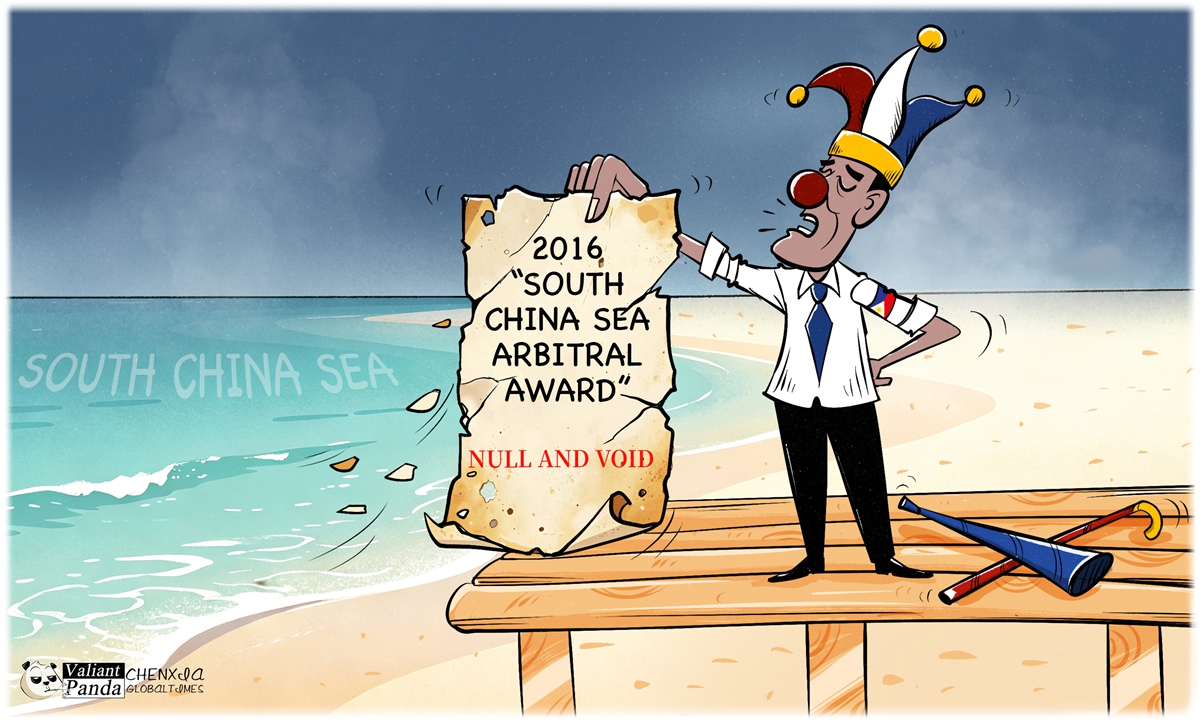
On July 12, 2016, a so-called ad hoc arbitral tribunal, established at the unilateral request of the Philippines, issued a ruling on the South China Sea dispute that was mired in deep controversy regarding both its factual findings and its application of the United Nations Convention on the Law of the Sea (UNCLOS). A decade has passed, and this ruling - which disregarded both facts and law - has resolved absolutely nothing. Instead, it remains like a persistent scar deeply wedged between China and the Philippines. It is high time Manila seriously reflects on this "lost decade" and adopts a more mature and rational stance.
From the very day of its inception, the so-called South China Sea arbitration award has been illegal, null and void. By overstepping its authority to hear the case, the so-called tribunal lacked legal foundation from the outset. Furthermore, the arbitration subjectively expanded the scope of its "ruling" based on convoluted evidence. Many international law experts believe that the case overextended the interpretation of UNCLOS provisions, leaving a concerning footprint on the practice of international maritime law.
When a ruling is riddled with so many procedural and substantive flaws, how can it possess any credible legal binding force? If Manila continues to revere this lifeless ruling as a sacred text - attempting to use it as leverage in its dealings with China or to stir up trouble in the region - it is doing nothing short of building a castle on shifting sands. This approach will yield no results, other than expose Manila's own distortion and opportunistic exploitation of international law.
Furthermore, the Philippines' "one-man show" in the South China Sea in recent years, along with its aggressive efforts to pull in external powers, has failed to gain traction among ASEAN countries. Over the past few years, Manila's repeated intrusions and provocations in the South China Sea have been less about defending "sovereignty" but more about a calculated performance. This performance serves its domestic political agenda and aligns with the so-called Indo-Pacific Strategy of external major powers. The danger of this theater lies in its attempt to tie the entire ASEAN bloc to a war chariot that Manila itself cannot control.
In 2023, the Philippines and the US announced the expansion of the Enhanced Defense Cooperation Agreement, under which US forces would gain access to four additional Philippine military bases. Concurrently, Manila has been forging a quasi-alliance with Japan, facilitating Tokyo's power projection into Southeast Asia. These actions - introducing external forces into South China Sea affairs and intensifying the confrontational nature of alliances - are the very root causes of regional tension, sparking widespread anxiety among neighboring countries.
What Philippine policymakers should reflect on even more deeply is the actual return on the vast political and diplomatic resources invested in the South China Sea dispute over the past decade. As anxieties regarding national security have been amplified, the country has been compelled to raise military spending to unhealthy levels, leaving sectors that are truly vital to public well-being - such as education, healthcare and agriculture - starved of necessary funding. In 2025, the Philippines' defense budget stood at a staggering 315.1 billion pesos ($5 billion), representing a sharp increase of more than 30 percent over 2024. Meanwhile, poverty rates remain stubbornly high.
The South China Sea dispute looming between China and the Philippines has acted like a festering wound, causing constant turbulence in bilateral relations and preventing a truly healthy development of ties. As the Philippines' largest trading partner, a prime source of potential investment and a key collaborator in infrastructure, China offered opportunities for the two nations to unlock significant growth potential in trade, connectivity and industrial cooperation, among other areas. However, a lack of political trust has hampered many of these projects. Looking back over the past decade, one must ask: How many precious growth opportunities that would have delivered tangible benefits to its people has Manila missed?
A decade on, the "South China Sea arbitration" has failed to serve as a key to resolving the dispute; instead, it has become a significant liability affecting China-Philippines relations. For the Philippines, the realistic choice - one that aligns with the fundamental interests of both peoples and meets the shared expectations of regional countries - is to return the South China Sea issue to the track of bilateral consultation, persist in handling differences appropriately through dialogue, build mutual trust through cooperation and expand common interests through development.
The future lies in the Philippines' own hands. Whether to continue indulging in the "arbitration myth" or return to the path of win-win cooperation is a question that Manila should seriously consider.
The author is Dai Fan, director of the Center for Philippine Studies at Jinan University.
Source: Global Times
