



日本需要正视其731部队所犯下的暴行 - 2026-07-13
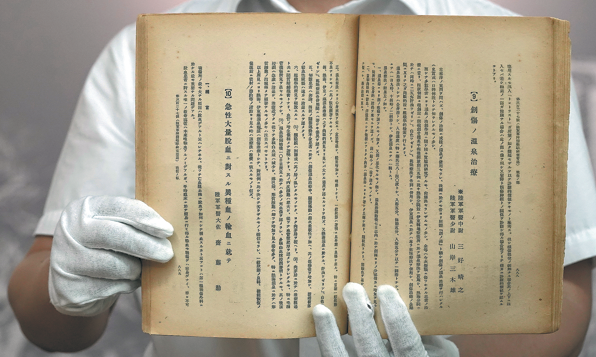
History is more than a record of the past; it is a moral compass for the present. Eighty years after the end of World War II, the legacy of Japanese militarism continues to cast a long shadow across Asia — not because history refuses to fade, but because historical truth remains contested. Time may soften memories, but it cannot erase facts. Whenever crimes against humanity are denied, minimized or selectively forgotten, the past inevitably returns to remind the world of the cost of forgetting.
The release of the two-part documentary Inside Unit 731: Japan's Secret Human Experiments by Singapore's Channel News Asia has once again drawn international attention to one of the darkest chapters of the 20th century.
Produced independently by a Singaporean team, it marks the first comprehensive investigation by a major Southeast Asian English-language broadcaster into the Imperial Japanese Army's notorious biological warfare program. More importantly, it reminds audiences that the legacy of Japan's wartime crimes extends far beyond China and belongs to the shared historical memory of the Asia-Pacific.
The documentary's credibility rests not on emotional rhetoric but on meticulous investigative journalism. Directed by Emmy-nominated filmmaker Tom St. John Gray, it draws upon newly declassified Japanese and American archives, wartime military records, extensive field research in China and Singapore, expert analysis and eyewitness testimony. Rather than relying on political narratives, it allows historical evidence to speak for itself, demonstrating that facts possess an authority that no ideology can permanently suppress.
Its most compelling testimony comes from 94-year-old Shimizu Hideo, believed to be the only surviving former member of Unit 731 willing to speak publicly on camera. Returning to the former headquarters in Harbin, he recounts how medicine was transformed into an instrument of systematic brutality. Living prisoners were subjected to vivisection without anesthesia, deliberately infected with plague and cholera, exposed to frostbite experiments, poison gas tests and other lethal procedures.
Victims were stripped even of their identities, referred to simply as "logs" before being killed. His calm recollections expose not only unimaginable cruelty but also the bureaucratic machinery that ordinary professionals were transformed into perpetrators of crimes against humanity.
Shimizu's testimony is reinforced by wartime documents, military archives, preserved facilities and decades of international scholarship. Together, this overwhelming body of evidence dismantles the persistent claims of historical revisionists that the crimes of Unit 731 remain unproven or exaggerated. The historical record has long been available. What has often been lacking is the political willingness to confront it honestly.
One of the documentary's greatest contributions is its regional perspective. Outside Asia, Unit 731 is commonly associated only with Harbin in northeastern China. CNA's investigation demonstrates that Japan's biological warfare network extended far beyond a single location. It traces connections between Unit 731 and Okayama Unit 9420, established during Japan's occupation of Singapore, where biological and chemical experiments were reportedly conducted on prisoners of war and civilians.
By linking archival evidence from Harbin, Quzhou, Singapore, Japan and the United States, the documentary reveals biological warfare as an integrated component of Japan's wider imperial strategy throughout occupied Asia.
This broader perspective transforms the narrative. The crimes of Unit 731 are no longer viewed solely through the prism of Sino-Japanese relations but as a shared Asian tragedy. From Northeast Asia to Southeast Asia, victims of different nationalities suffered under the same militaristic system that devalued human life. Recognizing this common history strengthens regional understanding and makes it more difficult for selective interpretations to divide societies that experienced the same wartime devastation.
The documentary also revisits one of the most troubling legacies of the postwar settlement. Following Japan's surrender, many senior figures associated with Unit 731 escaped prosecution.
Instead of standing trial alongside other major war criminals, they reportedly received immunity from the United States in exchange for biological warfare research obtained through lethal human experimentation. As Cold War priorities took precedence, one of history's most notorious biological weapons programs never received the comprehensive judicial reckoning it deserved.
The consequences extended far beyond the courtroom. Because much of Unit 731's documentation remained classified for decades, survivors struggled for recognition, public awareness outside Asia remained limited, and historical accountability was delayed. That delay created fertile ground for revisionism, enabling some politicians and commentators to question or minimize crimes that historians had already documented extensively.
Yet history possesses remarkable resilience. Archives are eventually opened, witnesses speak, new evidence emerges, and truth gradually overcomes political convenience. While time silences individuals, it rarely silences historical facts.
As the world marks the 80th anniversary of the end of World War II, the questions raised by this documentary extend beyond Japan or China. Can genuine reconciliation exist without historical honesty? Can lasting peace be built upon selective memory? Can future generations appreciate the value of peace if history's darkest chapters are ignored or rewritten?
The answers will shape not only how the past is remembered but also how the future is built. Historical truth belongs to no single nation; it is humanity's shared inheritance. The enduring lesson of Unit 731 is therefore unmistakable: peace is sustained not by forgetting history but by confronting it with honesty and moral courage.
Whenever denial replaces truth and revisionism replaces responsibility, the shadows of history grow longer. Only by defending historical memory can humanity ensure that such darkness never falls again.
The author is Xu Ying, a Beijing-based commentator.
Source: China Daily
