


中国以创新构筑未来 - 2026-10-08
China's emergence as a global innovation power is no longer a future projection — it is already shaping the global technology landscape. When I first arrived in Guangzhou, Guangdong province, about two decades ago, it was during a period of dramatic infrastructure expansion. Over the years, the Greater Bay Area — which includes Shenzhen, Guangzhou, and Hong Kong and Macao special administrative regions — has undergone a remarkable transformation.
Today, it stands out as a world-class innovation hub, boasting advanced manufacturing, venture capital, prestigious universities, robust supply chains and dynamic entrepreneurial networks.
Similarly, Shanghai was in the midst of rapid changes in the early 2000s. Now, after two decades of transformation, Shanghai, alongside Beijing, plays a pivotal role as a global innovation hub. The increasing number of artificial intelligence events reflects China's ambition to move beyond applications and become a leading developer of foundational technologies, including large language models, robotics, autonomous systems, and industrial AI.
What sets China apart is that its colossal ecosystem integrates supply with demand through innovation.
In the 1990s, while I was in New York and occasionally visited Finland, I found myself at the intersection of two technology revolutions: the internet in the US and mobile communications in the Nordic countries. This led me to write The Nokia Revolution (2001) and other pioneering works on the globalizing information and communication technology sector.
At that time, China's R&D capabilities were modest but growing exponentially. Comparing innovation leaders from small countries with China's continental size is misguided, however. Innovation leadership stems not from individual companies but from national ecosystems, where both the government and the country play crucial roles.
Agility and focus are equally important. Europe's science and technology base was on par with the US in the early 1990s. But US technology finance was more risk-driven and agile, which resulted in Europe falling behind the US in the technology revolution. Today, China's advantage lies precisely in the synergy between national strategy, market competition and finance, engineering talent, and massive domestic demand.
In the mid-2000s, Western observers still viewed Chinese companies primarily as efficient manufacturers benefiting from low costs, technology transfer and imitation. But early signals hinted at a more complex trajectory. China's initial competitiveness was based on scale, its enormous manufacturing base offering cost advantages unmatched elsewhere.
However, this scale fostered capabilities, as suppliers improved, engineers gained experience, and domestic competition spurred faster innovation. Companies once dismissed as copycats developed their own technologies, business models and global strategies.
As domestic competition intensified, companies learned to redesign products, reduce costs and shorten development cycles. What began as imitation evolved into indigenous innovation, mirroring industrial transformations in Japan and the Republic of Korea. China's unique advantages lie in its vast domestic market, low starting point for catch-up growth and rapid technological diffusion.
Between 2005 and 2007, I chronicled these shifts in The National Interest, a leading US international affairs journal, highlighting "the rise of the Chinese multinationals" and identifying the "new innovation challengers" in China, India and other large emerging economies. In particular, Chinese firms were turning from production platforms into global competitors.
These findings were initially dismissed in the US and Western Europe. The prevailing assumption was that China was "just a low-cost imitator", a belief rooted in the bias against Chinese and Asians as world-class innovators. The myth was shattered a few years later, when the OECD PISA tests highlighted the rise of Asian students, prompting some Western critics to claim that the tests were "rigged".
As times grew tougher following the 2008 financial crisis, the rise of the emerging markets was no longer viewed favorably in the West, giving rise to protectionism and geopolitical tensions. By the early 2010s, Huawei's dramatic rise marked the arrival of China's first generation of genuinely global innovation multinationals. In Washington, this development was met with aggressive political opposition.
In October 2012, the US House Permanent Select Committee on Intelligence released a report investigating Chinese telecom companies Huawei and ZTE. The move was reminiscent of the 1950s McCarthyite persecutions. Internationally, Huawei's rise marked a turning point in global innovation. However, the US response was not commercial competition but aggressive geopolitics, as pointed out by William Plummer, former head of Huawei's external affairs in the US, in his book Huidu — Inside Huawei (2018).
The US controversy surrounding Huawei became symbolic of a broader technological rivalry. Proponents of cooperation pointed to the company's research investments, global patents, and partnerships, which could greatly benefit US companies and consumers.
The White House had said it examined the opportunities, risks and implications of reliance on global, commercial markets, not targeting "any particular company". This was a wise qualification, but unfortunately ignored by subsequent US administrations.
Instead, the US administration opted for technological protectionism, hoping to restore US primacy in innovation through unilateral coercive measures in the absence of a strategy to tackle the Chinese challenge.
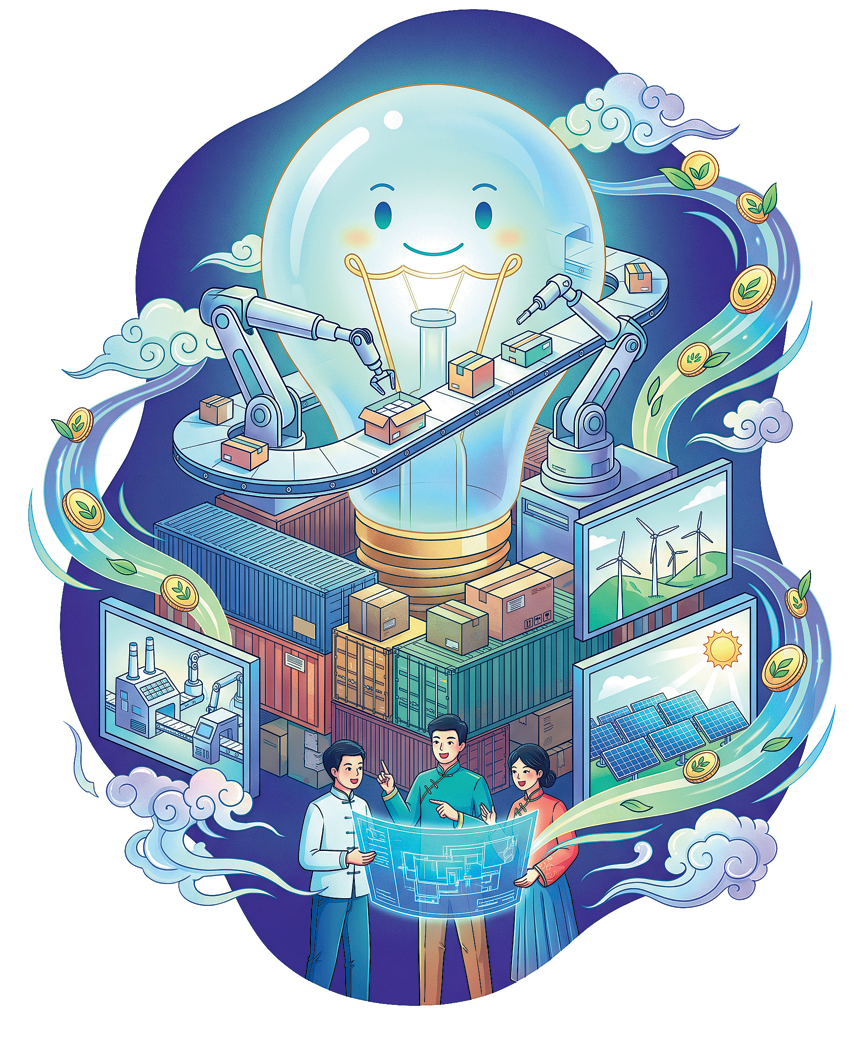
China has emerged as a major global innovation power by developing an enormous innovation-to-production ecosystem capable of turning research, engineering, capital and market scale into products at extraordinary speed and diminishing costs.
As these global innovation controversies intensified, AI arrived.
Source: China Daily
