



经济新闻
中国借助西北能源枢纽满足上海人工智能用电需求 2026-03-19
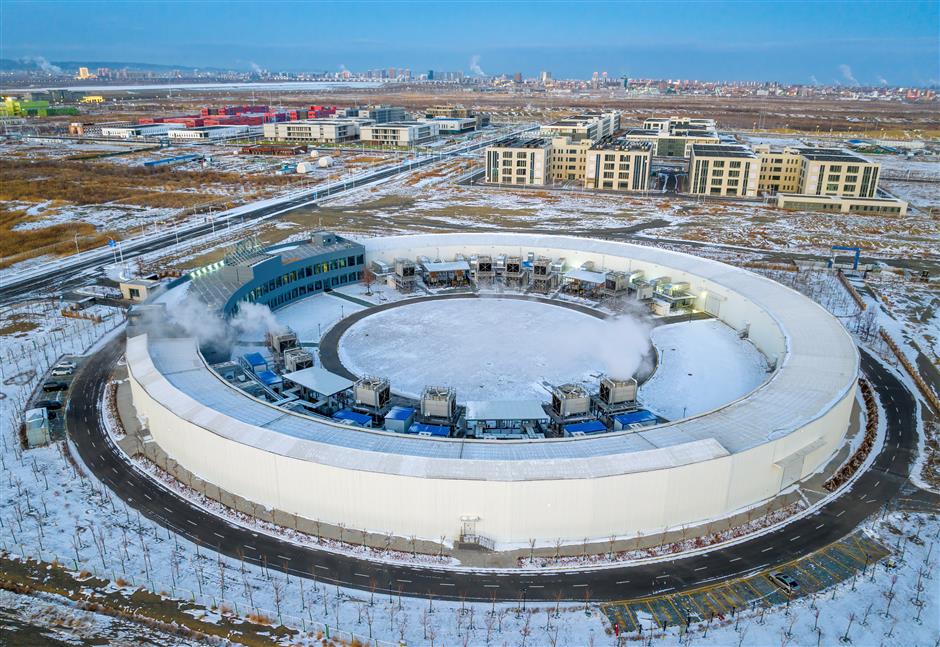 A liquid-cooled data center operates at the Karamay Cloud Computing Industrial Park in northwest China's Xinjiang Uygur Autonomous Region.
As demand for artificial intelligence computing rises, a remote oil city in northwest China is supplying increasing amounts of processing power to Shanghai and other eastern technology centers.
At an investment promotion event in Shanghai on March 18, officials and companies outlined how Karamay in the Xinjiang Uygur Autonomous Region – historically known for oil production – is being used as a base for data centers and AI infrastructure.
The city, more than 4,000 kilometers from Shanghai, is part of a broader effort to shift data processing to inland regions where energy is cheaper and abundantly available.
Telecom giant China Mobile, a major data center operator in Karamay, said the model relies on converting local energy into computing services.
"What we are doing is essentially converting electricity into computing power and delivering it to eastern cities like Shanghai," Zhong Bo, general manager of China Mobile Karamay, told Shanghai Daily.
Electricity accounts for up to 80 percent of data center operating costs, he said. In Karamay, power prices can fall below 0.35 yuan (5 US cents) per kilowatt-hour, compared with more than 1 yuan in Shanghai.
The lower cost reflects a combination of abundant coal reserves, large-scale wind and solar generation, and relatively low local consumption.
Instead of transmitting electricity over long distances, which increases costs and causes energy loss, companies process data locally and send results through fiber networks.
Latency between Karamay and Shanghai is about 50 milliseconds, which has a limited impact on most AI applications, Zhong explained.
Karamay now hosts six large data centers and a computing cluster exceeding 20,000 petaflops, according to the city.
Shanghai is a major source of demand. Clients linked to the city account for about 60 percent of usage in some local computing clusters, Zhong noted.
They include Shanghai-based AI firms such as MiniMax, with part of their computing handled in Karamay.
He said demand has surged in recent months, driven by the rapid uptake of new open-source AI models such as OpenClaw.
"Our servers are now running at near full capacity," Zhong pointed out. "But you may never have imagined that the large language models you interact with could be running on servers in Karamay."
China Mobile expects demand to continue growing and is planning further investment, with capacity expansion likely to exceed 50 percent this year, depending on market conditions.
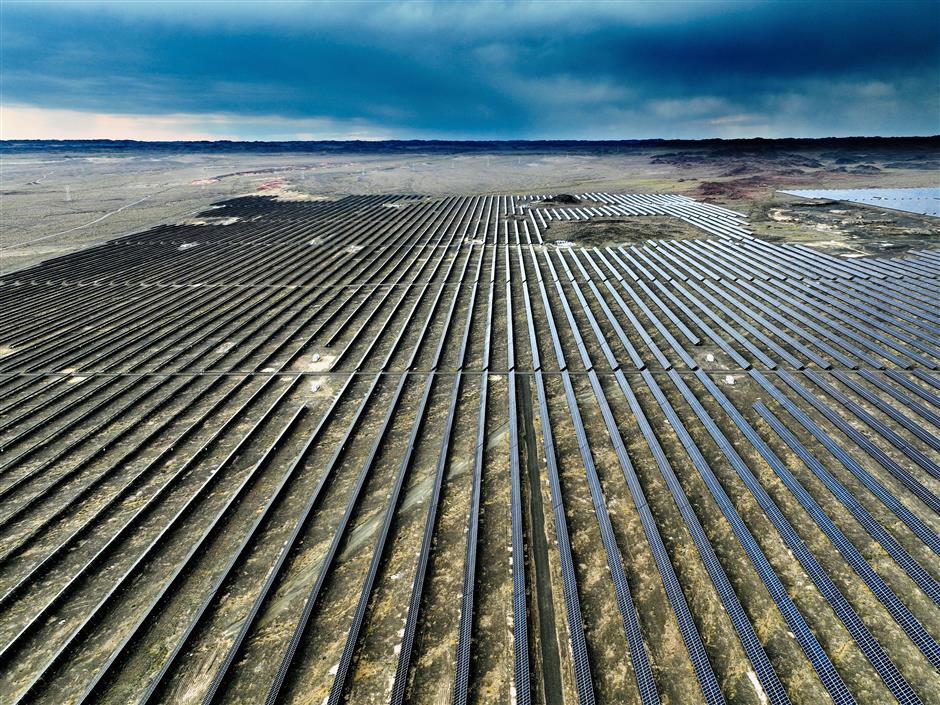 The solar panels at a photovoltaic base operated in Karamay
Private investors are also expanding in the sector.
Yang Hao, general manager of Shanghai-based Hash Base, said his company has invested in a Karamay computing infrastructure firm focused on green computing.
"AI computing is highly energy-intensive, so access to renewable power is a key factor in our investment decisions," Yang observed.
The company signed agreements on projects worth about 1 billion yuan at Wednesday's event and plans to expand operations in Karamay.
Yang said the firm is starting with computing infrastructure and plans to expand into related hardware and AI applications. "The industry is moving beyond basic computing rental toward more specialized services and real-world applications."
Karamay's location near Central Asia is shaping part of its strategy. Companies are exploring ways to export computing infrastructure and technical services to neighboring markets.
"We are exploring opportunities to bring AI infrastructure to Central Asia through technology exports and partnerships," Yang added.
The Shanghai event featured deals on 27 projects with a total value of 239.14 billion yuan, covering sectors including petrochemicals, renewable energy, digital economy and tourism.
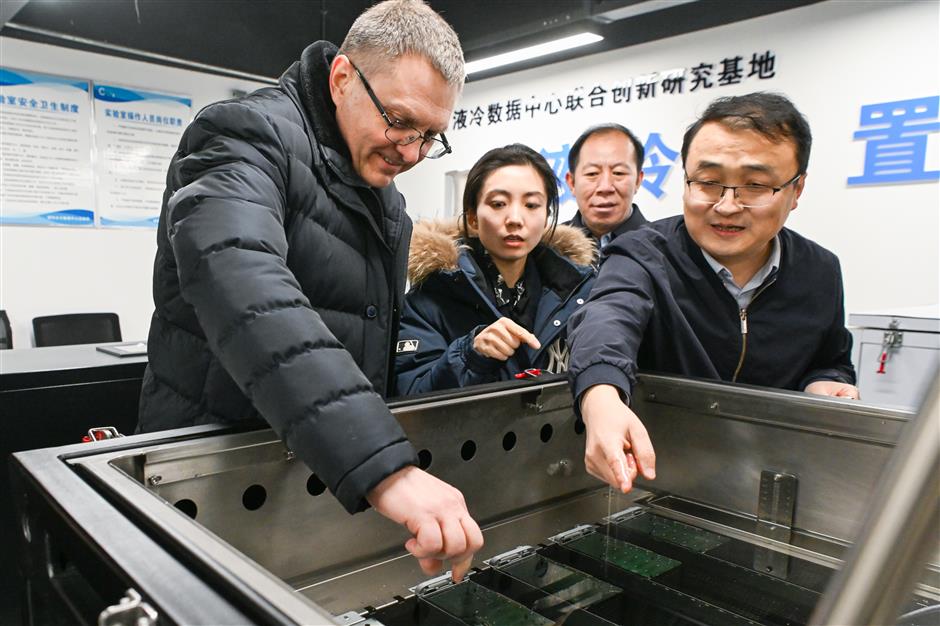 A foreign business representative checks the liquid-cooling technology at a data center in Karamay.
Source: City News Service
