



经济新闻
安森美半导体在上海设立大中华区总部 2026-04-02
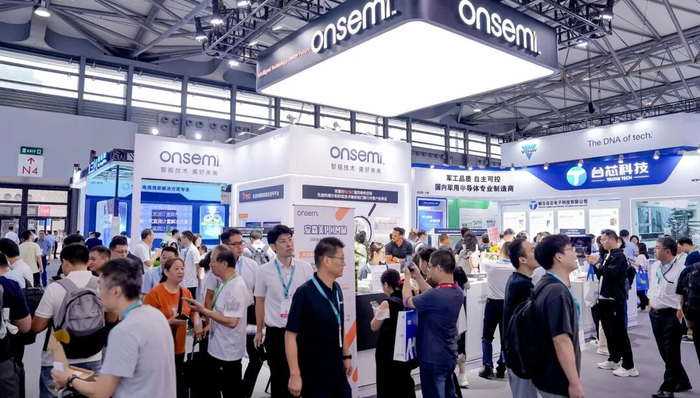
U.S. semiconductor company onsemi on April 1 announced its China strategy, naming Shanghai its Greater China headquarters.
The move comes as it steps up efforts to localize decision-making and engineering amid demand driven by electrification and artificial intelligence.
The company said its China general manager will also oversee system engineering, bringing engineering under closer management oversight.
Chief executive Hassane El-Khoury said the move would bring decision-making closer to customers and help develop solutions in China for use in other markets, describing China as one of the fastest-moving technology markets, where multinationals need to make decisions close to customers.
Electrification and AI are reshaping demand for power semiconductors. Consultancy TrendForce estimates the global silicon carbide (SiC) power device market will reach US$5.33 billion by 2026, with electric vehicles accounting for US$3.98 billion. Yole Group forecasts the gallium nitride (GaN) power market will reach US$2 billion by 2029.
El-Khoury said standalone components are no longer sufficient as customers increasingly demand system-level solutions. The company aims to develop such solutions in China and scale them globally.
The strategy includes four areas: local design, local manufacturing, operations in China and global expansion.
The company is expanding research and system engineering in Shanghai. It has eight joint application labs in China and plans three more, focusing on AI power applications.
It is also integrating local partners to build an end-to-end system linking engineering and production. Its local bill-of-materials sourcing ratio in China has risen from about 3% five years ago to 50%, El-Khoury said.
The shift to a Greater China headquarters reflects a push to streamline operations and respond more quickly to local market dynamics. El-Khoury said multinational structures need to adapt to what the industry calls "China speed".
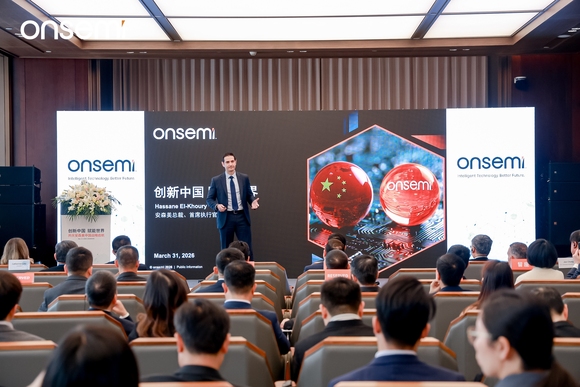
The move comes amid a broader shift by multinational technology firms toward localization in China.
WEI Shaojun, a professor at Tsinghua University, said China's semiconductor market continues to expand despite global disruptions.
WANG Zhijie, secretary-general of the China Semiconductor Industry Association, said long-term competitiveness requires a global outlook.
El-Khoury said Chinese customers' willingness to adopt new technologies and scale them rapidly is helping the company expand internationally.
Onsemi plans to invest up to US$50 million in China over the next three years to support local operations and development, El-Khoury said.
Source: Jiemian
