


经济新闻
专家在上海气候周上表示,中国可再生能源发电领先,但绿色保险滞后 2026-04-26
China's new energy sector is expanding at speed, with solar, wind, and energy storage installations all ranking among the top in the world. Yet major green energy assets in the country are underinsured or uninsured, according to experts taking part in Shanghai Climate Week.
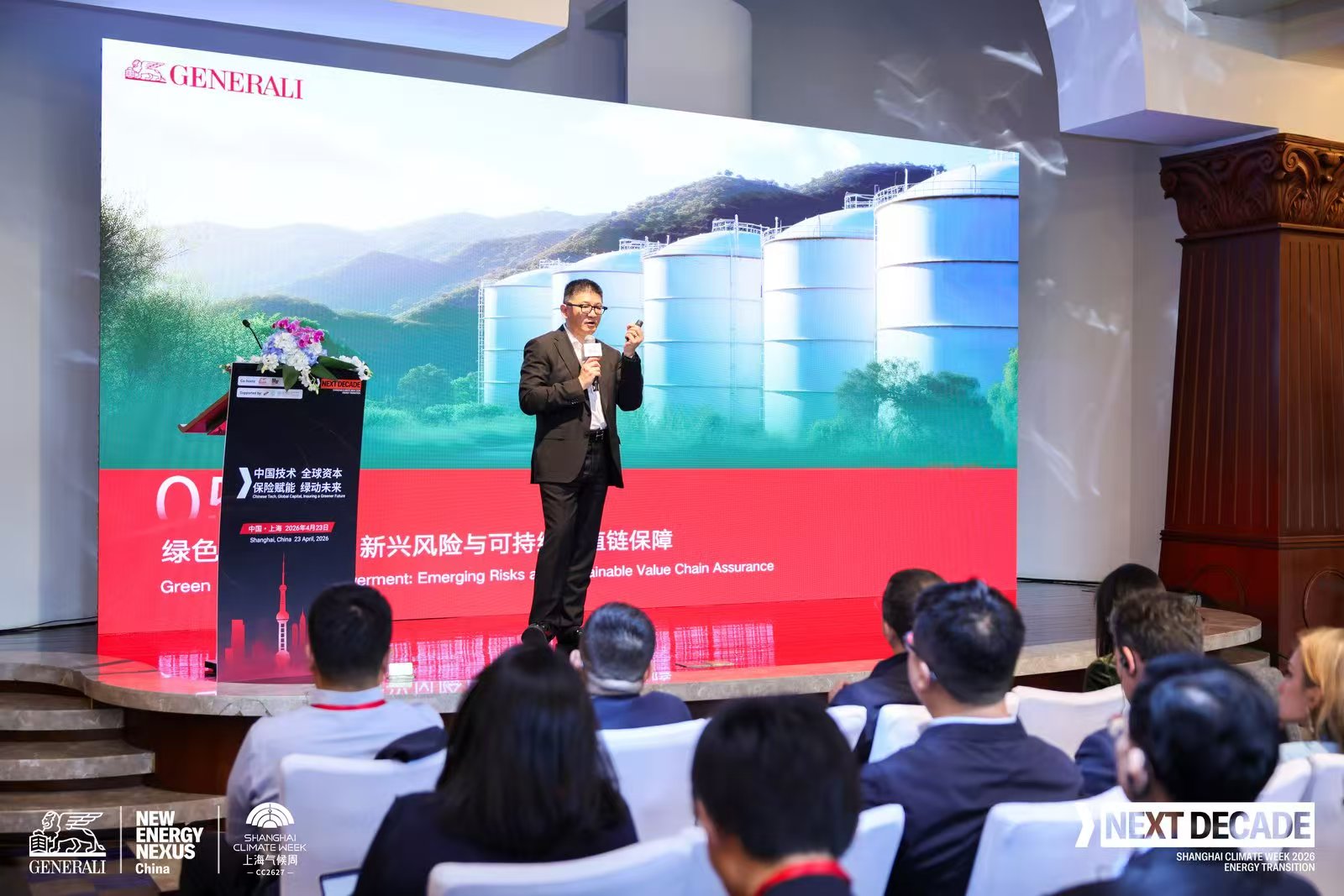
“The green transition is, at its core, an energy transition, and that requires very large capital investment,” Jack Yuan, chief executive of Generali China Insurance, told Yicai at a forum during the annual climate event held in Shanghai from April 20 to 28. “A crucial issue is bankability, and one of its key prerequisites is insurability.”
But more than CNY270 billion (USD37 billion) of China’s high-risk energy storage assets lack effective insurance protection, according to a white paper jointly released by Generali China and Fudan University. The pool of uninsured assets is growing by more than CNY160 billion a year.
While China’s new energy insurance market is large, technological innovation is lacking, particularly among domestic insurers that rarely venture into areas where reinsurers are unwilling to go, according to Wang Hui, general manager of Shanghai Electric Insurance Brokers.
Data Issue
Insurers are not unwilling but lack pricing tools, especially data, Yuan noted. “There’s market demand, and there is a gap in risk protection, but insurers lack data,” he said.
Energy storage technology has undergone three to four iterations in the past five years, meaning that the historical claims data on which traditional actuarial models rely is almost useless for valuing the latest generation of technology, Yuan explained.
At the same time, China has yet to introduce mandatory energy storage insurance requirements at the national level, so the market remains in the exploratory pilot stage.
The huge volume of data is another major difference with traditional insurance lines. A mid-sized storage facility, for example, generates several terabytes of operational data every day, which is equal to the entire 50-year historical record of a conventional insurer, Yuan said.
In his view, this is precisely why artificial intelligence is needed. "We should change our thinking from just looking backward in the traditional way to looking forward to perform dynamic risk projection and dynamic risk pricing," he said. “This is where the opportunity lies.”
Green insurance now accounts for about 15 percent of Generali China's portfolio, up from 3 percent five years ago. McKinsey projects that green insurance will account for 42 percent of China's property and casualty insurance market by 2030.
China added 373 gigawatts of renewable energy capacity in 2024, a 23 percent increase from the previous year, accounting for over 60 percent of global additions, according to the National Energy Administration.
The new energy industry is going in the direction of Risk-as-a-Service, where clients purchase a financially backed, clearly quantified operational outcome, such as a committed lifetime energy throughput.
According to the white paper, the global market for energy storage RaaS is projected to grow to USD177.6 billion by 2035 from about USD10.9 billion last year.
No single institution can complete this transformation alone. "We hope to be explorers," Yuan said. “More broadly, we’re talking about building an ecosystem and expanding our circle of partners within that broader ecosystem.”
Overseas Push
The gap in energy storage insurance is further amplified when Chinese new energy companies expand overseas. Eight of the world's top 10 energy storage system suppliers by volume are Chinese, according to the white paper.
The risks these companies most commonly underestimate are not technical but operational, such as underestimating local regulatory requirements and labor market conditions in the host country, Yuan said.
He explained that the value insurers can provide in overseas markets goes well beyond post-loss indemnification. “Our greatest hope is that nothing goes wrong,” he noted. “Insurance companies should not only use technologies for pricing and risk forecasting, but also apply them to loss prevention and risk mitigation, bringing the probability of a claim to its lowest possible level.”
At the product level, many countries require that insurance policies be issued locally, which poses a substantive barrier for Chinese insurers without established local networks, Wang pointed out. "This is a key reason why businesses end up with overseas insurance companies.” he said.
As an international company, Generali can leverage its global network alongside its understanding of the Chinese market to help clients bridge that gap through Generali China, Yuan noted.
Source: Yicai Global
