



经济新闻
上海计划到2030年实现8.12万亿美元的资产管理规模 2026-06-03
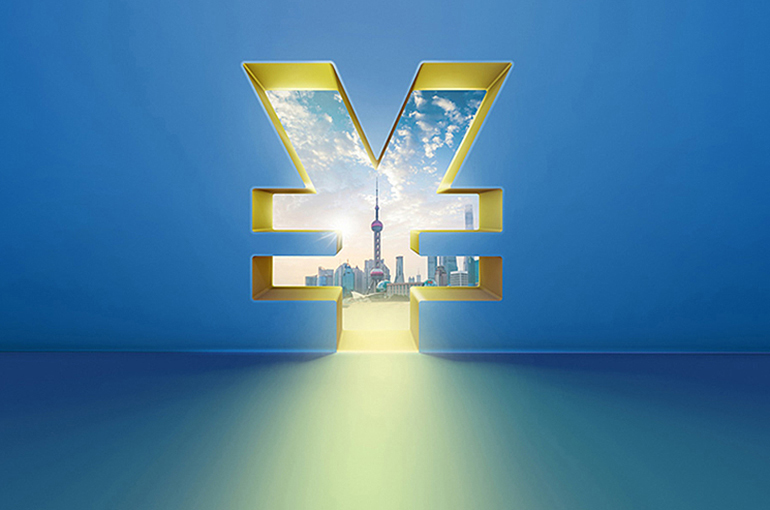
Shanghai aims to have CNY55 trillion (USD8.12 trillion) of assets under management by 2030, increasing the city’s share of China’s total to about a third, while boosting its role as key hub for Chinese yuan-denominated asset allocation, pricing, and risk management, according to a new policy document released by the local government.
The city had CNY44.19 trillion of assets under management at the end of 2024, accounting for about 30 percent of the national total, according to figures previously released by the Shanghai Asset Management Association. So to reach CNY55 trillion, the city will need to grow its AUM by nearly 25 percent.
The document published on June 2 replaces guidelines for building Shanghai into a global asset management center that were issued in 2021. It gives greater weight to cross-border asset allocation, risk management, financial infrastructure, and the internationalization of yuan-denominated assets, putting yuan asset allocation and risk management front and center. The prior guidelines focused more on clustering financial institutions and driving scale expansion.
The document proposes that by 2030, Shanghai should become a “new landmark” for global asset management, achieve smoother diversified allocation of assets both onshore and offshore, and bring high-level two-way opening-up to a new stage.
The policy’s central aim is to elevate the global influence of yuan assets. It repeatedly refers to the global allocation function of yuan assets, the “Shanghai price” benchmark, and cross-border yuan settlement. Measures such as permitting more overseas exchanges to use China’s commodity futures settlement prices, broadening the use cases for the Shanghai gold benchmark, and creating an overseas central registration and custody institution for yuan-based bonds are all intended to reinforce pricing power over yuan assets.
The development of Shanghai into a global asset management center is not simply about expanding the AUM scale, but is also about enhancing the ability of global investors to hold, allocate, and price yuan assets better, according to industry insiders.
Construction of that center is a crucial lever for Shanghai's leapfrog development as an international financial hub and a key application scenario for yuan internationalization, Ge Qing, an official at the Shanghai branch of the People’s Bank of China, said at the press conference held to release the policy document.
A mature and open asset management market can continuously attract global capital to invest in yuan assets, consolidate the currency’s standing as an international unit for valuation, investment, and reserve, and lay solid market foundations for yuan internationalization, Ge noted. Expanding the redback’s cross-border use and improving the trans-border financial infrastructure will further sharpen the global competitiveness and appeal of Shanghai’s asset management industry, he said.
The policy document commits to advancing high-level opening-up in the asset management sector and refining cross-border market connectivity schemes, including the Stock Connect and Bond Connect programs between the Chinese mainland and Hong Kong.
Risk management tools also feature prominently in the policy. The document proposes a pilot program for yuan foreign-exchange futures and adds “computing power futures” to the global asset management center agenda for the first time.
The Shanghai government began supporting the city’s development into an international asset management center in 2021. Since then, its share of the national AUM has risen to 30 percent from 25 percent.
Shanghai accounts for about half of China’s insurance asset management and roughly 40 percent of the country’s public fund management accounts. It also ranks first nationwide for private fund management.
All six wholly foreign-owned public fund managers and all five China-foreign joint venture wealth management companies operating in China are headquartered in Shanghai.
Source: Yicai Global
