



经济新闻
上海口岸加快货物和旅客通关的新举措 2026-06-17
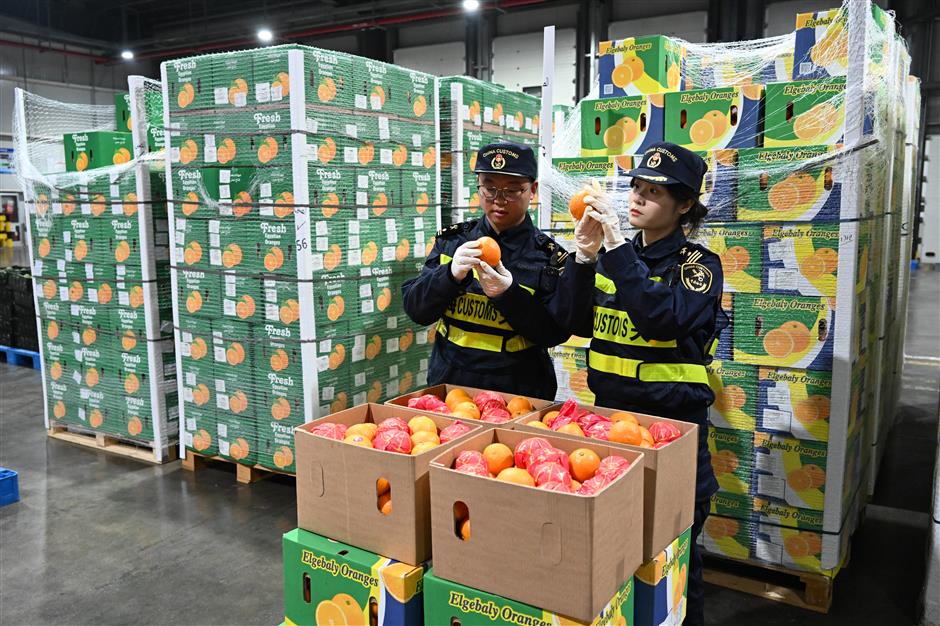 Shanghai Customs officers inspect a 516-ton shipment of fresh Egyptian oranges before clearing them for local markets at the Waigaoqiao Port area on May 1.
This summer, fresh salmon may make its way to Shanghai dinner tables faster. So could the latest electronics from international brands be looking to make their China debut.
And travelers going through Pudong International Airport may soon board their flights by looking at a camera rather than a boarding pass.
These are among the 23 actions outlined by seven Shanghai government departments to boost trade and travel via the city's ports, which are one of the world's busiest cargo gateways.
The initiatives, released jointly by the Shanghai Commission of Commerce and Shanghai Customs, as well as five other departments, range from AI-powered cargo inspection to sustainable aviation fuel storage at Pudong Airport.
Shanghai handles nearly one-fifth of China's foreign trade in value. The Yangshan and Waigaoqiao port complexes are among the world's largest container terminals.
Among the most immediate practical changes, importers of fresh seafood on an approved whitelist will be able to sell their items as soon as customs agents collect a sample, rather than having to wait days for lab results.
Another pilot initiative for worldwide consumer brands will expedite customs clearance for newly launched imported goods ranging from clothes and toys to kitchen appliances and electronics.
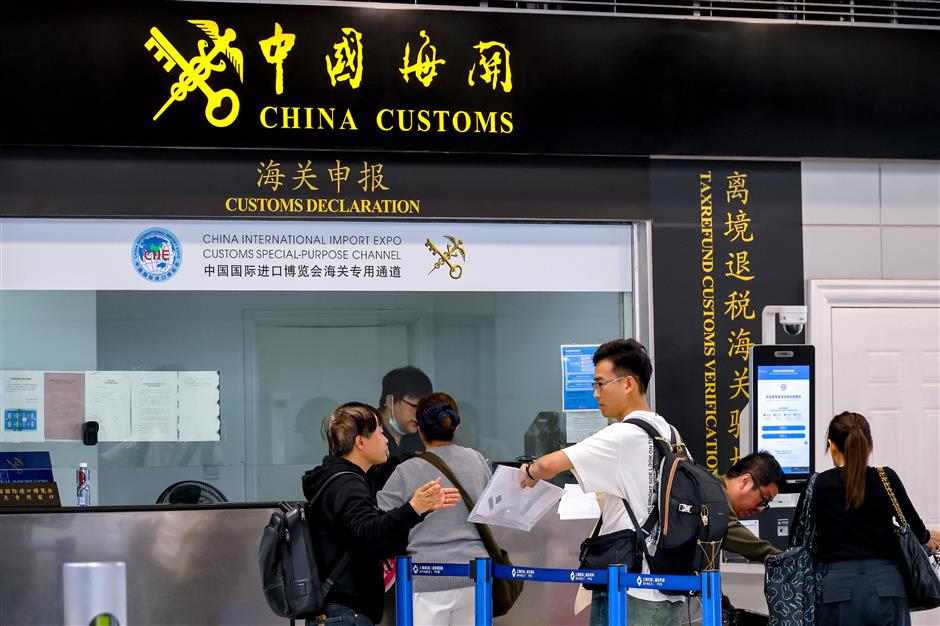 Foreign travelers queue at a China Customs desk to claim departure tax refunds at Shanghai Pudong International Airport Terminal 2.
The authorities said that they will expand the program and increase the frequency of company eligibility reviews. The program already includes over 30,000 launch products from 62 international brands.
On the technology front, Shanghai Customs will extend what it calls China's first AI-powered cargo inspection platform, which employs digital twin technology to track port operations in real time.
Shanghai Port will also see a wider use of autonomous guided vehicles and driverless container trucks.
The proposal also calls for shore power coverage throughout all of Shanghai's berths, which means that ships at dock will draw electricity from the grid rather than operating their own engines.
The Pudong airport will expand storage and supply facilities for sustainable aviation fuel, a commodity that airlines are increasingly relying on to meet tighter emissions regulations in Europe and abroad.
For foreign tourists, Pudong Airport will modernize its boarding gate equipment to incorporate facial recognition, allowing passengers to board without showing a physical passport.
The city will also increase the number of routes covered by international through-flight services, which allow passengers to check their luggage at the point of departure and receive it at the final destination, avoiding rechecks at connecting airports.
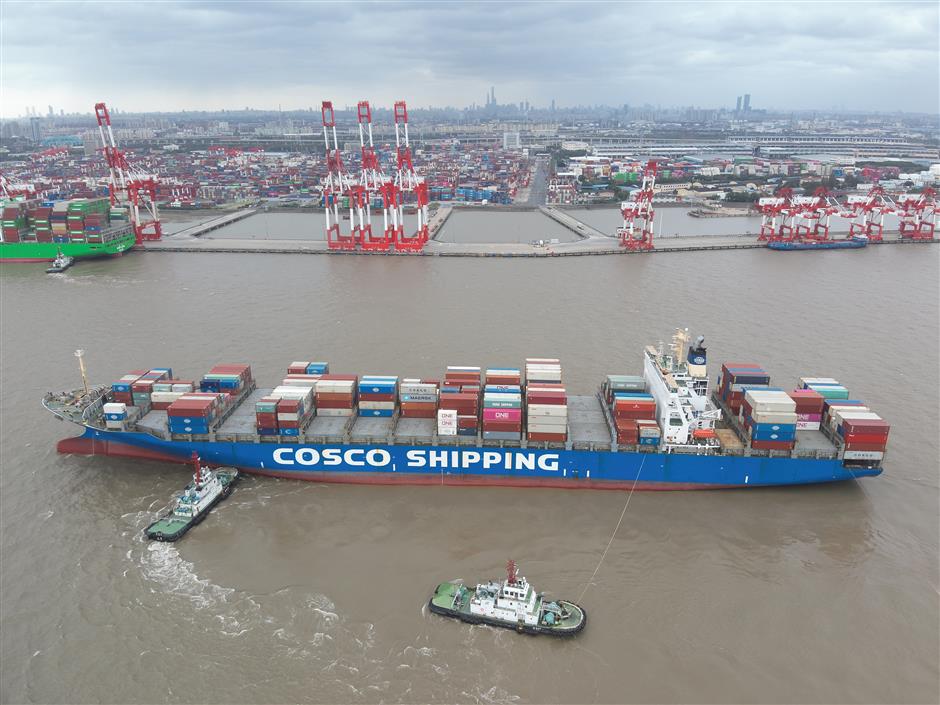 A COSCO Shipping container vessel carrying maritime exhibits for the China International Import Expo docks at Shanghai's Waigaoqiao Port.
Source: City News Service
