



经济新闻
中国StepFun将推出搭载AI助手的智能手机,随着人工智能技术向设备端延伸 2026-07-09
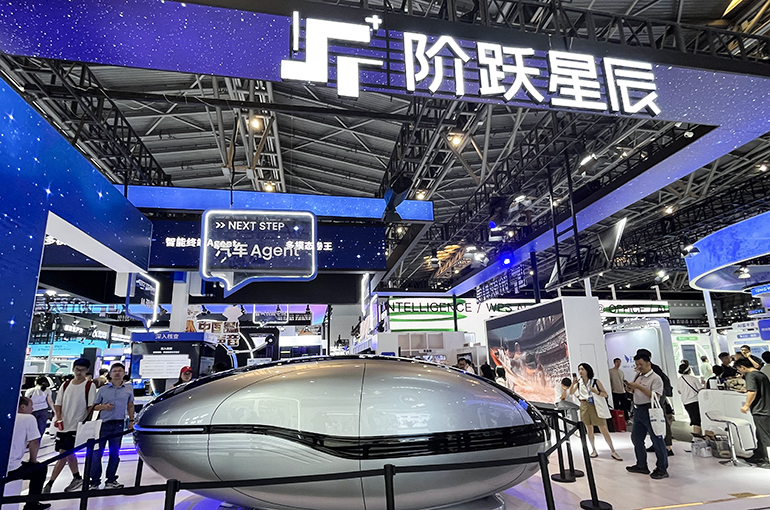
Shanghai Jieyue Xingchen Intelligent Technology is preparing to launch its first artificial intelligence agent mobile phone, Yicai learned from sources in the smartphone supply chain. The Chinese large language model unicorn, better known as StepFun, has recently attracted investment from several firms across the consumer hardware supply chain as competition in the AI industry shifts from cloud-based model training to end-user devices.
StepFun, which released its Step-2 trillion-parameter LLM in July 2024, attracted investment from Huaqin Technology, one of the world’s biggest original design manufacturers, in its Series B+ funding round earlier this year.
And subsequent disclosures about a new financing round showed that several companies within the consumer electronics supply chain, including Shanghai Longcheer Technology, OmniVision Integrated Circuits Group and ZTE, have also joined as investors. The firm's investor base now spans multiple segments, including mobile phone design and manufacturing, mobile imaging technologies and device brands.
"There is already extensive exploration of LLMs on end devices, but when it comes to mobile phones, the industry is still waiting for regulatory approval. From a technical perspective, there are few major obstacles remaining," an insider at a domestic mobile phone manufacturer told Yicai, adding that the development of products like the Doubao AI smartphone is also accelerating.
Several smartphone makers have already identified AI agents as the core direction for next-generation mobile operating systems. Honor has introduced its vision for Agentic OS, while Google has emphasized reconstructing the Android experience around AI agents. As a result, mobile operating systems are emerging as a key battleground in the global AI race.
Unlike overseas AI companies that must build their supply chains from scratch, Chinese AI model developers can leverage the country’s mature manufacturing ecosystem to rapidly validate new products and commercialize them through established distribution channels, according to an industry insider.
Rather than relying solely on application programming interfaces and application distribution, LLM developers are aiming to establish more stable user access points through hardware, including smartphones, while generating continuous user data and stronger monetization opportunities.
Industry experts believe that the next round of competition in AI devices will no longer center on simply integrating AI assistants into mobile phones. Instead, it will focus on redesigning operating systems and user interactions with AI agents. As a result, future competition is likely to be driven by AI agent ecosystems, rather than by new hardware products alone.
Source: Yicai Global
