



经济新闻
上海“人工智能+文化旅游”模式落地,沪小游服务中心正式启用 2026-08-19
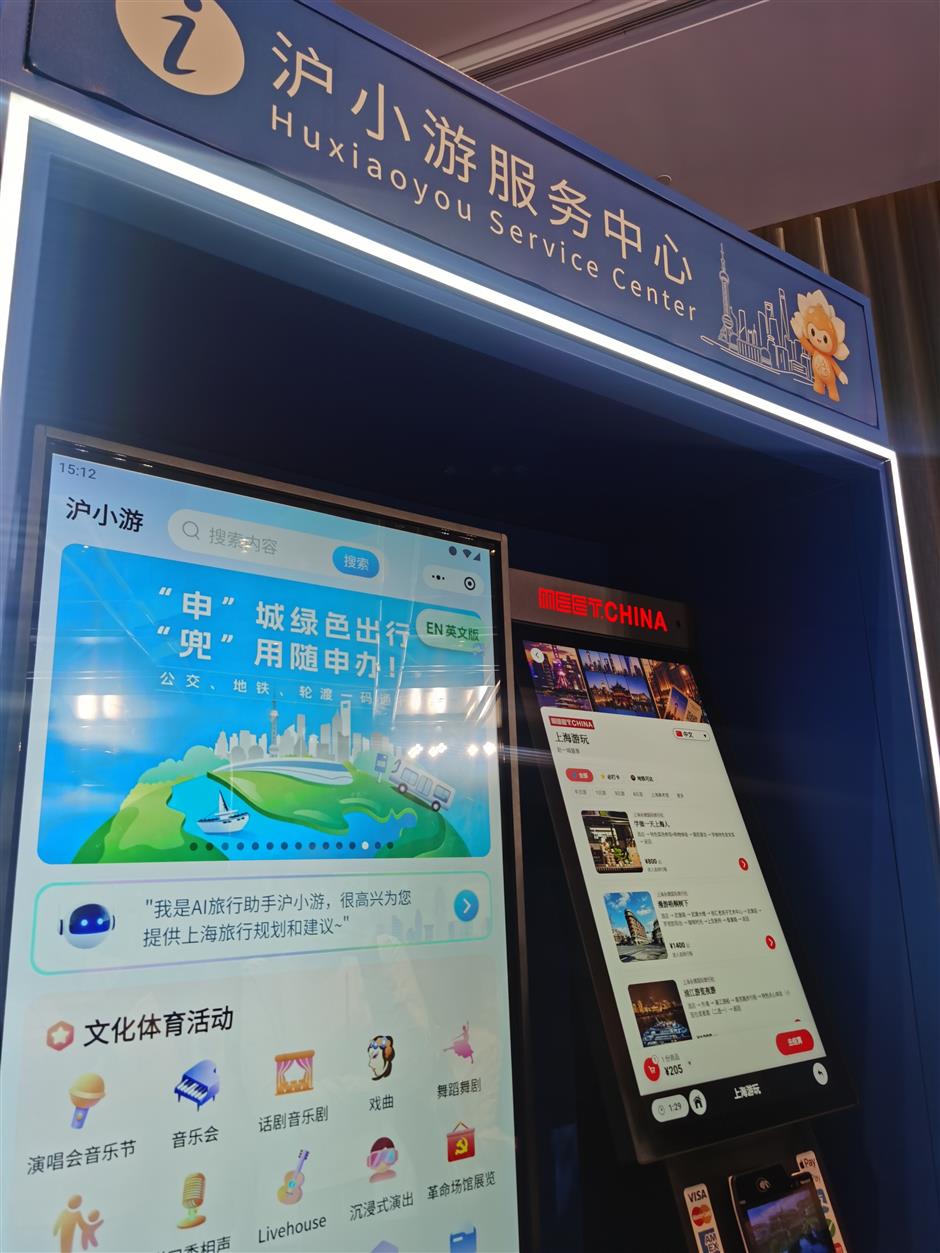
Shanghai launched the Hu Xiaoyou Service Center, its first citywide micro service hub integrating culture, tourism, business, sports and exhibitions, on Wednesday, pioneering an all-in-one multilingual digital and offline model for tourists from home and abroad. The city hopes the service will convert tourist traffic into sustained consumption growth.
Combining the artificial intelligence (AI) agent Hu Xiaoyou and the national-level MeetChina foreign card payment terminal, the new system is an upgrade on the traditional tourism information platform, providing a comprehensive entry portal that supports 10 languages, namely Chinese, English, Japanese, Korean, French, German, Spanish, Thai, Russian and Arabic.
Powering the newly launched micro-hub, the Hu Xiaoyou AI agent serves as the digital foundation for "AI + cultural tourism," offering core functions, including AI Q&A, LBS (Location-Based Services) precise positioning, multilingual interaction and personalized travel route recommendations.
As a national demonstration platform for inbound tourism consumption, the MeetChina foreign card payment terminal delivers convenient payment services for overseas visitors, exempting them from app downloads, account registration or card binding when completing transactions.
The information integration function pools over 84,000 municipal resources categorized into 36 major and 117 minor sectors to build a comprehensive cultural and tourism resource database.
Partnering with over 20 online service platforms, the hub provides 14,000 official ticketing and shopping links and integrates about 20,000 catering locations and more than 7,500 hotels and homestays. It therefore offers a full-chain guidance for dining, accommodation, transportation, sightseeing, shopping and entertainment.
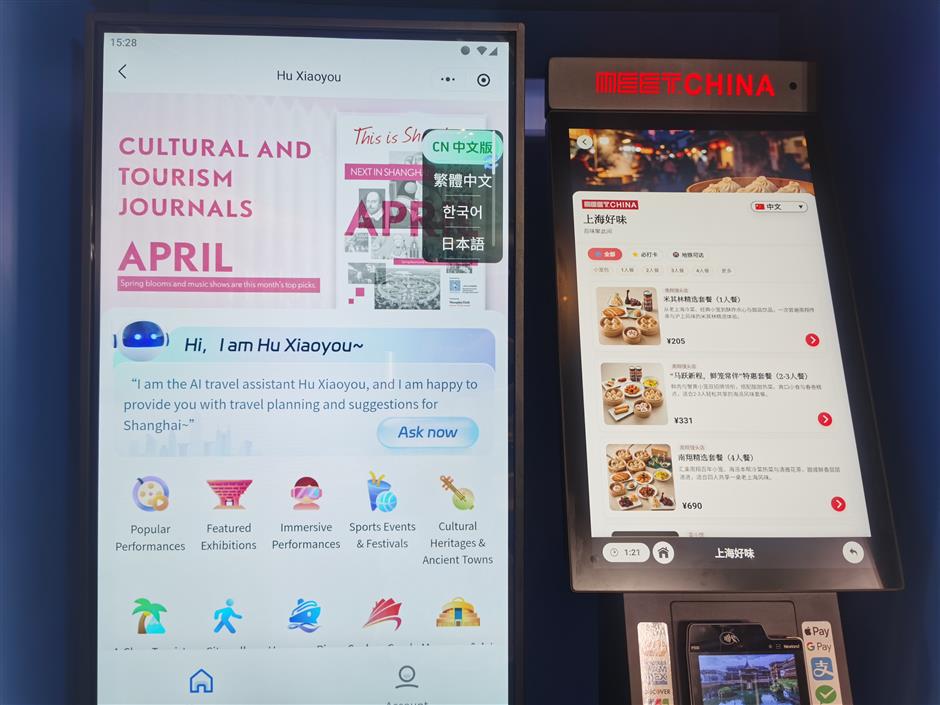
Supported by the MeetChina cross-border payment system, the hub supports payment in 120 currencies and 10 languages. The convenient cross-border payment service covers tourism, catering, retail and customized urban services.
The city logged 313 million visitor trips between January and June, up 17.6 percent from a year earlier. Inbound tourism led the way, with 5.31 million inbound visitors arriving in the first half of the year, rising 27.8 percent, including 5.02 million who stayed overnight, surging 31.2 percent annually, according to the Shanghai Administration of Culture and Tourism.
From July 1 to August 4, the Shanghai General Station of Immigration Inspection recorded more than 4 million entry-and-exit travelers, averaging 117,000 passengers daily. Family travelers and students have dominated cross-border trips during the summer vacation season.
"I chose China because it is a beautiful country with amazing culture and architecture," said Milla, a French student traveling in Shanghai during her summer break. "Shanghai has both modern streets and beautiful nature. The weather is cooler than Europe, and travel here is affordable and worthwhile."
The city will deploy an initial batch of 100 offline Hu Xiaoyou micro-hubs across airports, hotels, scenic spots and cultural venues ahead of next month's WorldSkills Competition, forming a citywide service network to facilitate convenient travel and consumption for inbound travelers.
Shanghai will further open up cross-industry resources and empower enterprises to develop innovative products featuring culture, performances, hotels, sports events and exhibitions, said Zhong Xiaomin, director of the Shanghai Administration of Culture and Tourism.
"Centering on visitor experience, we will continuously optimize micro-hub functions to build a benchmark for intelligent, convenient and reassured urban tourism services."
Source: City News Service
