


经济新闻
乐高上半年收入普涨,唯独中国市场例外 2026-08-26
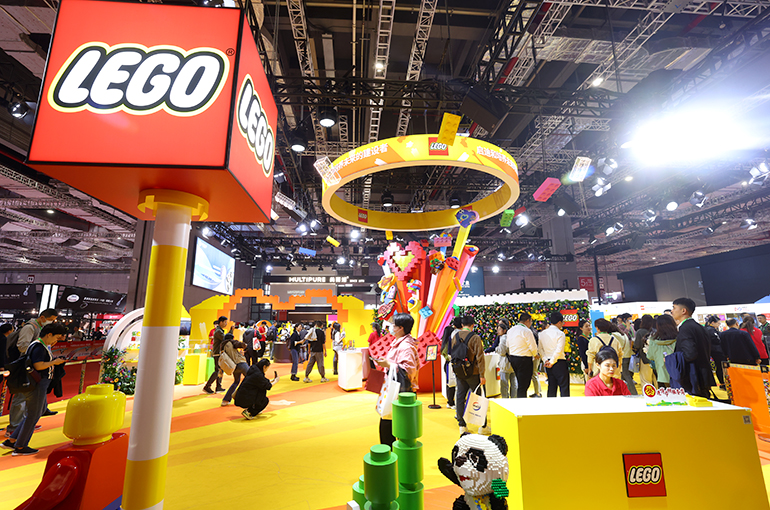
Lego Group's China business was the exception to the Danish toy giant's broad-based revenue growth in the first half, with the Chinese market "not growing much" and consumers there "quite reluctant to spend," Chief Executive Officer Niels Christiansen said.
“It is true that this year we see very broad-based growth basically across all market groups except in China,” Christiansen said on the Billund-based company’s earnings conference call yesterday. “We are impacted by the fact that that market isn't growing much.” Lego did not disclose separate revenue figures for China.
Lego's revenue rose 21 percent to a record DKK41.9 billion (USD6.5 billion) in the six months ended June 30 from a year earlier, or 26 percent at constant currency, according to its earnings report. Net profit surged 32 percent to DKK8.6 billion (USD1.3 billion), operating profit jumped 22 percent to DKK10.9 billion, and free cash flow was DKK2.1 billion.
Christiansen noted that Lego remains focused on long-term growth in China, citing the opening of the Legoland Shanghai Resort last year and continued investment in brand and stores. “The potential for us in China is big,” he said. “There’s a really big excitement about the Lego brand. We're very confident in that for the long term.”
He added that Lego has made "significant expansions" in Mexico, China, and Hungary, and is “very committed to the places we are.”
"We are very pleased with our strong start to 2026 and the excitement we see for the Lego brand," Christiansen stressed. "Our portfolio of products offers something for everyone, and culturally relevant brand experiences continue to drive demand across the globe.
"Our success in the market means we can maintain high investment levels in growth and sustainability for both the short and long term," he pointed out.
First-half consumer sales, which Lego treats as its main demand gauge, rose 22 percent year on year, against broader industry growth that Chief Financial Officer Jesper Andersen put at around 14 percent. The company also noted its market share grew in the period.
On the issue of cost pressures from oil price swings linked to the Middle East conflict, Andersen said Lego had managed the situation "very prudently," with no material impact in the first half. However, logistics and some input costs increased, he said, noting that "a little more cost increases" are expected in the second half.
Operated by Merlin Entertainments, Legoland Shanghai Resort is not included in Lego's consolidated financial report. The park, which marked its first anniversary last month, became the fastest Legoland resort worldwide to reach two million visitors.
Legoland Shanghai Resort has been "a very successful launch," Christiansen said. “It really shows us how the Lego brand resonates with children, with families, with adults in China.”
The park provides positive experiences for many people in the Shanghai area and allows Lego to keep building its brand, which is "positive for the brand," he added. Its success "doesn't kind of totally take away" from what he had said earlier about the market for such products in China not being in growth, and the longer term is "super exciting," he said.
Lego is "really happy that even in this environment, we can make these kind of" brand investments in China, Christiansen added.
Lego's approach in China to adult consumers, a segment the firm has grown over the past seven years, mirrors its global one, Christiansen said. The company is "leaning into a lot of really exciting partnerships which have interest for both kids and adults,” he said.
Lego’s adult portfolio will likely keep growing in China, he said, but declined to disclose what share of sales the segment accounts for, citing competitive reasons.
Lego launched more than 330 new products in the first half, including from its Speed Champions, Botanicals, Technic, Icons, and Star Wars series, while also partnering with Formula 1, the FIFA World Cup 2026, and KPop Demon Hunters. In addition, Ninjago, its longest-running homegrown intellectual property, celebrated its 15th anniversary with new sets, while the Lego Smart Play interactive platform has been used in Star Wars and Pokémon sets.
Lego opened 20 new branded stores in the period, bringing its total to 1,106 worldwide. It also spent DKK1.9 billion to buy 29 Lego and Legoland Discovery Centers from Merlin Entertainments, with these venues drawing about five million visitors a year.
In addition, Lego increased purchases of certified mass-balance and renewable materials used to make its toy bricks, while continuing its shift from plastic to paper-based packaging, targeting completion across all factories by next year. In June, the company began building its largest solar park at its Billund headquarters, with the 160,000 panels designed to generate 99 gigawatt-hours a year scheduled to go live next year.
Lego opened its Kornmarken Campus in Billund in June, while continuing construction on a new factory and distribution center in Virginia, alongside expansions in Mexico, China, and Hungary. The Kornmarken Campus is its first dedicated global manufacturing innovation center to develop, test, and scale new production technologies.
Source: Yicai Global
来源:Yicai Global
