



经济新闻
上海推出新型GW级天基计算网络项目 2026-09-15
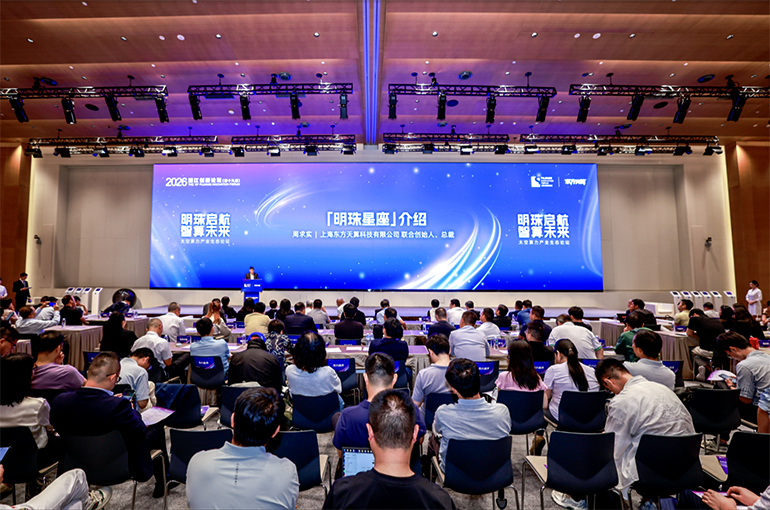
Shanghai has launched the "Pearl Constellation Project," aiming to shift part of computing capacity from ground infrastructure to low Earth orbit and build a gigawatt-class space-based computing constellation and a global computing network.
The Pearl Constellation Project was unveiled by Zhou Qiushi, co-founder and president of Orient Space Computing Technology, which will oversee the project, during the Pujiang Innovation Forum's Space Computing Industry Ecosystem Forum on Sept. 13.
Construction on the project will follow a phased roadmap, with in-orbit technical verification starting next year, Liu Jingjing, chief executive of Orient Space Computing, told Yicai. "The first phase focuses on engineering verification and iteration of core technologies."
Space-based computing refers to deploying computing resources on space platforms such as satellites to process large-scale data and deliver information services.
Orient Space Computing will conduct continuous in-orbit technical verification targeting domestic computing payloads, optical computing payloads, new energy systems, and other areas, Liu said, noting that it will verify key technical capabilities of the space-based computing infrastructure through different types of experimental satellites.
After completing phased technical verification, the Pearl Constellation Project will kick off the first batch of satellite deployment and constellation networking based on China's rocket launch capacity and mass satellite launch conditions, Liu pointed out. By 2030, it will gradually build a globally covered, space-ground coordinated and home-made space intelligent computing infrastructure and service network, Liu added.
The service models envisioned by Orient Space Computing include computing resource leasing, token-based billing for in-orbit model inference, and customized development of space-based intelligent computing centers for industry clients, Zhou said.
During the Space Computing Industry Ecosystem Forum, 27 supply chain partners of the Pearl Constellation Project signed agreements to jointly advance collaborative innovation in key links of constellation building, including computing chips, space energy, inter-satellite communication, satellite platforms, computing payloads, and software services. Partners include the Innovation Academy for Microsatellites of the Chinese Academy of Sciences, the Shanghai Institute of Space Power-Sources, the Shanghai Institute of Satellite Engineering, Alibaba Cloud, iFlytek, GCL Photoelectric, Jinko Solar, Trina Solar, Biren Technology, and Iluvatar CoreX.
The Pearl Constellation Project will rely on the Space Computing Laboratory of Shanghai Jiao Tong University and unite member entities of the Yangtze River Delta Space-Based Computing Innovation Consortium and more upcoming ecosystem partners to foster an innovation ecosystem featuring government support, industrial matching, and industry-university-research collaboration, Zhou noted.
In July, Shanghai rolled out the space computing constellation "Star Pivot Project" at the World Artificial Intelligence Conference. Led by Fudan University and StarPivot Space Computing Technology, the project seeks to perform in-orbit AI inference on remote sensing and meteorological sensing data.
The Star Pivot Project will be implemented in three phases: verification, commercial deployment, and long-term deployment, with a target of forming a constellation of 1,000 satellites.
Source: Yicai Global
