



经济新闻
上海会议探讨AI时代的数字化终身学习 2026-10-19
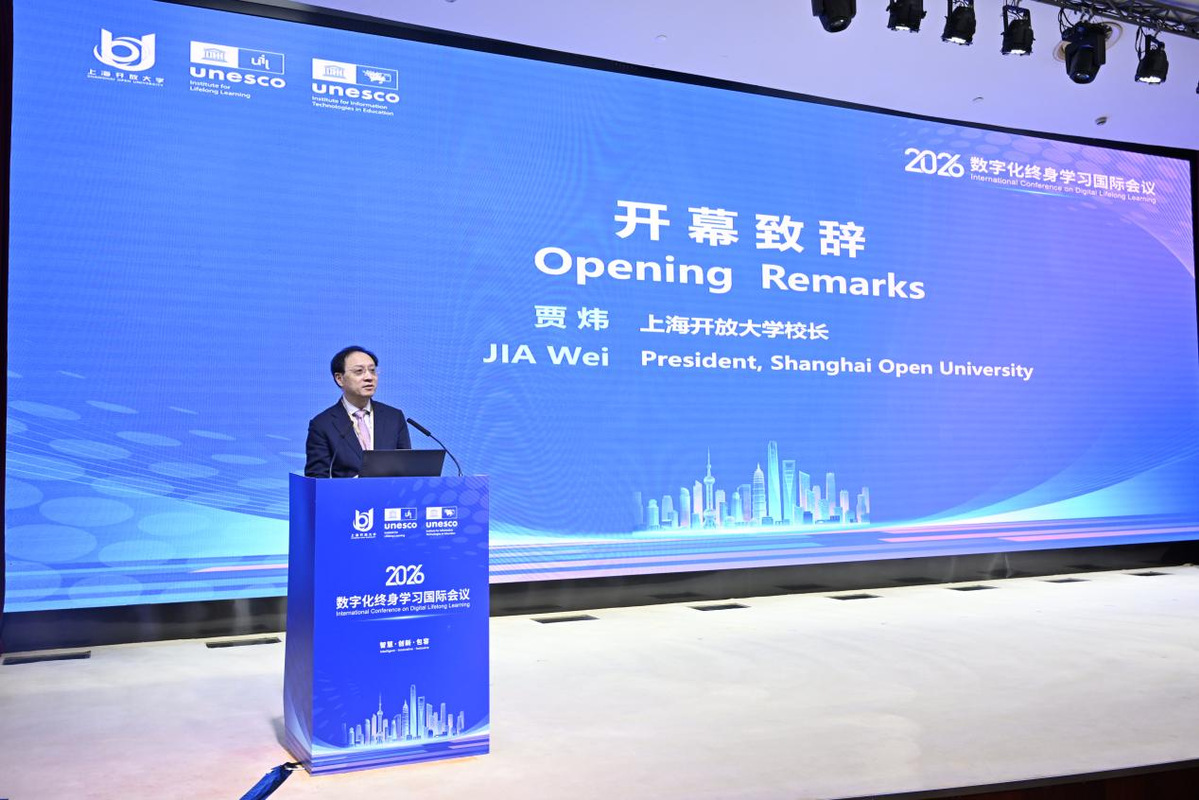
The 2026 International Conference on Digital Lifelong Learning, themed Intelligent, Innovative, Inclusive, wrapped up in Shanghai on Saturday.
The two-day event, co-hosted by Shanghai Open University and two UNESCO institutes, brought together education experts from multiple countries to discuss the transformation trends of lifelong learning amid the AI wave. They explored a fairer and more inclusive future for technology-enabled lifelong learning and advanced the deep integration of global experience with local practices.
Raul Valdes Cotera, senior programme coordinator at the UNESCO Institute for Lifelong Learning (UIL), noted that digital technologies have reshaped learning patterns, yet hundreds of millions of adults worldwide still lack basic literacy.
"Lifelong learning is not a luxury — it is a prerequisite for building an inclusive and sustainable society," he emphasized.
During the conference, the UNESCO Institute for Information Technologies in Education (IITE) and Shanghai Open University released the core outcomes of their 2025 to 2026 cooperation. Focusing on upgrading teachers' digital competencies and developing intelligent education tools, the deliverables included two analytical reports, four cutting-edge courses, four intelligent education tools, and two assessment guidelines. These resources cover the full teaching spectrum from literacy evaluation to course development and in-class support, providing systematic support for digital transformation in education.
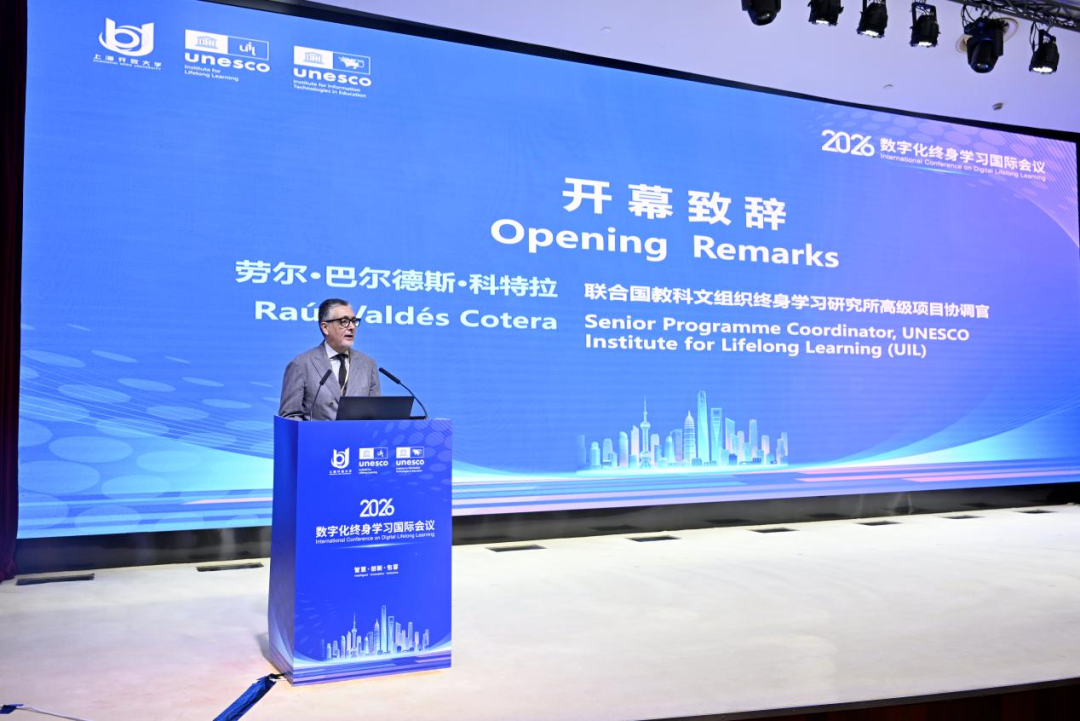
In the keynote session, Chinese and international experts discussed core issues around AI and lifelong learning. Jia Wei, President of Shanghai Open University, shared Shanghai's implementation framework for advancing AI literacy education, along with local practices such as the "One-Network Learning" platform, "15-minute community learning circles" and the "lifelong education credit bank". Experts reached a consensus: AI's core value in education is empowerment rather than replacement, and the essence of education always lies in nurturing human growth and thinking ability.
As one of the first Chinese cities to build a learning city, Shanghai has established a city-wide lifelong learning system. As a core hub, Shanghai Open University helped the city win the UNESCO Learning City Award.
Statistics show that 69.6 percent of surveyed seniors in Shanghai are willing to take AI learning courses, and 93.1 percent of surveyed teachers are open to AI training. Currently, the "One-Network Learning" platform hosts over 10,000 courses, and the first batch of short AI literacy courses is under development, with diversified programs continuously enriching public learning options.
For example, 71-year-old Shanghai retiree Fang Zigen started from scratch in an AI short drama program at Shanghai Open University. Now he can independently complete the full AI drama production workflow, and his low-budget work was selected for the Hong Kong International Short Film Festival. A piece by his classmate Chen Dongxia also entered two international film festivals.

Source: China Daily
