



经济新闻
上海时尚产业蓬勃发展 2026-10-21
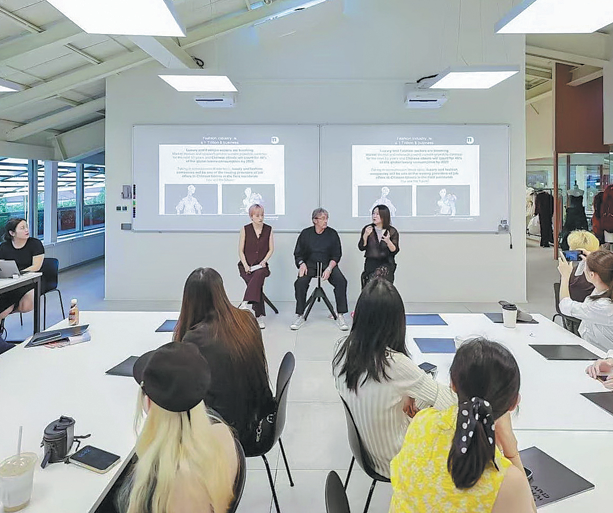
As China's fashion industry moves up the value chain, Shanghai is attracting growing numbers of aspiring designers and international students seeking to develop their skills in one of the world's most dynamic fashion markets.
The country's fashion consumption market is also expanding. The 2026 China Fashion Consumption Report — compiled by the Fashion Research Institute of China Cultural Media Group and its partners — estimates that China's fashion consumption market is worth around 3 trillion yuan ($449.1 billion), and projects it could exceed 3.5 trillion yuan by 2030. The report identifies changing consumer preferences, technological innovation and the growing importance of brand identity as key trends shaping the sector.
Against this backdrop, Italian fashion school Istituto Marangoni held an open class in Shanghai in September, highlighting the city's growing role in international fashion education.
"Shanghai is one of Asia's key fashion capitals," said Cheng Yingting, chief operating officer for China and Asia-Pacific at Istituto Marangoni and principal of its Shanghai campus. Cheng cited the city's cultural depth, rapidly developing artificial intelligence capabilities, mature e-commerce ecosystem and extensive fashion supply chain as factors that make it attractive to students and educators alike.
The school has seen a marked change in its student profile. The proportion of international students in its Shanghai programs has risen from 1 percent to nearly 40 percent this year, she said. The campus has more than 200 students in 2026, continuing a pattern of steady growth since it opened in 2013.
Istituto Marangoni operates a global network of fashion education campuses, including in Milan, Paris and London. Its Shanghai campus is its first center in Asia, reflecting the city's importance in the school's global network. The school offers courses in fashion design, fashion communication and image, and fashion business, combining creative training with industry-oriented skills.
For Cheng, the attraction goes beyond China's expanding consumer market. The country's fashion industry is undergoing a structural transformation, moving from its traditional strength in manufacturing toward greater emphasis on material innovation, craftsmanship and brand development.
Many factories that once focused mainly on original equipment manufacturing are now investing in fabric development and building their own brands. At the same time, independent Chinese designers can draw on an established industrial base to test ideas, develop materials and bring collections to market more quickly.
This combination of creativity and manufacturing capability is helping Chinese designers gain international visibility. Cheng cited Istituto Marangoni alumnus Chicco Mao, whose eponymous brand Chicco Mao has appeared on the official Milan Fashion Week calendar, as an example of homegrown talent reaching a worldwide audience.
The shift is also changing the skills required of fashion professionals. In addition to design ability, young talent must understand materials and supply chains, assess commercial opportunities and work across cultural boundaries, Cheng said.
Technology is becoming another important part of fashion education. Istituto Marangoni Shanghai incorporates digital tools and AI into its teaching while adapting course content to local industry needs. The aim is to help students draw inspiration from Chinese culture while preparing them to create and compete internationally.
The school's next step is to deepen cooperation with Chinese universities. In 2022, it established a Sino-foreign joint college with Zhejiang Sci-Tech University and its Paris School of Fashion. Cheng said the school hopes to expand such partnerships over the next two to three years, combining its international design and industry networks with Chinese universities' strengths in research, AI and digital technologies.
The broader market outlook reinforces the importance of talent development. The 2026 report also highlights a shift in consumer priorities, with shoppers increasingly weighing price alongside functionality and quality. It notes that AI is becoming part of the wider consumer journey, from product discovery and virtual try-ons to content and purchasing decisions. These developments are creating demand for professionals who can combine design skills with an understanding of technology, business and consumer behavior.
Li Jiaqi, a director at Shanghai-based China Insights Consultancy, said Shanghai attracts fashion students through its international education resources, mature fashion supply chain and diverse industry opportunities. Looking ahead, China's fashion market is shifting from rapid expansion toward quality, personalization and cultural identity.
As competition increasingly depends on distinctive design, technology and brand identity, fashion education is becoming a bridge between China's industrial capabilities and global creative markets. For Shanghai, attracting students from China and abroad is part of a wider evolution from a major fashion consumption center into a place where talent can learn, collaborate and develop ideas for a global audience.
"Growth opportunities include premium and everyday applications of Chinese-style aesthetics, functional and multi-scenario apparel, AI-enabled design and immersive retail experiences. Sustainable fashion — including secondhand luxury and recycled materials — is also emerging as a potential growth area," Li said.
Source: China Daily
