



经济新闻
前央行行长周小川:中国应保留政策工具以应对AI投资风险 2026-10-22
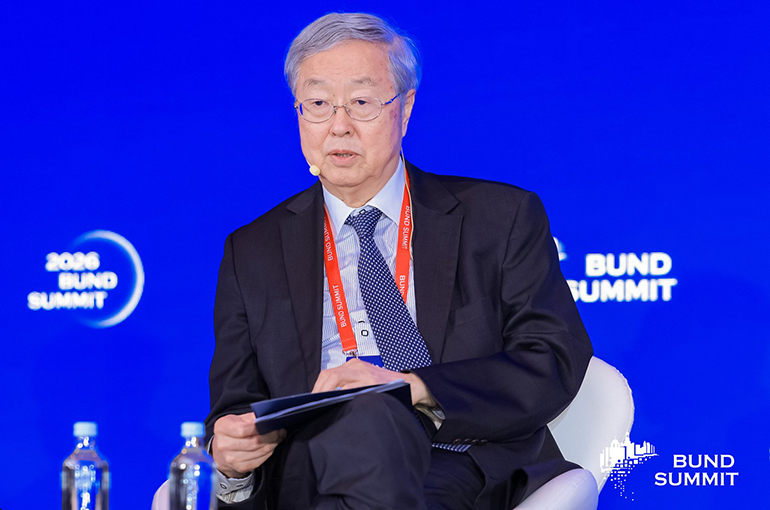
China should conduct research and draw up contingency plans, keeping relevant policy tools ready to deal with the turmoil and impact caused by huge capital flows into the artificial intelligence industry, according to Zhou Xiaochuan, former governor of the country’s central bank.
Several major directions can help apply AI and raise productivity, but they also carry risks, Zhou said at a forum during the four-day Bund Summit ending in Shanghai on October 22. Much investment is flowing into data center construction, but it is questionable to what extent AI models and applications will depend on data centers’ computing power in the future, he added.
Technological evolution will undoubtedly have some investment failures, while others will succeed, he noted. But given the sheer amount of money flowing into AI and its infrastructure, a small failure could trigger financial turmoil and even a crisis, he explained. That would call for large-scale action to support the economy and bail out some financial institutions.
“The financial sector is investing heavily in AI-related areas,” Zhou said. He then divided such AI-related areas into three categories: AI models, along with the computing power, data centers, and other resources used for training, AI applications, which China is paying more attention to, and industries that support AI, such as semiconductors, electricity, and liquid cooling.
“We believe that investing in these three areas is safe because no matter how AI develops, it needs water and electricity, and investment related to climate change also requires more energy and water supply,” he pointed out.
Beyond the risk of technological evolution, Zhou also stressed that the global supply-demand balance and industrial structures will change dramatically as AI develops.
Financial practitioners and scholars should focus on letting the price mechanism play a major role in coping with changes in the global balance, Zhou noted. They should not rely too heavily on administrative measures to guard against the impact, but instead let price adjustments reflect the structural changes underway and the responses adopted adapt to the new structure, he added.
Source: Yicai Global
