



今日上海
青铜之光依旧闪耀 - 2025年12月04日
Bronzewares still shine bright
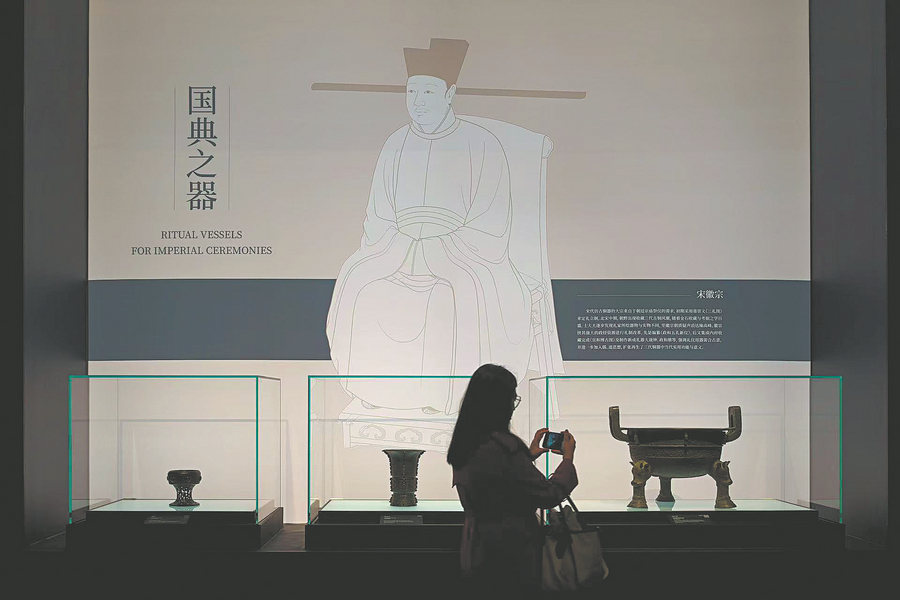 Emperor Huizong of the Song Dynasty is highlighted for reforming the ritual system and revival of ancient Chinese bronzes, at the exhibition, Recasting the Past: The Art of Chinese Bronzes, 1100-1900, at Shanghai Museum East from Nov 12 to March 16.
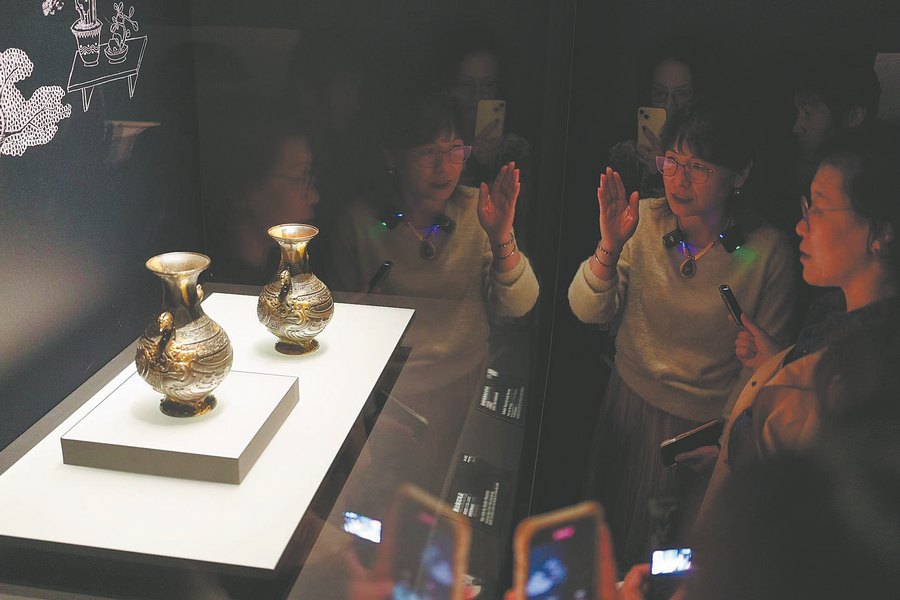
 Following the successful exhibition at the Metropolitan Museum of Art (The Met) in New York, Recasting the Past: The Art of Chinese Bronzes, 1100-1900 opened at the Shanghai Museum on Nov 11, showcasing approximately 178 pieces or sets of artifacts, including dozens that have never been displayed to the public.
The exhibition, jointly hosted by the Shanghai Museum and The Met, was held at the New York museum from Feb 28 to Sept 28. It featured artworks of 15 collections from Asia, Europe and the United States, many of which have never been displayed.
Paintings, ceramics and works in other media provided context for the bronzes' use and symbolic resonance in the modern age.
In Shanghai, the exhibition features new scenography and selected exhibits from the Shanghai Museum collection. It will be held at Shanghai Museum East until March 16.
The exhibition is of the most epic scale of later Chinese bronzes to be held in recent years, both domestically and internationally, according to Wei Hsin Ying, a research curator in the bronze department of the Shanghai Museum and the curator of the Shanghai exhibition.
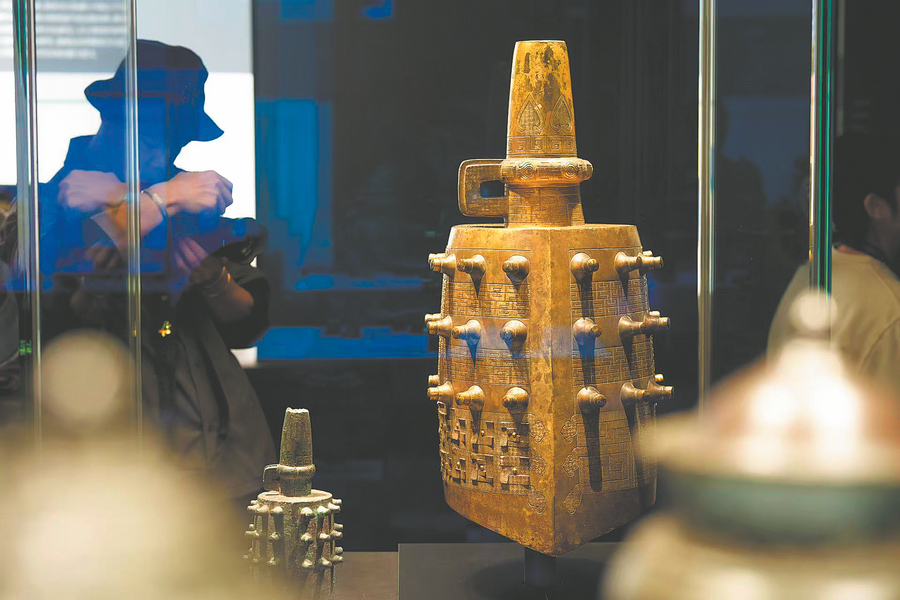 Ritual Bell with Archaistic Design, made in 1761, from The Metropolitan Museum of Art.
 Bronze used as ritual vessels hit its peak era during the three dynasties: Xia (c. 21st century-16th century BC), Shang (c. 16th century-11th century BC) and Zhou (c. 11th century-256 BC), she says. It gradually faded from the limelight afterward, until the Song Dynasty (960-1279), when imitations of ancient ritual vessels began to appear.
Bronzeware continued to enjoy great popularity throughout the subsequent Yuan (1271-1368), Ming (1368-1644) and Qing (1644-1911) dynasties, undergoing a functional transformation as trends changed, Wei observes.
Their placement gradually shifted from temples and palaces to the studies of the literati and civilian households.
Meanwhile, bronzeware craftsmanship became increasingly refined. Artisans drew on a wide range of influences to create more diverse and eclectic vessel styles, evolving from simple and solemn to exquisite and ornate, ushering in a new era of bronze art while reflecting society's cultural trends.
For a long time, these latter-period bronze artifacts were often labeled as archaistic and received relatively little attention from the academic world.
In recent years, with the successive publication of archaeological discoveries, numerous dated artifacts have been found in collections around the world. The academic community has conducted in-depth research, leading to a progressively mature understanding of archaic bronze vessels.
"No single museum can fully present the complete story of bronze in China, so we need an exhibition like this, that brings together artifacts from all over the world, centering on the outstanding collections of the Shanghai Museum and The Met," says Lu Pengliang, curator of Chinese art at The Met.
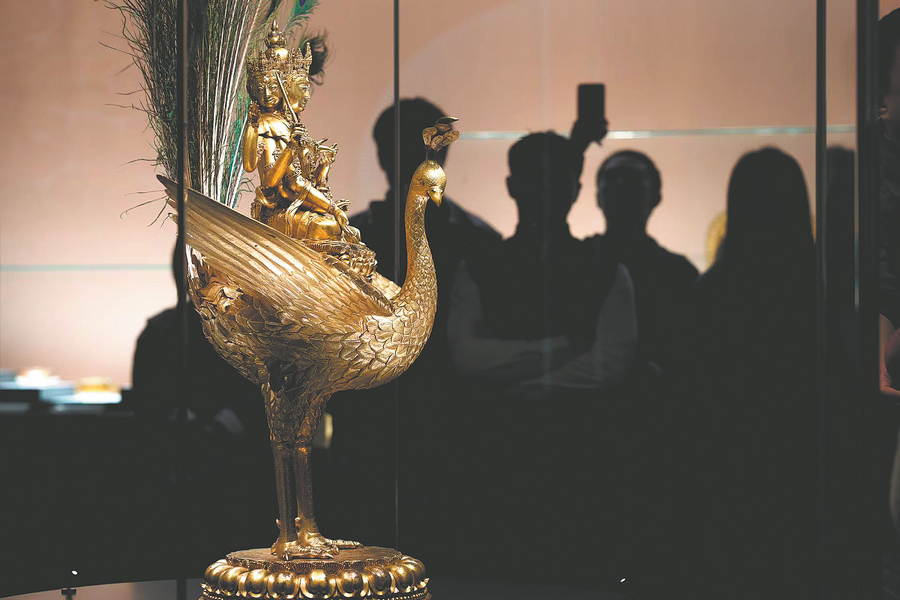 Mahamayuri on Peacock made in the 15th century.
 "By focusing on underrepresented, or maybe even in certain parts, neglected areas of outstanding artistic achievements and artistry, we are not only sharing something new, but are making sure that this art gets the proper acknowledgment it deserves," says Max Hollein, director and CEO of The Met, at the opening of the exhibition in Shanghai.
The exhibition is arranged in four thematic parts. The first begins with imperial bronzes from the reign of two emperors, Huizong of Song and Emperor Qianlong of Qing, who were influential reformers of the ritual system. It then moves on to objects used in memorial ceremonies for ancient sages in local counties and sacrificial rites at ancestral clan temples.
A series of bronze bells is highlighted in this part. Four belonged to a set of ritual musical instruments, originally named Dasheng, that were cast at the order of Huizong in 1105, following the style of the Spring and Autumn Period (770-476 BC).
The ancient Bell of Zhejian, made in the same period, is displayed alongside an archaistic ritual bell called "Gu Xi", which was made in 1761. The Bell of Zhejian comes from the Shanghai Museum, and Gu Xi from The Met's collection. Together, they tell of the evolution of ritualistic bells in China's imperial history spanning millennia.
The second part explores how the popularity of "retro" led to the commercialization of bronze production from the Southern Song (1127-1279) to Ming dynasties. Master artisans emerged in this period, creating vessel forms that combined ancient aesthetics with new functions, such as censers, vases and ewers.
Part three features the Yongle-Xuande gilt-bronze statuary and Xuande censers. Recognized as outstanding representatives of Ming-Dynasty arts and crafts, these artifacts have had a profound and far-reaching influence on later ages.
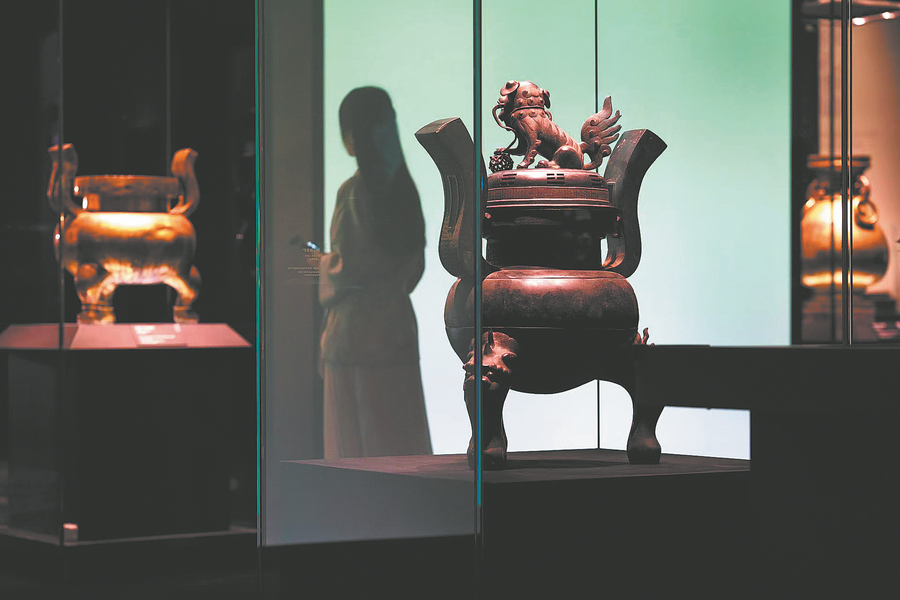 Censer with a Lion-shaped Lid, Ming Dynasty (1368-1644), from Shanghai Museum.
 The final part explains how scholars and aesthetes transformed archaistic bronzes from revered vessels of the state into elegant studio furnishings for the leisurely appreciation of antiquity
During the exhibition in New York, over 300,000 visitors went to The Met to see the show, Hollein says. "It was a revelation for audiences in regard to the deep understanding of more recent Chinese bronzes, but also a celebration of the great collaboration between the Shanghai Museum and The Metropolitan Museum.
Chu Xiaobo, director of the Shanghai Museum, says the exhibition marks another milestone in the collaboration between the two institutions that dates back to 1980, when the Shanghai Museum participated in an exhibition of Chinese bronze at The Met.
The Shanghai Museum and The Met are planning further collaborations, Hollein says. "We already have one (project) framed up, and we will announce something very soon, with the Shanghai Museum."
 Wei Hsin Ying, curator of Chinese Bronzes at Shanghai Museum, guides a media tour of the exhibition.
Source: China Daily
