


今日上海
未来5年,上海的外资企业看到了越来越多的机会和巨大的潜力 - 2025年12月23日
Foreign businesses in Shanghai see rising opportunities, vast potential in next 5 years
As the 14th Five-Year Plan (2021-2025) draws to a close, Shanghai has marked historic milestones in economic resilience, green transition and technological innovation, cementing its role as a hub for China's economic and industrial development as it moves into the 15th Five-Year Plan (2026-2030).
As of the end of this September, Shanghai's cumulative actual use of foreign capital during the 14th Five-Year Plan period reached US$100.33 billion.
The share of foreign investment flowing into high-tech industries has risen from 23 percent during the 13th Five-Year Plan (2016-2020) period to 33 percent by the end of 2025.
In high-tech manufacturing, which includes integrated circuits, biopharmaceuticals and artificial intelligence, foreign investment accounts for 52 percent of all manufacturing-related foreign direct investment.
As Shanghai's economy stabilizes and grows, multinational companies have driven high-quality growth and innovation in the city.
Shanghai's foreign investment performance is impressive: 4,764 new foreign-invested enterprises were established in the first three quarters of this year, a year-on-year increase of 5.5 percent. This year, the city recognized 44 new regional headquarters, bringing the total to 1,060.
These expansions in advanced manufacturing and R&D reflect global companies' confidence, as foreign businesses eye increasing opportunities across multiple sectors in the 15th Five-Year Plan period.
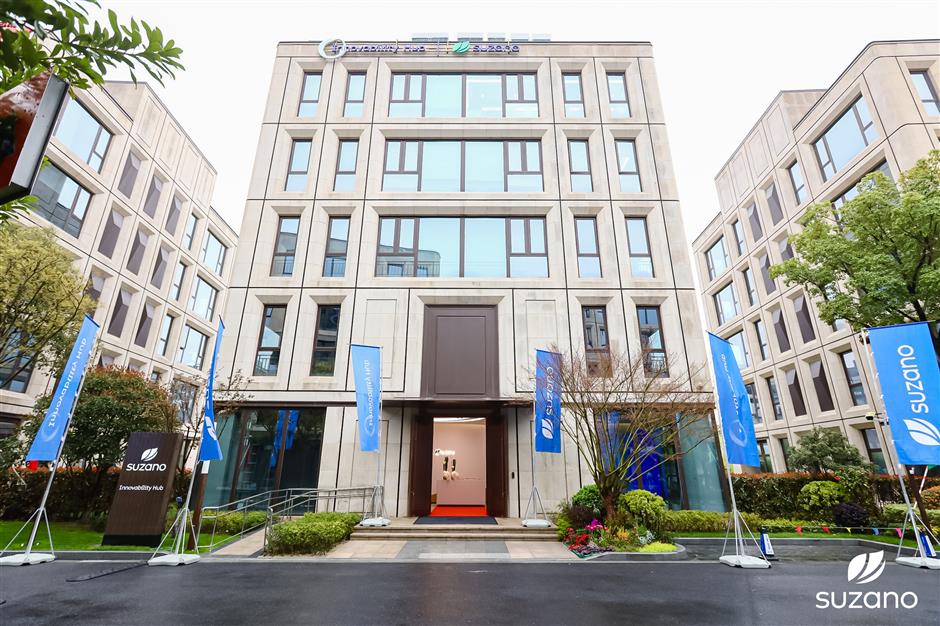
Suzano is steadily expanding its domestic footprint.
Suzano
Pablo Machado, Suzano's global executive vice president for strategy and Asia business, expects Shanghai's 15th Five-Year Plan to offer clearer policy guidance on "green development" and "new quality productive forces," aligning with the company's sustainability-driven growth strategy.
The Brazilian bio-based solutions developer, which entered China in the 1980s, counts China as its largest pulp export market.
Machado said China's push for high-standard opening-up and wider foreign investment access has strengthened its confidence in deepening localisation across innovation, financing, talent, procurement and international trade.
Suzano has seen solid growth in China over the past five years, with local operations supplying products and technology while supporting Chinese exports. Its China-based procurement hub now sources and exports equipment, components, raw materials, inputs and high-end technologies to its global operations.
The company has steadily expanded its Shanghai footprint, opening its sixth global technology center, the Asia Innovability Hub, in 2023 with an investment of over US$10 million. In 2024, it established a partnership in the Lingang area, generating more than US$1 billion in sales revenue in China. A Shanghai tech hub launched in 2025 focuses on sourcing high-end technologies, including advanced manufacturing, robotics, AI and 5G for use across Suzano's China and global operations.
Shanghai's business environment underpins Suzano's ongoing investment, offering R&D incentives and support for foreign companies navigating China's competitive market.
"The Shanghai government has fostered a highly favorable business environment for foreign-funded enterprises, and the city's highly educated and highly skilled workforce ensures a continuous supply of talent necessary for industrial development," Machado said.
During the 8th China International Import Expo (CIIE), Suzano unveiled "Jinyu", the Chinese brand for Suzano Biopulp, which signals a major step in its localization strategy.
In the next three to five years, it hopes to continuously deeply localize products, and upgrade value chain cooperation, which are the fundamental drivers for Suzano's high-quality growth in China.
"We will remain customer-focused, fully utilizing our unique innovation ecosystem in China, and engaging in extensive collaboration with local industry partners, academia, and government institutions," Machado said. "We are committed to becoming an active participant in the 'modernized industrial system' China is building."
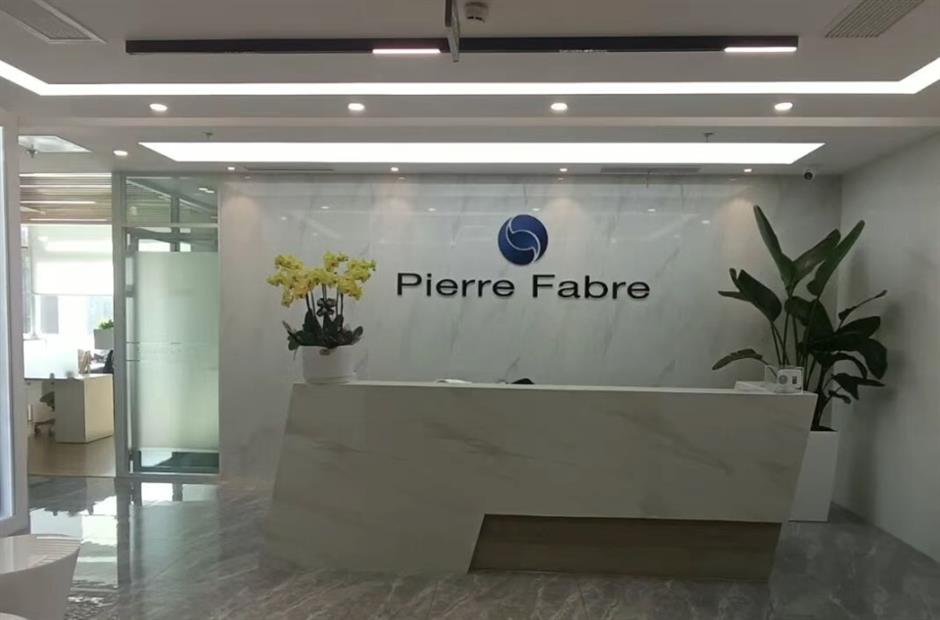
Pierre Fabre has three subsidiaries in China.
Pierre Fabre
Pierre Fabre is one of Europe's leading pharmaceutical companies, headquartered in southwestern France and employs about 11,000 employees worldwide.
In China, Pierre Fabre has invested in and established three subsidiaries spanning healthcare technology and cosmetic trading. In 2024, one subsidiary was approved as Pierre Fabre's multinational regional headquarters for China in Shanghai, creating a platform for collaboration across its medical technology and cosmetic R&D projects in the city.
In September, a group of senior executives visited China, holding nearly 40 one-on-one pipeline discussions and visiting nine pharmaceutical technology companies across Shanghai, Zhejiang and Jiangsu, as the company seeks to position itself for the next phase of growth in the Chinese market.
"China is undoubtedly a value high ground for European companies," said Zheng Hongshu, senior director of Asia-Pacific Market Access & Health Economics and senior director of Business Development for China at Pierre Fabre Pharmaceuticals (China).
She noted that the goals and policy measures outlined for China's 15th Five-Year Plan period present a significant opportunity for the company.
During China's 14th Five-Year Plan period, the pharmaceutical sector was designated a strategic industry. Against that backdrop, Pierre Fabre inaugurated its China Innovation & Development Center in Pudong, Shanghai, marking a key milestone in its R&D strategy in the country. Over the same period, the company's China subsidiaries grew into major international operations in dermatological cosmetics and pharmaceuticals, with the Chinese market ranking second globally by value contribution, after France.
Pierre Fabre expects Shanghai to continue easing access and approval processes for innovative drugs, accelerate regulatory and service innovations for urgently needed therapies and expand cooperation in advanced technologies during the 15th Five-Year Plan period.
"For pharmaceutical companies like us, this is undoubtedly an unprecedented development opportunity, but it also places higher demands and expectations on us," Zheng said.
Pierre Fabre's development plans for the next five years will align with national policy priorities and Shanghai's industrial planning, accelerating collaboration and new-drug R&D to benefit both patients and the company.
Pierre Fabre also is stepping up collaboration with local Shanghai drug technology institutions and research-oriented hospitals.
Zheng said Pierre Fabre's approach is to focus on technological innovation as its primary role within Shanghai's industrial ecosystem. Partnering with leading local R&D institutions is a core strategy for achieving long-term, sustainable development in the Chinese market.
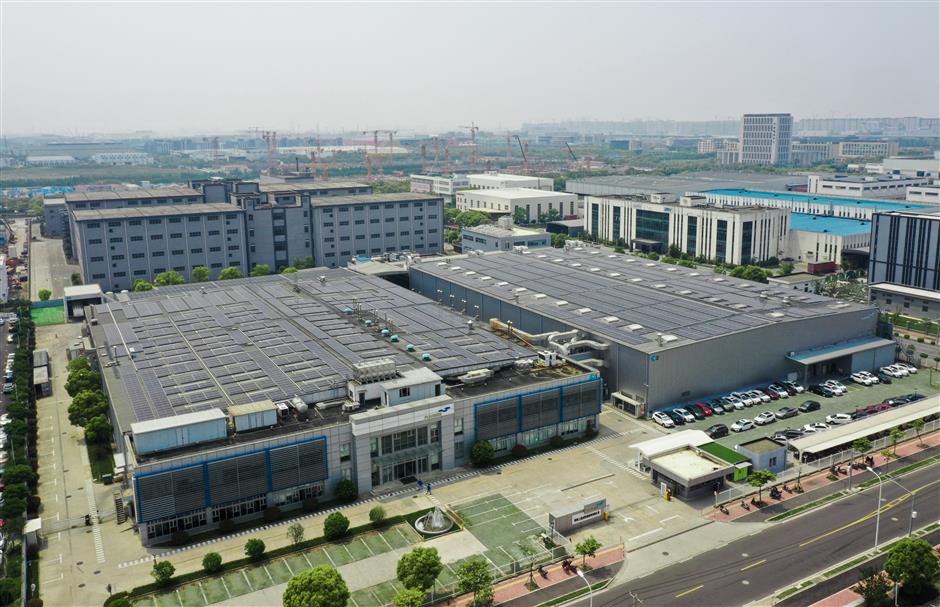
Plansee's Lingang factory
Plansee
Austria-headquartered Plansee Group, a leading powder metallurgy company, established Plansee Shanghai High Performance Materials Ltd in 2013, specializing in refractory metals, alloys and composites.
The first phase of its Lingang factory covers 31,600 square meters. The second-phase expansion, completed in 2019, added more than 20,000 square meters. Construction on the third phase began in 2024 and has been in trial operation since October 2025.
The group launched a new semiconductor material and key component production line in Lingang in early 2024, boosting annual production capacity by 30 percent.
At present, its products mainly serve domestic leading semiconductor companies, including semiconductor equipment, chip manufacturing and advanced semiconductor packaging.
Richard Cheung, managing director of Plansee Shanghai, said the Lingang site was chosen for its strategic location in the Yangtze River Delta region.
"With convenient transportation and a complete industrial chain, it is particularly suitable for high-end manufacturing and import and export businesses. Lingang has gathered many advanced companies in the semiconductor and new energy sectors, which is conducive for companies to get closer to customers and achieve collaborative innovation."
The Lingang Special Area has also offered strong policy support, he said. Local officials understand industry needs and provides comprehensive services, including fast-track project approvals, which helped the firm accelerate its 2024 production line upgrade.
"Shanghai is the gateway to the Chinese market and a platform for innovation and cooperation. In the future, we hope to fully leverage Shanghai's technological innovation advantages and open policies to further deepen our localization strategy and expand influence in the field of high-end materials," Cheung said. "We look forward to actively participating in building Shanghai into a global technological innovation center."
Between 2021 and 2025, the group increased production capacity in Shanghai by 30 percent, with its customer base rising 50 percent. It also established long-term partnerships with several leading companies.
It expects Shanghai to strengthen policy support during the 15th Five-Year Plan in areas such as high-end materials and green manufacturing, boosting R&D and industrialization of new products.
Cheung said the group plans to capitalize on global semiconductor industry upgrades and China's "dual carbon" goals, aiming to increase R&D investment by an average of 20 percent annually over the next five years.
Under Plansee's plans, annual output of high-end materials is expected to double by 2030 while achieving carbon peak.
Source: City News Service
