



今日上海
2025年,上海首个门店热潮将面临真正的考验 - 2026年01月05日
Shanghai's first-store boom faces its real test in 2025
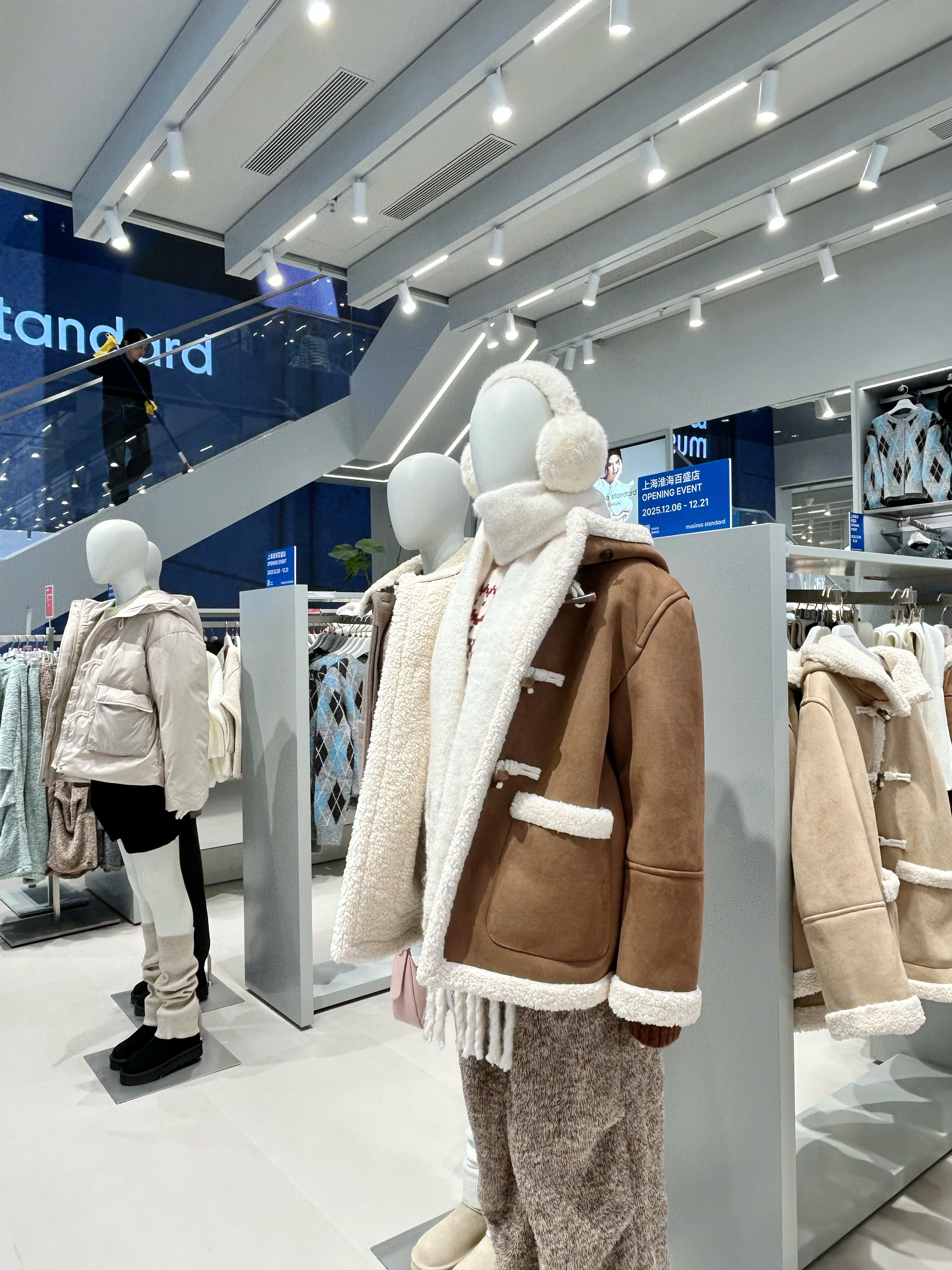
In the past year, Shanghai's debut economy has been thriving. Even at the end of 2025, new flagship stores continue to make their mark in the city, such as the opening of Musinsa Standard's first international flagship on Huaihai Road.
The arrival of Musinsa Standard in Shanghai is a reflection of the strong growth in the city's consumer market throughout the year. According to data from the Shanghai Statistics Bureau, the total retail sales of social consumer goods in October 2025 increased by 8.6 percent year-on-year, while the cumulative growth from January to October was 4.8 percent. This represents a 0.5 percentage point increase from the growth rate in the first three quarters.
A Rising Global Launch Hub
The rapid development of the debut economy in Shanghai has garnered widespread attention, and its success can be attributed to two main factors. On one hand, it serves as a crucial tool for boosting consumption. The introduction of debut stores, exhibitions, performances and product launches draws attention to new products and services, stimulating consumer interest and driving sales.
An increasing number of internationally renowned enterprises and brands are choosing Shanghai as the stage for their global debut.
This is not only because of Shanghai's robust economic foundation, open international outlook, and deep-rooted commercial tradition, but also because of its market-oriented, legal and internationalized environment, along with its long-term, stable, open and predictable development prospects.
Moreover, Shanghai has implemented a series of practical policies and measures to promote the debut economy, offering substantial financial support to high-quality debut stores, making it an attractive destination for major brands.
Shanghai Now the 'First Stop' for Entering the China Market... By the Numbers
The city is quickly becoming the "first stop" for international brands entering China. Here are some pull figures to digest:
From January to October 2025 Shanghai has opened:
• 848 debut stores, including:
•498 debut restaurants
•275 debut retail stores
Among these, 13 global and Asian flagship stores and 134 national and Chinese mainland debuts accounted for a combined 17.3 percent, with brand origins spanning the US, France, Italy, the UK, South Korea, Germany, and more. The growth of debut economy is providing vigorous momentum for Shanghai's development as an international consumption center.

Vibrant Shopping Districts Boosting the Debut Economy
Shanghai is a "battleground for global trends," where brands from around the world compete, and it serves as a fashion trendsetter for young consumers in China and even across Asia.
Many brands recognize Shanghai's vibrant consumer culture and global influence, choosing it as the location for their first overseas stores. Especially in Shanghai's core commercial districts, with their prime locations and convenient transportation, they have become the focal points of competition for many international luxury brands.
The head of research for Greater China at Cushman & Wakefield told China Business Journal: "As a key source of Shanghai's debut economy, the city has long aimed to become a global platform for new product launches, offering a wide stage and huge market potential for both domestic and international brands. For multinational corporations, opening their debut store in Shanghai allows them to quickly enter the Chinese market, test new products, and build brand awareness. In practice, debut activities have introduced numerous new products, business models and innovative concepts, injecting strong vitality into Shanghai's commercial environment and consumer appeal."
From an economic perspective, debut stores activate latent demand through the novelty effect, improve supply-side efficiency, and create synergies among clusters of commercial areas, thereby stimulating consumption. "The debut economy not only generates new consumption but also redistributes existing demand. It stimulates consumers' desire for additional purchases through limited-edition products and unique services, while drawing shoppers from traditional commercial districts to emerging, trend-driven spaces," said Liu Chunsheng (刘春生), associate professor at the Central University of Finance and Economics, quoted by China Business Journal.
The rapid expansion of Shanghai's debut economy is also accelerating growth in the city's commercial real estate sector.
Nanjing Road W. – one of Shanghai's premier shopping and commercial corridors – is a focal point where the city's cultural heritage and historical memory converge. Hang Lung Properties has announced a partnership with Shanghai Jiubai (Group) Co Ltd to operate a commercial project at 1038 Nanjing Road W., further strengthening this billion-yuan commercial district.
According to reports from JLL, demand for flagship and concept stores remained robust in the third quarter, driven by emerging consumption trends in sectors such as sportswear, designer toys, pet products and consumer electronics. The vacancy rate in Shanghai's core commercial districts declined by 0.8 percentage points quarter-on-quarter to 8.8 percent, supported by sustained demand from brands seeking prime retail locations.
Quality and Experience Drive Consumer Trends
The development of Shanghai's debut economy also reflects the growing demand for a higher quality of life.
As residents' income levels rise, consumer preferences have shifted from "having it" to "how good it is," with quality consumption becoming mainstream. The debut economy, through introducing premium brands, provides high-quality products and services that meet consumers' pursuit of better living standards.
As the consumer model shifts from "buying products" to "buying experiences," there is a profound transformation in the way people consume. The debut economy focuses on uniqueness and experience, offering customized and personalized products and services through debut exhibitions and performances to meet diverse consumer needs.
Different industries are also undergoing changes driven by debut economy initiatives. For example, we have previously analyzed the huge potential in Shanghai's pet market and the emergence of the city's "hobby obsession mode" in the anime sector. Furthermore, debut economy initiatives made notable appearances at the 2025 China International Import Expo (CIIE).
Cooling Hype and Strategic Retreats
However, like any coin, there are two sides. In the market competition, being the first to debut symbolizes strength and exclusivity. The debut economy is gradually becoming an important indicator of regional economic strength and business environment. While achieving a debut is challenging, maintaining it is even harder. The key lies in providing high-quality services and continuous support post-launch. This is why some stores have closed over the past year, as discussed in our article "Lessons from Luxury's F&B Experiments."
Mardi Mercredi: Caught in an Awkward Middle Ground
In November, many consumers were taken by surprise when South Korean fashion label Mardi Mercredi announced the closure of all its stores in China – less than two years after opening its first location in Shanghai. The abrupt exit highlights the increasing difficulty for mid-range foreign fashion brands to establish sustainable brick-and-mortar operations in China's highly competitive retail market.
Since September, stores in cities including Beijing, Shanghai, Changsha, Shenyang and Wenzhou have been clearing inventory through steep discounts, signaling a controlled but decisive withdrawal. According to Jiemian News, the brand's China distributor, Mantova, described the closures as part of an internal optimization of its brand portfolio, with resources set to shift toward newer labels such as Raive and Rest & Recreation. This reflects a broader industry trend in which distributors streamline operations to focus on brands with stronger growth potential or clearer market positioning.
Mardi Mercredi's retreat also underscores structural pressures facing offline retail in China, including rising rents in core commercial districts, intensifying competition from domestic designer brands, and the growing dominance of online and social-commerce platforms. While the brand has shut down its physical stores and official mini-program, its continued presence on platforms such as Tmall, Douyin and Xiaohongshu suggests a strategic pivot toward lower-cost, traffic-driven digital channels rather than a complete exit from the Chinese market.
Founded in 2018 by a Korean designer and his wife, Mardi Mercredi takes its name from the French words for Tuesday and Wednesday – an early hint at the brand's carefully curated nonchalance. Its look was easy, Paris-adjacent, and instantly legible: relaxed silhouettes, soft colors, and a daisy motif that felt made for Instagram.
In China, the formula worked – at first. Store openings drew long queues, logo T-shirts and sweatshirts went viral, and the daisy quickly became shorthand for a certain kind of young, style-aware consumer who wanted effortlessness without obscurity.
But effortlessness, it turned out, wasn't inexpensive. Mardi Mercredi's most recognizable designs – blooming daisies, cartoon dachshunds – sat comfortably below the 1,000-yuan (US$143) mark, yet rarely felt like casual purchases. In practice, two items at checkout could easily tip a bill past four figures, nudging the brand into an awkward middle ground: not luxury, but no longer impulse-friendly either.
That tension became harder to sustain as offline costs climbed. In China's prime commercial districts, rent continued to rise while foot traffic became less predictable, squeezing productivity just as competition intensified. Against that backdrop – and alongside internal shifts in brand strategy – the retreat from physical retail began to look less like a surprise and more like an inevitability.
In a market that rewards either scale or sharp differentiation, Mardi Mercredi found itself caught somewhere in between.
Kura Sushi: High Costs, Mixed Reviews and Localization Challenges
Coincidentally, Kura Sushi, Japan's second-largest conveyor-belt sushi chain, followed a similar trajectory. Its Shanghai debut store – opened just two years ago at Longmont Shopping Mall in Zhongshan Park – closed on June 30. The brand's two other Shanghai locations, at Metro City and Lalaport Jinqiao, have since also gone dark.
At the outset, the appeal was unmistakable. The first store drew long lines, selling not just sushi but a meticulously replicated Japanese dining experience. The interiors, staff uniforms, service rituals, conveyor-belt system, ordering process – even the protective lids covering each plate – were near carbon copies of its Japan outlets, down to the smallest detail.
Localization came cautiously. After identifying salmon as the undisputed favorite among Chinese diners, Kura introduced a Shanghai-exclusive item: lightly seared salmon sushi. It was a modest adjustment, thoughtful but restrained.
Yet authenticity, much like novelty, has a shelf life. As operating costs rose and foot traffic became harder to convert into repeat visits, the precision of the transplant proved insufficient on its own. In a market that increasingly rewards either aggressive localization or overwhelming scale, faithful replication – however charming – was not enough to keep the conveyor belt moving.
Everything seemed to be going well, yet few people may still remember that Kura once aimed to open 100 stores on the Chinese mainland by 2033. Back then, many netizens were already concerned, wondering if the target was "a bit too optimistic – maybe even overconfident."
According to Japan-China Business News, financial reports from Kura Sushi Asia tell a clearer story:
- 2023 Shanghai revenue: 180 million yuan (+143%)
- 2023 net loss: 155 million yuan
- 2024 Q1 revenue: 39 million yuan (-21%)
- 2024 Q1 net loss: 61 million yuan (+133%)
Online comments frequently cite two reasons for its struggles:
- "Not worth the price" – taste failing to justify cost
- Weak marketing and lack of local engagement
Prices were a major concern: per-plate pricing in Shanghai was nearly double that of Japan. Meanwhile, local sushi brands have become highly competitive, making survival difficult for Kura's high-cost yet underwhelming experience.
EHB: Sustainability Challenges
Norway's three-Michelin-star restaurant Maaemo closed its Shanghai outpost, EHB, on September 28. Opened in 2023, the restaurant – Maaemo's first overseas branch – was founded by chef Esben Holmboe Bang in partnership with Holiland and Black Swan executive president Luo Hao, located in a three-story heritage villa on Dongping Road.
The venue fused classic Shanghai-style architecture with Nordic minimalism. In 2024, it earned one Michelin star and its head chef, Viviane Mello, was awarded the Young Chef Award.
But with a price tag nearing 10,000 yuan per person at launch, the restaurant shocked even Shanghai's high-end dining scene. Despite slight price reductions, business remained weak and reviews described the flavor as unimpressive. After just over two years, its closure came as little surprise.
EHB's exit shows that even with strong branding and premium experiences, high-end restaurants face sustainability challenges under high operating costs, fast-changing consumer tastes and intense competition.
Aēsop: Rent, Productivity and Strategic Overhaul
Australian premium personal-care brand Aēsop opened its first Chinese mainland store on Shanghai's Dongping Road in November 2022. The location – known for its leafy streets, historic residences and understated elegance – was a natural fit for Aēsop's long-standing retail philosophy: embedding stores within neighborhoods that reflect a city's cultural memory rather than its commercial intensity.
Yet less than two years later, the store closed on May 10, officially citing an "expired lease." While the explanation was procedural, the closure highlighted a deeper tension between high-rent, low-traffic boutique streets and the productivity expectations of a rapidly scaling global brand.
Just one month later, Aēsop unveiled its second Chinese mainland store in Shanghai's Xintiandi, housed within a restored shikumen (stone-gated) lane. The move signaled a strategic recalibration rather than a retreat. Compared with Dongping Road, Xintiandi offers a more mature commercial ecosystem – combining heritage architecture with consistently high foot traffic, stronger tourist flows and proven spending power – allowing Aēsop to preserve its aesthetic identity while improving store efficiency.
This shift coincided with a major change in ownership. In April 2023, L'Oréal Group acquired Aēsop from Natura & Co for US$2.525 billion, following a high-profile bidding process that included Shiseido, LVMH and L'Occitane. The deal marked the largest acquisition in L'Oréal's history and placed Aēsop within a portfolio where global expansion, operational discipline and return on retail space are tightly managed.
Under L'Oréal's stewardship, Aēsop's China footprint has expanded rapidly. The brand now operates more than 20 stores across cities including Hangzhou, Chengdu, Nanjing, Beijing, Guangzhou, Shenzhen, Suzhou and Hainan. The Dongping Road closure, viewed in this context, reflects not a loss of confidence in the market, but a broader optimization strategy – prioritizing locations that can balance brand storytelling with sustainable sales density.
For Aēsop, the lesson is clear: in China's premium retail landscape, cultural fit alone is no longer enough. Even the most carefully curated spaces must ultimately justify their rent through productivity.
Given the brand's broader expansion momentum, it is unlikely that "lease expiration" alone explains the closure of Aēsop's Dongping Road store. A first store – particularly for a design-driven brand like Aēsop – carries symbolic and strategic weight far beyond that of a typical boutique. As Aēsop's global store design director Marianne Lardilleux has previously noted, the process from concept to completion for a single store can take nearly a year, underscoring the level of commitment involved.
Behind the phrasing "lease expiration," there are likely more practical considerations at play. According to commercial real estate sources, the two-story stand-alone building that housed the store was listed at a monthly rent of approximately 275,000 yuan (21st Century Business Herald statistics), inclusive of service fees, as of May, with final terms varying by tenant. When combined with relatively modest pedestrian traffic on Dongping Road and Aēsop's substantial investment in bespoke interior design and materials, the financial equation became difficult to justify.
In this context, the closure raises a series of fundamental questions about site selection and retail modeling in premium urban locations. Was the expected foot traffic sufficient to support breakeven targets, even under optimistic conversion assumptions? Were reliable data available on pedestrian volume and conversion rates prior to lease signing? And to what extent did property management provide actionable insights into the location's commercial performance, beyond its cultural appeal?
Ultimately, the case highlights a recurring challenge for premium brands entering China's offline market: While narrative-rich locations can elevate brand image, they must still meet increasingly rigorous productivity thresholds. When rent, traffic and build-out costs fall out of balance, even the most carefully designed flagship can struggle to perform as a viable commercial asset.
However, the fate of a first store does not determine the fate of a brand. Some departures are temporary. H&M is a prime example: its first China store opened at the intersection of Huaihai Road and Sinan Road in 2007, closed in 2022 due to market conditions, and made a comeback after only three years – returning in September 2025 in an upgraded form.
Closing a first store isn't failure. It's feedback.
In a market defined by high costs and fierce competition, the real mistake isn't changing course – it's clinging to a model that no longer works. Shanghai remains one of the world's most important arenas for global brands, not because it is easy, but because it is demanding.
The next phase of the first-store economy won't be about spectacle for its own sake. It will be about focus. About building fewer things, but building the right things – stores that fit the market, earn their place, and are designed to last.
That's how progress happens: not by standing still, but by learning fast and moving forward.
Source: City News Service
