



今日上海
淮海中路的百年变迁 - 2026年01月14日
100 years of Huaihai Road M.
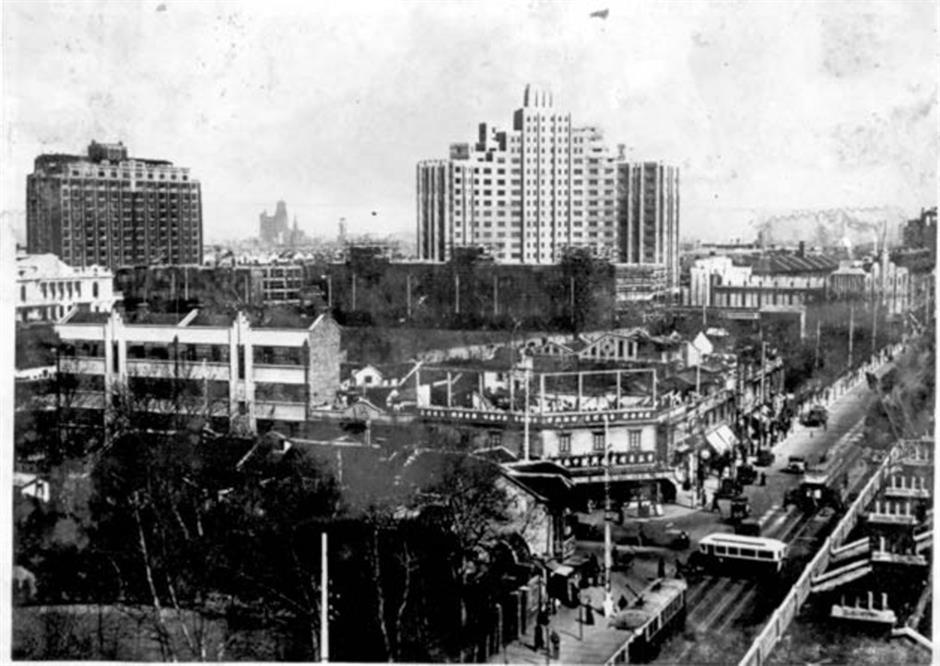 Avenue Jofffre (1931)
Beneath an emerald canopy of plane trees – generous, seasoned and quietly knowing – Huaihai Road M. unfurls with an ease that feels rich with memory and promise.
Once known as Avenue Joffre, in today's Huangpu District, this elegant 2-kilometer stretch has matured beautifully, like something long loved and carefully kept. It is Shanghai at its most confident: European façades leaning companionably against revolutionary ghosts, couture brushing past history, everything coexisting in a uniquely Shanghai Harmony.
Today, it is polished and worldly, lined with flagship stores, cafés where coffee lingers and conversations do too, and galleries that invite you to slow down, just a little. Yet beneath the sheen – behind every immaculate window and perfectly judged glow – there is a pulse. You can feel it. Revolutionaries once walked here with purpose, writers with restless minds, film stars with secrets in their pockets.
Locals call it Shanghai's Walk of Fame, though there are no handprints set in stone. The fame here is softer, more human: the residue of people who lived fully, dreamed boldly, and shaped their time. And then there is its other name, offered with affectionate pride – the Champs-Élysées of the East – a title earned not through imitation, but through a long, stylish devotion to fashion, to flair, and to the gentle thrill of modern glamor done properly.
Where Fashion Was Born and History Was Lived
Huaihai Road wasn't just the setting for Shanghai's golden age – it was the runway.
Back in the 1920s and 1930s, when the street still answered to the name Avenue Joffre, Russian émigrés and French traders transformed it into a corridor of couture. Boutiques, cafés, patisseries and tailor shops lined the sidewalks, setting the tone for how the city dressed, dined and presented itself to the world.
Women in silk qipaos strolled past arm in arm with men in sharply pressed Western suits, turning an everyday walk into a live fashion show – and Huaihai into the place where modern Shanghai first learned how to look the part.
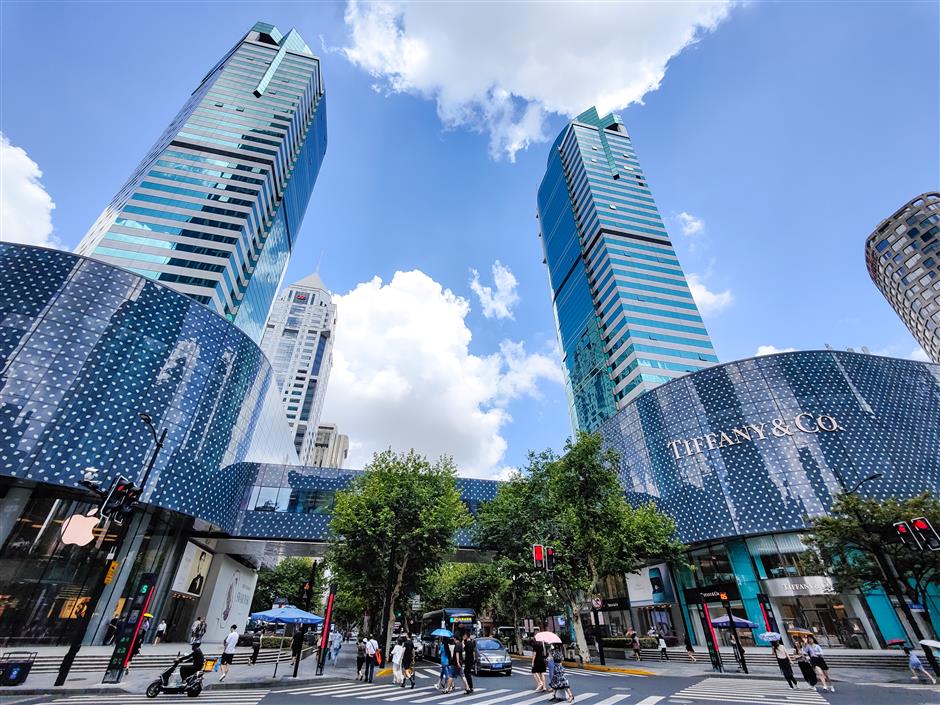 Hong Kong Plaza
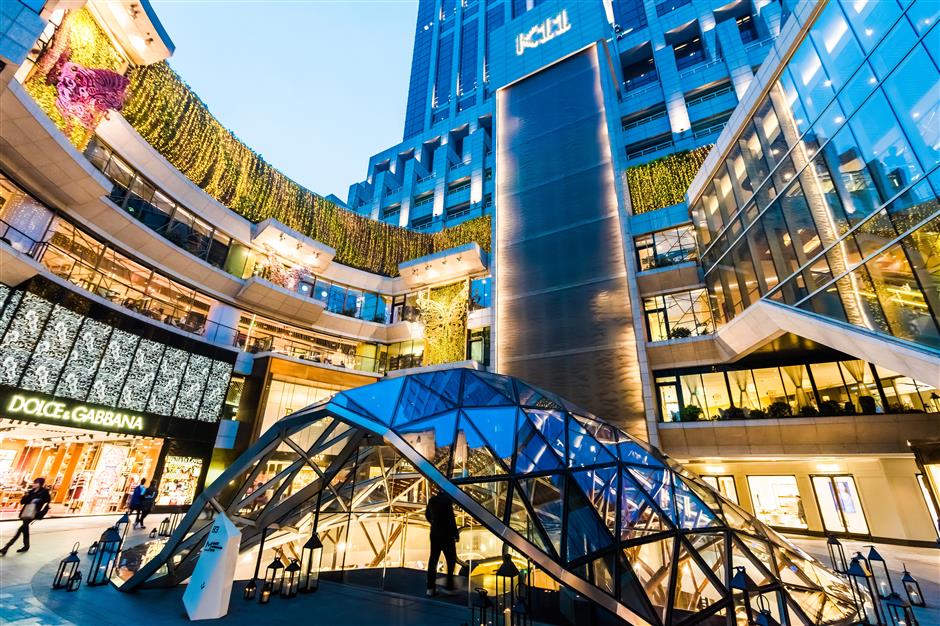 K11
K11This is where modern Chinese fashion took shape – a distinctly Shanghai fusion of East and West that came to be known as haipai. Parisian polish met oriental restraint, and the result became a look, an attitude, and eventually, a shorthand for the city itself.
But Huaihai Road has always been more than a stylish parade. It's a neighborhood built on names.
Behind those leafy façades lived some of the most influential figures of 20th-century China, each adding their own layer to the boulevard's mix of glamor, ambition and intellect.
At 1843 Huaihai Road M., the former residence of Soong Ching Ling feels almost deliberately calm. She lived here for nearly 30 years, and the house still reflects her character – polished wood, soft light, and a sense of quiet purpose from a woman who moved effortlessly between revolution and diplomacy.
Just down the street, the Sun Yat-sen Residence preserves the presence of modern China's founding father. His study remains lined with books, the sitting room washed in daylight and memory, offering a rare, intimate glimpse into the private world behind a public legacy.
The Wukang Building – still stubbornly called the Normandie by the old-timers – sits at the corner of Huaihai like it's auditioning for a role in its own noir film. Everyone photographs it, but fewer know that behind those heavy Art Deco curves, film legends Zhao Dan and Wang Renmei once played house, back when Shanghai's silver screen was black-and-white and the city still dreamed in technicolor. László Hudec drew the lines – part ocean liner, part city statement – and, somehow, made it all work.
A few minutes' walk away, in the leafy quiet of Yicun Compound, Chiang Ching-kuo (yes, that Chiang Ching-kuo, son of Chiang Kai-shek) did his homework and dodged the housekeeper. Meanwhile, novelist-anarchist Ba Jin was upstairs on the same block, wrestling with his "Family, Spring, Autumn" trilogy – writing novels that would outlive the wallpaper and half the neighbors.
Every street number here is a footnote in a story you haven't finished reading. Buildings keep diaries. Corners collect gossip, scandal, the occasional love letter. This is Huaihai's real currency – memory, pressed between the pages of time, offered up like a secret handshake.
People will tell you Nanjing Road is the heart of Shanghai commerce – and sure, if you like crowds and neon. But Huaihai? Huaihai is the soul. It's where the city went to reinvent itself, over and over again, and where – if you pay attention – you can still hear the echo of ideas, the rustle of silk, the hush just before the curtain goes up.
Lights, Flavors and Landmarks on Shanghai's Champs-Élysées
What earned Huaihai Road M. its quietly confident title as the Champs-Élysées of the East was never just fashion – though it wears that beautifully – but its long, luminous life as Shanghai's cultural main stage. This was a boulevard that knew how to entertain, how to gather people together, how to feed the city's imagination long before luxury labels ever learned to pronounce its name.
In the early years of the 20th century, the street positively shimmered with theaters, each one offering its own particular seduction. At what is now No. 85 stood the Empire Theatre, opened in 1921 by a Spanish entrepreneur, a place remembered fondly for children's performances and community shows – wholesome, generous and quietly joyful. Just a short stroll away, the Cathay Theater opened its doors in 1932, all Art Deco confidence and cinematic glamor, introducing Shanghai audiences to Western films that would help shape the city's visual language and dreams.
And then there was the Palais Oriental. In 1926, it played a part in nothing less than China's cinematic awakening – a year of remarkable firsts, when Shanghai welcomed its inaugural film expo, its first sound film, and even its earliest animated creation. One can almost feel it still: the hum of anticipation, the soft rustle of seats, the sense that something thrillingly new was about to begin.
Where theaters appeared, restaurants were never far behind.
Russian émigrés alone opened more than 40 taverns and cafés along Avenue Joffre, perfuming the street with borscht, smoked fish and pastries heavy with butter and nostalgia. Food became part of the scene, as essential as the performances themselves.
Donghua Restaurant – named after the Palais Oriental, or Donghua Theater, next door – quickly became a gathering spot for painters, poets and actors, a place where ideas lingered long after the curtain fell.
And then there's Lao Da Chang Bakery. Founded in 1937 and still pulling long lines today, its cream-filled cakes and flaky pastries taste less like dessert and more like memory – edible echoes of old Shanghai that refuse to fade.
Hotels completed this cultural world. Iconic properties like the Garden Hotel and Jin Jiang Hotel welcomed diplomats, celebrities and film stars, their grand ballrooms and lounges embodying the cosmopolitan confidence that made Shanghai Asia's most international city.
After the founding of the People's Republic of China, Huaihai Road reinvented itself again, becoming a showcase of socialist commerce. The Second Department Store, the Women's Goods Store, and the 6.1 Children's Goods Store transformed the street into a model of modern retail for a new era.
By the 1980s and 1990s, as China reopened to the world, the boulevard evolved into a laboratory for contemporary trade and design. The historic Red House Western Restaurant, originally Roewe's Café opened by an Italian chef in 1935, was revived with its signature borscht and baked escargot, while new commercial towers ushered in a changing skyline.
The next chapter arrived in the 1990s, carried in on Metro lines and wrapped in glass and steel.
Landmarks like Lippo Plaza, Golden Bell Plaza and the Lansheng Building rose up beside carefully preserved façades, creating a streetscape where vertical ambition met old-world restraint. The contrast became part of Huaihai's appeal – historic elegance holding its ground against a new skyline.
After dark, arcing neon signs and glowing pedestrian bridges turned the avenue into a night-time spectacle. Beneath the familiar canopy of French plane trees, Huaihai Road claimed its place as one of the city's most convincing balancing acts – where heritage and modernity don't just coexist, but quietly elevate each other.
A Runway for the World
Today, Huaihai Road M. sits squarely at the center of Shanghai's so-called "world-class business corridor."
This is where Hermès, Louis Vuitton and Cartier move into meticulously restored historic buildings, and where K11 Art Mall folds contemporary installations seamlessly into the retail experience. Iamp shopping mall rises nearby, stacking six floors of flagship fashion beneath a soaring skylight, while Hong Kong Plaza and Lane Crawford link the boulevard directly into the circuitry of global retail.
Huaihai no longer has to prove itself – it simply sets the standard.
In recent years, Huaihai Road has quietly widened its focus. Luxury is still here, but it now shares the spotlight with a younger, more experimental crowd. The turning point came in 2019, when TX Huaihai Youth Energy Center opened and jolted the boulevard's once-sleepier midsection back to life.
Aimed squarely at the 28-to-35 crowd, TX Huaihai introduced the idea of "curated retail" to the street, dedicating nearly a quarter of its floor space to exhibitions, pop-ups, art festivals and designer collaborations. By leaning unapologetically into youth culture, it transformed its block into one of Huaihai's most animated corners, pulling in anywhere from 20,000 to 50,000 visitors a day and injecting fresh energy back onto the pavement.
Just a short walk away, another heavyweight has emerged – this one rooted as much in values as in visuals. The century-old building at 550 Huaihai Road M., once home to the Palais Oriental and later a Barbie flagship, has been reintroduced as HAI550, a marketplace built around sustainability and conscious consumption.
Inside, large open zones are left deliberately flexible for exhibitions and pop-ups. The tenant mix ranges from circular fashion labels and refill shops to Yunnan craft boutiques and DIY jewelry studios. Raw industrial textures meet a carefully restored façade, giving the space a look that feels both unfinished and intentional. Since opening, HAI550 has quickly become one of the street's most talked-about addresses, drawing an estimated 30,000 to 40,000 visitors a day in its first week alone.
Together, TX Huaihai and HAI550 signal the boulevard's next phase – retail spaces designed less around transactions and more around communities. They're places where young creatives gather, where shopping overlaps naturally with social life, and where Huaihai's cultural future is being shaped in real time.
Importantly, the street's modernization hasn't come at the expense of its identity. If anything, it's been an exercise in amplification rather than erasure.
Launched in 2023, the Huaihai Smart Business District Project brought 5G coverage, AR-powered navigation and real-time data tools for retailers, pushing the area into the ranks of Asia's most technologically advanced shopping corridors – all without losing its sense of place.
And despite the luxury storefronts and constant glow, Huaihai still moves to a very human rhythm. Street musicians set up beneath the plane trees. Young couples pause to frame photos in front of the Wukang Building's sunlit curve. Elderly regulars linger over coffee at the restored Cathay Cinema café, trading memories of the days when streetcars once rattled down the avenue.
Together, TX Huaihai and HAI550 signal the boulevard's next phase – retail spaces designed less around transactions and more around communities. They're places where young creatives gather, where shopping overlaps naturally with social life, and where Huaihai's cultural future is being shaped in real time.
Importantly, the street's modernization hasn't come at the expense of its identity. If anything, it's been an exercise in amplification rather than erasure.
Launched in 2023, the Huaihai Smart Business District Project brought 5G coverage, AR-powered navigation and real-time data tools for retailers, pushing the area into the ranks of Asia's most technologically advanced shopping corridors – all without losing its sense of place.
And despite the luxury storefronts and constant glow, Huaihai still moves to a very human rhythm. Street musicians set up beneath the plane trees. Young couples pause to frame photos in front of the Wukang Building's sunlit curve. Elderly regulars linger over coffee at the restored Cathay Cinema café, trading memories of the days when streetcars once rattled down the avenue.
A Street That Never Stops Becoming
As dusk settles in, Huaihai's façades begin to shimmer. Glass towers catch the outlines of baroque balconies, while neon light ripples across old stone archways, past and present folding into one another.
It's the image of a city permanently between moments – one foot in the future, the other lingering in a sepia-toned dream.
For locals, Huaihai is more than a shopping street. It's a state of mind, a place where Shanghai's elegance, intellect and restless entrepreneurial energy naturally converge.
For visitors, it's a chance to walk the same pavement once tread by Sun Yat-sen, Soong Ching Ling, Ba Jin and the film stars of another era – and to see how that legacy now reflects back beneath LED skylines.
Huaihai Road M. isn't a museum piece from Shanghai's golden age.
It's proof that the city, like its most iconic boulevard, never stands still – it just keeps evolving, with style.
Source: City News Service
