


今日上海
MODE 驱动上海时装周的商业脉搏 - 2026年03月30日
MODE drives Shanghai Fashion Week's business pulse
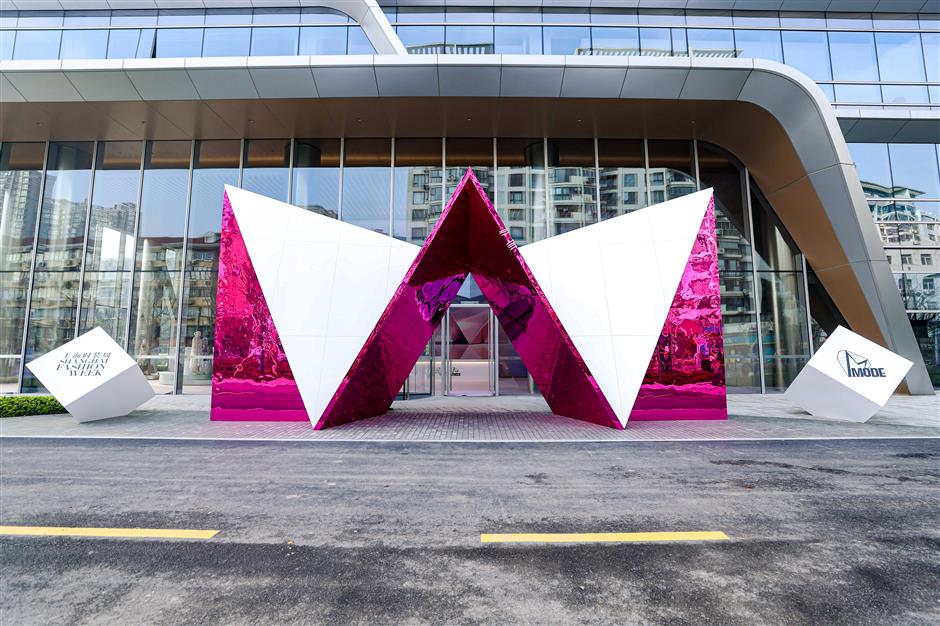
MODE Shanghai Fashion Trade Show at Hongqiao.
Away from the runway crowds in Xintiandi, the real business of Shanghai Fashion Week unfolds a few metro stops away.
At MODE Shanghai Fashion Trade Show, racks of garments replace catwalk theatrics, and conversations revolve less around aesthetics than orders, margins and expansion plans. For many brands, the trade show is where visibility turns into revenue.
The Autumn/Winter 2026 edition of MODE opened on March 25 in the Hongqiao area, bringing together hundreds of brands, showrooms and international buyers as part of Shanghai Fashion Week's broader push to build what organizers call Asia's largest ordering season.
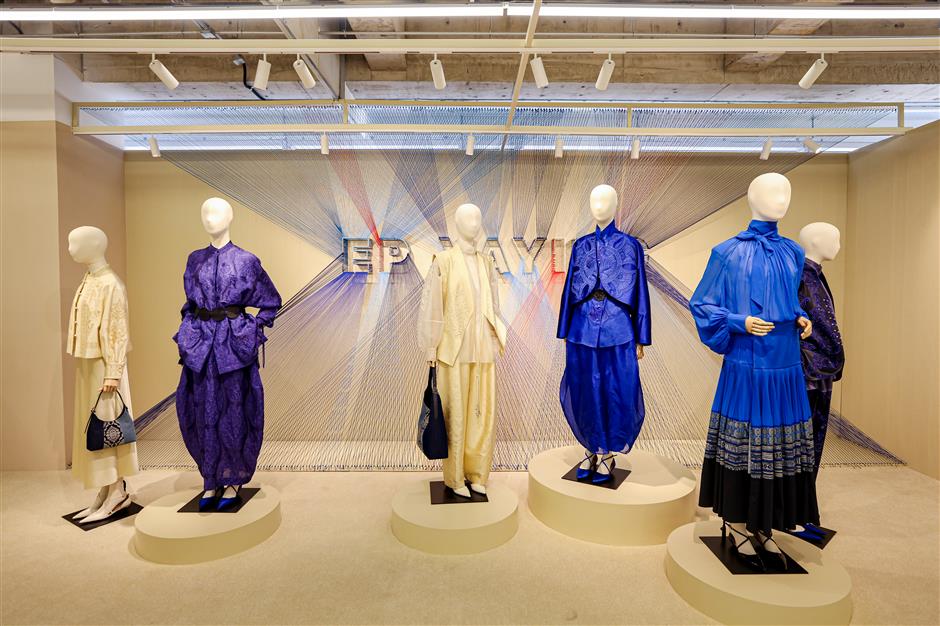
EP YAYING is participating in MODE for the first time.
For Chinese heritage label EP YAYING, the trade show marks a shift from visibility to international expansion.
As it works to expand beyond China, the brand, which opened Shanghai Fashion Week last season and will close this season's runway calendar, is participating in MODE for the first time to connect with international buyers.
"Shanghai Fashion Week has strong media reach, and after the runway show we saw a noticeable increase in traffic and sales," said Jasper Liu, brand director of EP YAYING. He added that sales in Shanghai rose by more than 10 percent following the brand's previous participation.
But for Liu, the runway is only part of the equation.
With flagship stores in the US and plans to expand into Southeast Asia, the brand is using MODE to test international demand for its "Eastern aesthetic with a global expression."
"We want to bring Chinese materials and cultural elements into a more international language," Liu said, adding that the company is exploring new markets, including Kuala Lumpur and Singapore.
The strategy reflects a broader shift among Chinese brands: using domestic platforms not just for branding but as launchpads for global growth.
For younger independent brands, however, the equation is less straightforward.
Hangzhou-based Mian, a niche accessories label that makes hats and fine jewelry, has used MODE to cultivate high-end buyer relationships while carefully controlling distribution.
Last year, the brand signed around 30 buyers after winning a commercial potential award, according to founder Wang Si'en.
However, the brand has intentionally limited its growth.
"We chose to stay conservative," Wang said. "Our products are not discounted, and many buyers are looking for faster turnover. So we prefer to focus on building our own retail channels."
For Mian, whose products range from 1,500 yuan (US$217) to tens of thousands, the challenge is not demand but positioning – balancing cultural expression with commercial viability.
The brand is now exploring opening a street-facing store in Shanghai, prioritizing locations that allow for direct interaction with consumers rather than traditional mall retail.
"Street stores communicate a brand's identity much more clearly," Wang said. "They give us space to engage with consumers and explain the culture behind what we do."
Across MODE, the diversity of brands on display points to a maturing domestic ecosystem.
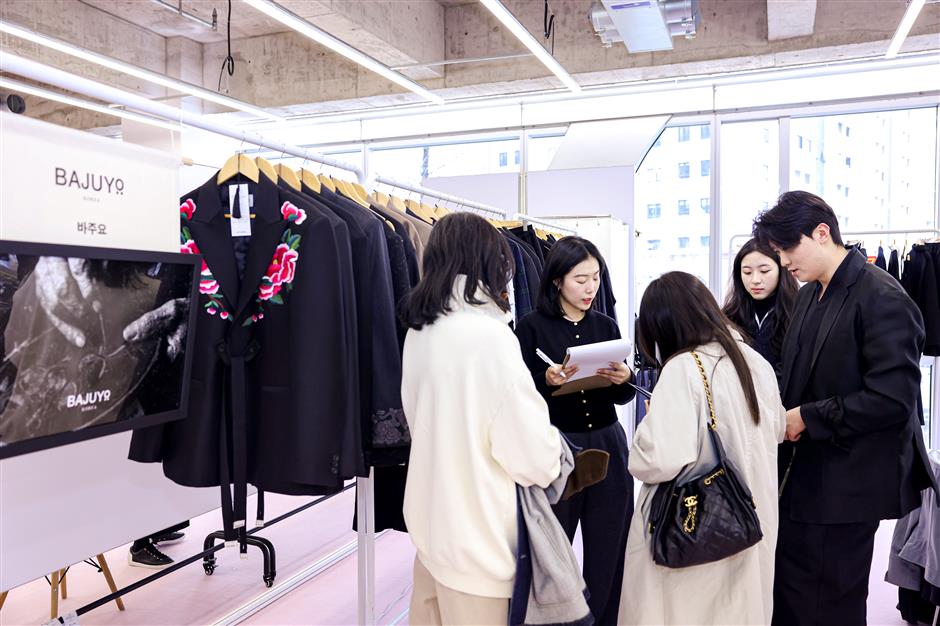
Some labels do wearable, commercially viable collections for urban consumers, while others do craftsmanship, materials, or conceptual designs. Sustainable and innovative materials like bio-based fibers and recycled textiles are also recurring themes.
At the same time, the trade show has become increasingly international, with buyers from retailers such as Antonioli and Printemps attending alongside regional platforms from Southeast Asia.
This hybrid structure – part showroom, part forum and part networking hub – is central to MODE's role at Shanghai Fashion Week.
Industry discussions held alongside the trade show, including the MSPACE forum, focus on questions that go beyond design: how to scale a brand, how to integrate sustainability into production, and how to navigate a more complex global market.
Underlying many of these conversations is a shared recognition that China's fashion market has entered a new phase.
"The era of quick monetization and copying is over," Wang said. "Consumers today are much more sensitive. If a brand doesn't have a clear identity, it won't last."
That shift is forcing designers to think beyond individual collections and toward long-term brand building, something MODE increasingly reflects.
What was once a platform for exposure is becoming a filter: separating brands that can translate creativity into business from those that cannot.
Source: City News Service
