



今日上海
高炉见证了宝钢对人工智能的巧妙运用 - 2026年06月29日
Blast furnace a testimony to Baosteel's smart AI use
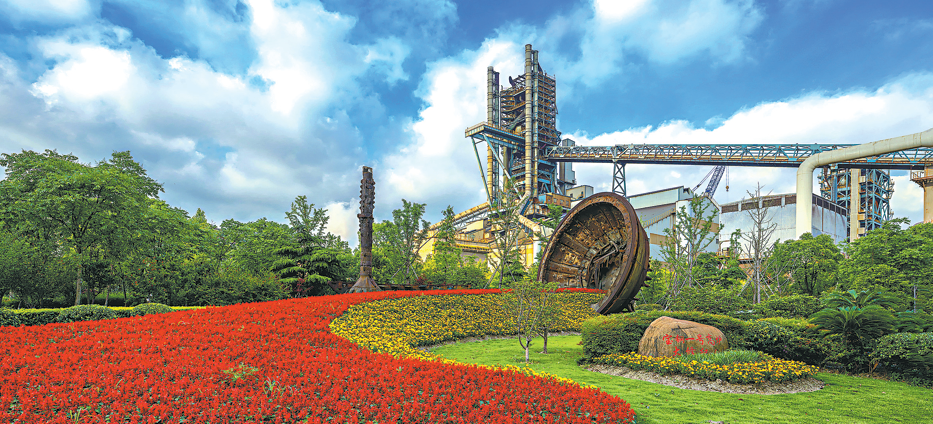
It might be one of the world's toughest engineering feats — keeping China's first ultra-large blast furnace operating consistently at a temperature of around 1,510 degrees Celsius.
But this seemingly impossible task is now being streamlined and improved with the help of artificial intelligence.
Commissioned on Sept 15, 1985, Baoshan Iron and Steel Co's No 1 Blast Furnace — with a capacity exceeding 4,000 cubic meters — has been operating for over 40 years. The towering furnace is located in Shanghai's Baoshan district at a base of Baosteel, a subsidiary of China Baowu Steel Group.
Now, the 115-meter-tall structure is undergoing a technological revival and refinement of its operations thanks to the applications of AI.
Once the upgrading of the No 1 Blast Furnace is finished in the next few days, all four blast furnaces at the Baoshan base will be fully AI-powered. The technology will help reduce each furnace's operating costs by over 10 million yuan ($1.48 million) annually and cut carbon emissions by 5 kilograms per metric ton of hot metal, setting a benchmark for intelligent manufacturing in the steel industry.
Blast furnace ironmaking — a core process in steel production — has long faced challenges such as highly complex operating conditions, multi-variable coupling, and heavy reliance on human experience.
The "black box" nature of the process has been a major barrier to intelligent upgrading of the sector and is described as "dirty, difficult and dangerous", according to Wang Shibin, chief engineer of big data application at Baosteel's ironmaking plant.
"Within the sealed furnace, where temperatures can exceed 2,300 C and even rock is fully molten, no instrument can be inserted for direct measurement. Yet, the furnace temperature is crucial to blast furnace production, directly determining product quality stability," he said.
Poor control of furnace temperature and sulfur content can disrupt downstream steelmaking processes and increase production costs, Wang said.
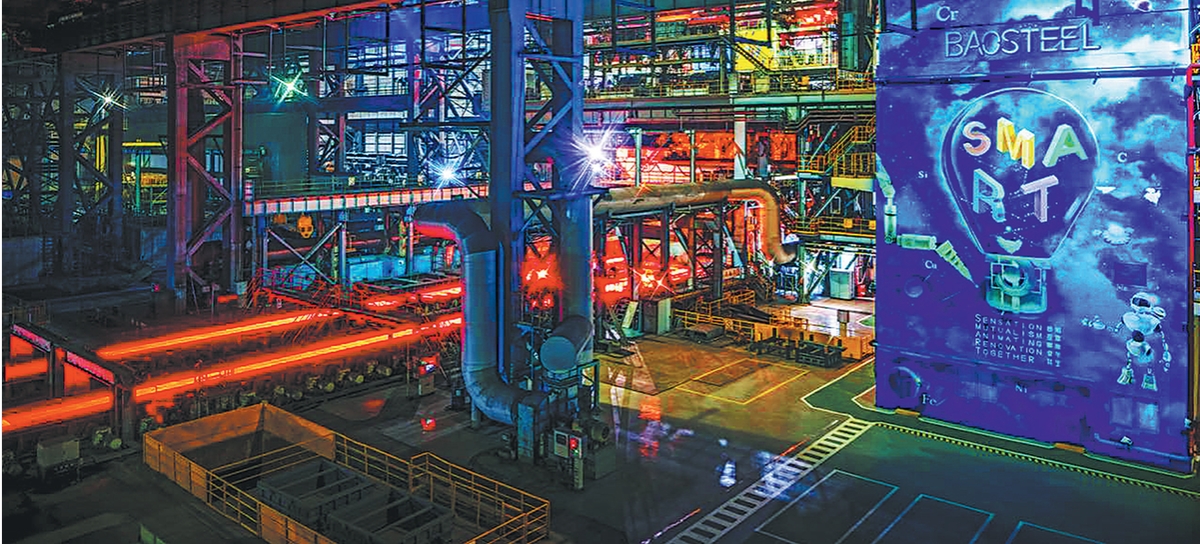
Previously, furnace temperature was managed mainly through the experience of the company's senior operators.
"With large AI models the blast furnace, which was once a 'black box', has become far more transparent. By analyzing complex internal interactions, the system can now generate highly accurate forecasts, with predictions made two hours ahead and exceeding 90 percent accuracy," Wang said, adding that work efficiency has also improved by 20 percent.
"Taking the blast furnaces at the Baoshan base for example, the target is to maintain an ideal range of 1,510, plus or minus 10 degrees Celsius, with longer stability providing stronger operational assurance," he added.
The company officially launched the world's first AI-powered smart blast furnace model on April 3.
This marked that Baosteel has leveraged AI large models to improve furnace temperature predictions, providing a practical model for the steel industry's digital transformation by converting experience into data and uncertainty into precision.
Blast furnace ironmaking accounts for around 70 percent of total steel production costs. In this process, temperature fluctuations are not only cost-related, but also closely linked to carbon emissions.
According to Wang, the AI large model has played a significant role in ensuring stable blast furnace operations. Prediction accuracy has improved from just over 70 percent at the beginning of 2024 to over 90 percent, and continues to be optimized. Other external production bases have invited the team to help deploy the system.
Before embracing AI large models, Baosteel had already built a strong basis for using cutting-edge technologies.
Since the 1990s, the steelmaker has focused on information system development and experience accumulation, and further advanced digitalization to form a sizable database.
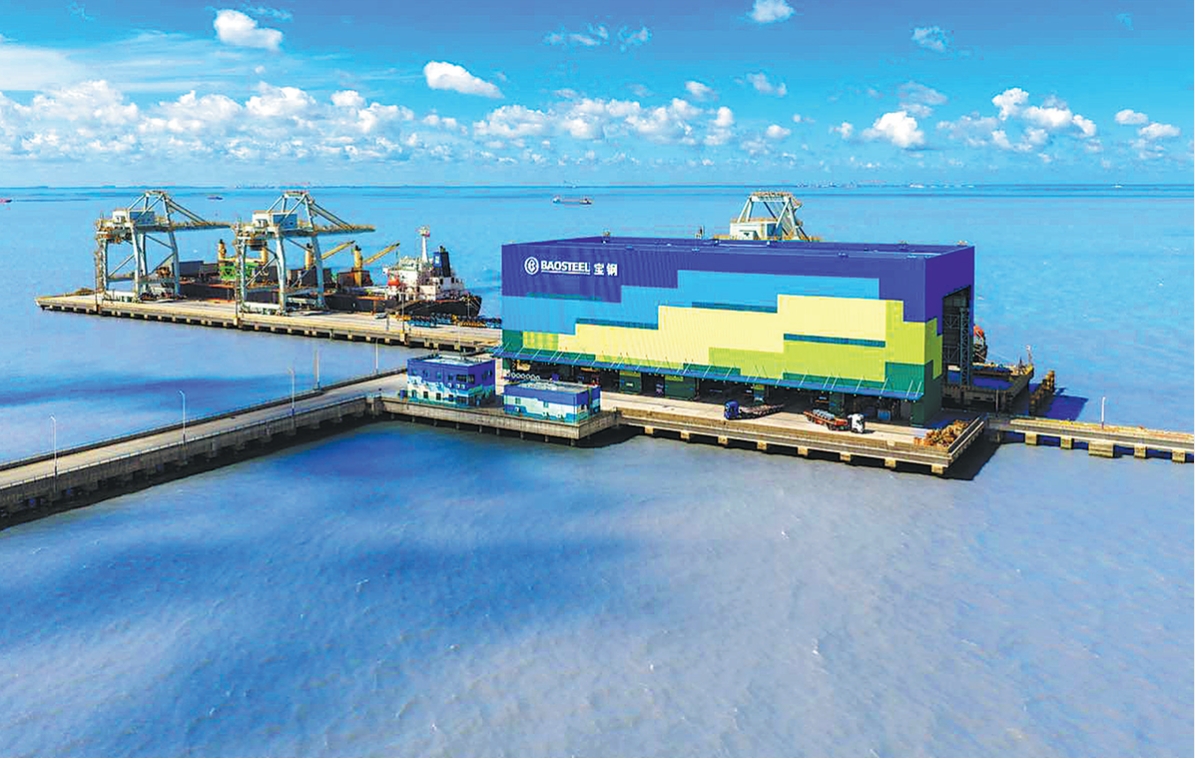
Smart factories
Baosteel designated 2024 its "Year of AI" and set a goal of developing 1,000 models to embed AI across production processes. To date, the technology has been applied in more than 600 scenarios.
"From the perspective of a single process, the AI smart blast furnace — what we call the 'AI furnace manager' — is actually a strong example of best practice in our operations," said Wu Wenbin, director of Baosteel's data and AI department.
According to the company's paper on AI application scenarios published earlier this year, AI now covers six major business segments and 23 scenario categories. A total of 162 AI achievements have been recorded, generating economic benefits of over 270 million yuan. The company is also actively contributing to industry standards and co-building an AI-driven industrial ecosystem.
A global first "intelligent driving" grading framework for production lines has been introduced by the steelmaker, drawing on autonomous driving logic to establish a Level 1–5 smart manufacturing maturity system.
The applications of AI in core processes have also achieved breakthroughs. Six major new applications now span the entire production chain, from ironmaking and steelmaking to rolling and quality inspection, with all performance outcomes quantified and verifiable.
Over the past 30 years, Baosteel has progressed through three stages of development — informationization, digitalization and intelligentization, Wu said.
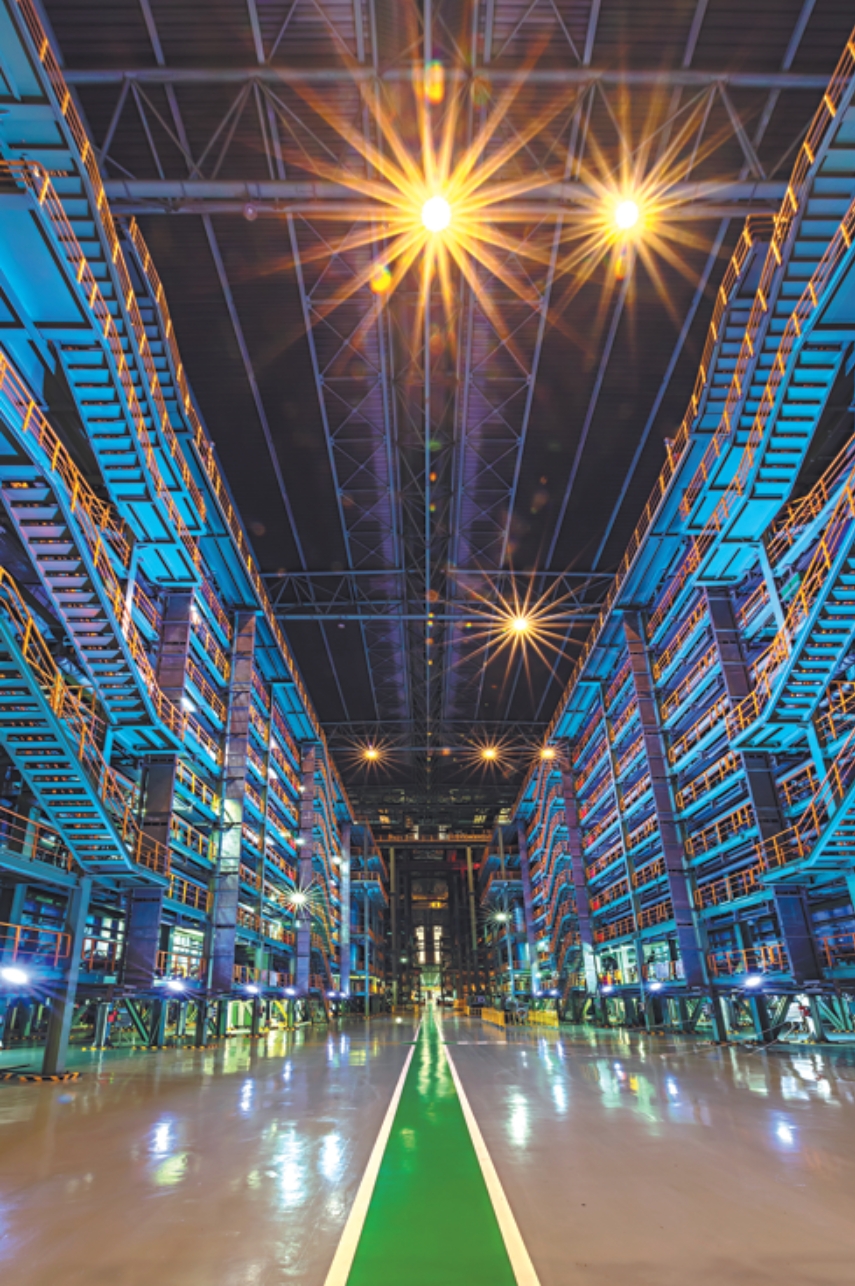
The company's entry into smart manufacturing can be divided into two key phases.
During the first smart manufacturing stage from 2015 to 2023, Baosteel was listed as a World Economic Forum lighthouse factory, the first enterprise in the Chinese steel industry to receive the classification. During the same period, the steelmaker began smart manufacturing demonstration projects, laying the foundation for its intelligent manufacturing framework.
Since 2024, the company has entered the second smart manufacturing stage, with AI being the core driver. It has launched industry-first large models for the steel sector, including blast furnace models, setting benchmark applications, and leading the industry toward a new AI-driven paradigm of digital intelligence, Wu said.
Chen Fangruo, dean of Antai College of Economics and Management at Shanghai Jiao Tong University, said, "We are now in the fourth industrial revolution, where big data, artificial intelligence and computing applications are key features."
"Being selected as a lighthouse factory represents a global leading level of advanced manufacturing," Chen said.
As of March, there are 224 lighthouse factories worldwide, including 101 in China, which accounted for nearly half of the global total.
"Baosteel was also listed as one of the 15 in the first batch of leading-level smart factories by the Ministry of Industry and Information Technology last year, a further recognition of its advancement in AI applications," Chen said.
"In my view, these two honors reflect the highly advanced level of Baosteel's manufacturing sector, and also represent one of the most advanced levels globally," he added.
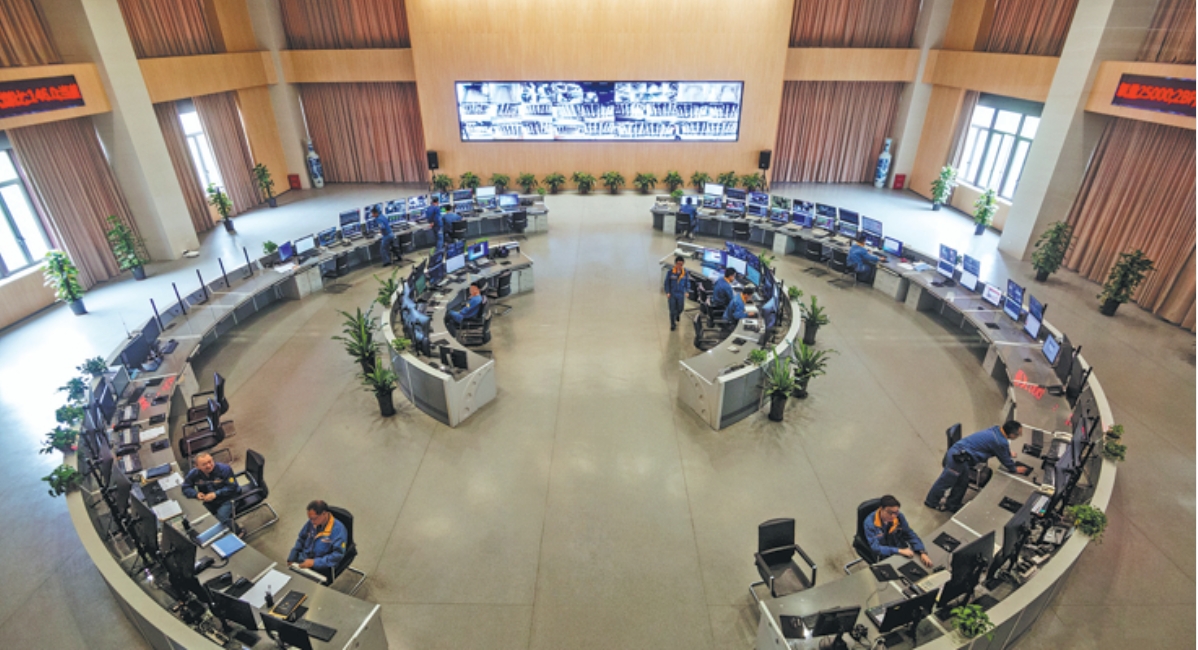
Powering production
Hu Wangming, chairman of China Baowu Steel Group Corp, said that as the world's largest steel enterprise, China Baowu has elevated redefining steelmaking with artificial intelligence to become a corporate strategy.
Baosteel's "smart blast furnace", a global first, is the result of collaboration between Baosteel, Shanghai Baosight Software and partners including Huawei Technologies Co, he said, and represents a major breakthrough in addressing longstanding industry challenges.
It serves as a model for integrating AI with ironmaking operations, offering a valuable reference for the global steel industry's transformation, Hu added.
Baosteel operates multiple production bases with a combined annual steelmaking capacity of 80 million metric tons. By the end of 2025, the company had deployed a total of 994 industrial robots across its operations, equivalent to a robot density of 216 robots per 10,000 employees.
Robot density — a key measure of the adoption of automation in manufacturing — is the number of robots per 10,000 people in the industry.
China has a robot density of 166 per 10,000 workers, ranking sixth in Asia and 22nd globally, according to the latest report from the International Federation of Robotics.
In terms of the total number of industrial robots, China leads the world. China accounted for about 2 million units, nearly 4.5-fold more than Japan in second place, the report said. The country's annual installation numbers were also impressive as 54 percent, or 295,000 units, of all robots installed worldwide in 2024 were deployed in China.
"By 2030, we plan to build the 'Baosteel Brain' to enable centralized decision-making across all production processes and maximize operational value," Wu, director of Baosteel's data and AI department, said.
Since implementing its AI strategy, Baosteel has undergone a profound shift from experience-driven operations to a data-driven mode, and from "passive response" to "proactive prediction".
Looking ahead, Baosteel said it will continue to advance China's strategy for high-end, intelligent and green manufacturing, while deepening the implementation of an AI+ initiative as a central State-owned enterprise, and under China Baowu's "AI 2.0 strategy".
With AI as its core engine, Baosteel aims to build a future steelmaking model that is greener, smarter and more efficient, contributing a new solution to the digital and intelligent transformation of China's steel industry.
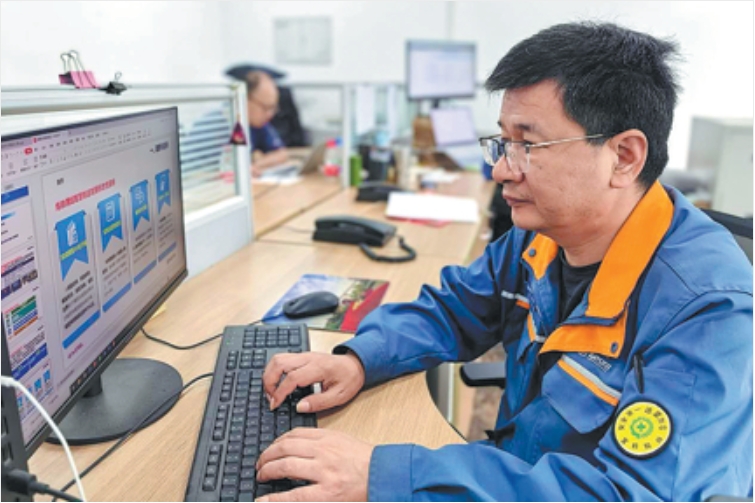
Core strategy
From a business perspective, the vast majority of steelmakers have already made digital transformation a core corporate strategy.
According to a survey by the China Iron and Steel Association, more than 95 percent of steelmakers have incorporated digital transformation into their overall development plans, reflecting a broad industry consensus on embracing digital technologies represented by AI.
"The steel sector has also stood out in national smart factory evaluations," said Wang Guoqing, director of the Beijing Lange Steel Information Research Center.
"So far, 36 steel plants have been recognized as the nation's excellent level smart factories by the Ministry of Industry and Information Technology, representing the high level of intelligent manufacturing in China."
In addition, among the 151 typical application cases for AI-enabled new industrialization released by the MIIT, 12 came from the steel industry, covering key areas including intelligent analysis, quality inspection and production optimization, Wang said.
"The industry shift toward intelligent manufacturing has also been driven by structural changes in China's steel market. While overall steel output has gradually declined in recent years, demand for high-quality and high value-added steel products has continued to rise, accelerating the transformation of companies such as Baosteel," she said.
China's crude steel output fell from 1.06 billion metric tons in 2020 to 960.81 million tons in 2025, according to official data.
Chen said when Baosteel was established in 1978, it carried the nation's hopes for industrial development. In the new era, the company's transformation has continued to closely align with the pulse of the times.
"Baosteel has made breakthroughs in a number of core steel products, serving both export markets and domestic industrial demand while continuously adapting to changing industrial needs.
"There is a huge sign at the entrance of Baosteel that roughly reads 'History will prove that the establishment of Baosteel was the right decision'," Chen said.
Source: China Daily
