


今日上海
上汽与通用汽车中国合资企业合作至2047年 - 2026年08月06日
SAIC, GM extend China JV deal through 2047
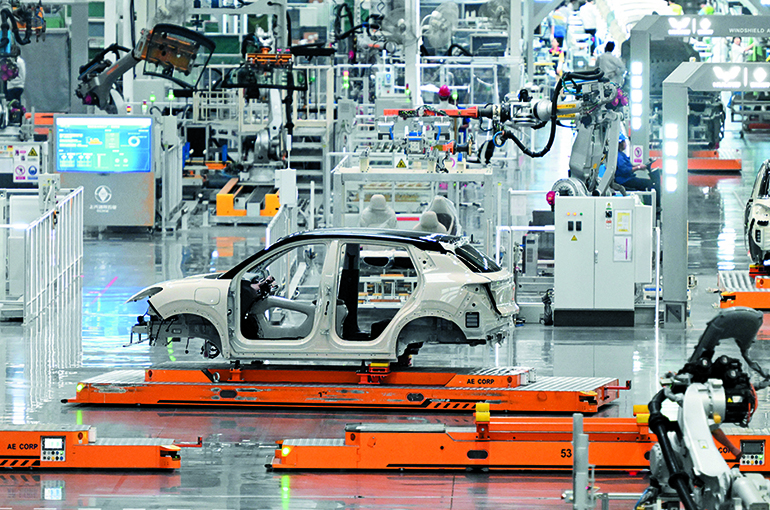
SAIC Motor and General Motors have agreed to extend their joint venture agreement for another 20 years until 2047, which will turn it into the longest-running JV between a foreign and a Chinese carmaker in China.
SAIC-GM aims to launch at least 30 new energy vehicle models by 2030, further enhancing the electric lineup for the Buick and Cadillac brands, and accelerate the use of smart cabin and advanced autonomous driving technologies, the pair announced after signing the deal in Shanghai on August 5.
Late on the same day, pre-sales for the first model under the renewed partnership, the Buick Electra L7 pure electric edition, opened. The car has an 800-volt architecture, a range of 702 kilometers, and advanced 6C ultra-fast charging technology.
"29 years ago, the JV partnership addressed the question of 'whether we have it or not,'" Wang Xiaoqiu, chairman of SAIC Motor, said at the signing ceremony. "Today, we must answer the pressing question of 'how strong we are.'"
GM sees vast opportunities to expand beyond China and into global markets, noted Senior Vice President John Roth, who is also president of the firm's country arm. SAIC-GM has strong local engineering, manufacturing, and quality capabilities, and GM can leverage these advantages in other global markets, including the Middle East, Africa, South America, Mexico, and the Asia-Pacific region, he added.
SAIC Motor and GM signed the initial deal for the JV on Oct. 31, 1995, establishing SAIC-GM in June 1997. The agreement was set to expire in June next year.
The Buick Electra L7 will be exported starting in October, becoming Buick's first premium NEV to go overseas. In the future, SAIC Motor and GM will continue to explore markets in the Middle East, Africa, South America, and the Asia-Pacific region, promoting a shift from "global localization" to "China globalization."
SAIC-GM's 20-year renewal marks the longest partnership term among automakers for a JV in China, said Cui Dongshu, secretary-general of the China Passenger Car Association. It fully shows that the country remains a core market for global auto innovation, large-scale implementation, and industrial competition, and that leading foreign firms have not abandoned the Chinese market, he pointed out.
The logic of cooperation has fundamentally changed, evolving from past technology introduction and large-scale manufacturing to "local decision-making, capability co-building, innovation co-creation, and value sharing," Cui said. Local teams have a greater say in product and tech, addressing the pain points of the traditional JV decision-making chain being lengthy and slow to respond to domestic users, Cui added.
The "Electra model," centered around the Pan-Asia Technical Automotive Center, is the foundation of confidence, Cui stressed. The shift from tech to product shows the feasibility of this transformation path and is key to attracting continued investment from shareholders, he noted, but added that competition in the Chinese NEV market is extremely fierce, and the renewed SAIC-GM deal represents an industrial practice of open cooperation rather than confrontational competition.
The Chinese market has accelerated its transition towards electrification and intelligence in recent years. JVs that once held more than 60 percent share of the market have faced many challenges, bringing their share down to 25 percent in June.
SAIC-GM's sales dropped to 535,000 units last year from a peak of 2.06 million units in 2019. In addition, sales fell 4.5 percent to 265,927 units in the first half of this year from a year earlier.
Source: Yicai Global
