



今日上海
上海浦东机场加快了移民通关,使流程更便捷 - 2026年08月26日
Shanghai Pudong airport makes immigration clearance faster, more accessible
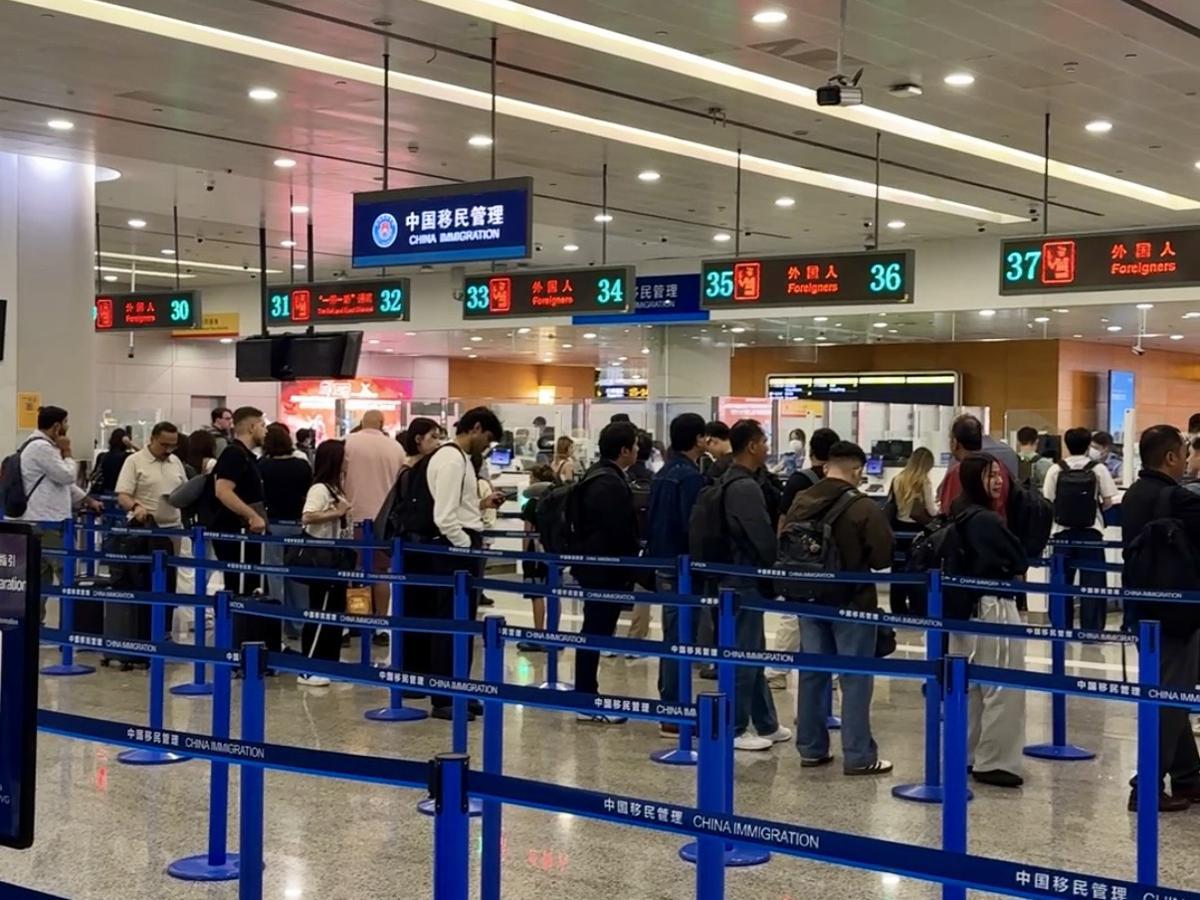
Shanghai Pudong International Airport has solidified its position as China's busiest airport of entry by making immigration clearance faster and more accessible through a combination of smart technology and service innovation.
The airport handled over 36.5 million immigration clearances in 2025, accounting for a quarter of the nation's total airport traffic. This year through Aug 20, more than 23 million travelers have been processed, with foreign arrivals surging 21 percent compared to the same period last year.
The key to managing this volume lies in making every step of the process smoother and more intuitive for travelers while maximizing efficiency behind the scenes.
Shanghai airport border inspection station has developed a proprietary information system. The platform continuously monitors flight dynamics from over 100 global destinations and real-time passenger queues, predicting arrivals down to the minute.
"We've transitioned from experience-based judgments to intelligent analysis," Yang Ming, director of the border inspection department, said.
Two hours before landing, the system automatically recommends optimal staffing levels, allowing officers to be positioned exactly where needed.
"The data tells us where to deploy, so passengers can be processed immediately upon arrival."
This anticipatory approach means travelers rarely encounter long queues. The station implements dynamic coordination between arrival and departure halls, shifting officers to meet demand.
Recognizing that language obstacles create anxiety and delays for international travelers, the station has embedded multilingual support throughout the process. All 90 smart verification channels in Terminal 2 integrate intelligent translation systems directly into inspection counters. Officers carry portable translation devices providing real-time interpretation across 23 languages.
A 150-member foreign language volunteer service team, covering 13 languages, has provided over 18,000 hours of assistance since 2009, helping travelers navigate procedures and answer questions in their native tongues.
The station has redesigned immigration lanes to make technology accessible. Express lanes now use a buffer relay model that guides passengers smoothly through each verification stage, boosting throughput by one-third. The smart verification channels integrate passport readers, biometric scanners, and data collection into a single intuitive interface.
For officers, a digital intelligence training center uses AI simulations to practice handling diverse traveler situations, ensuring consistent, capable service regardless of which counter a passenger approaches.
The station has also pioneered categorized inspection for foreign nationals, with specialized lanes matching different traveler profiles. This classification system, the first of its kind in China, allows each passenger type to move through appropriate verification procedures.
The accessibility improvements have kept foreign arrivals moving through immigration within 30 minutes even during peak periods. When major international events, including the World Artificial Intelligence Conference, brought daily foreign arrivals exceeding 20,000 — peaking at 25,000 — the system maintained smooth operations.
First-time visitor Cooper Laffins, 24, from the United States, completed entry in about 20 minutes.
"From deplaning to clearing immigration took about 20 minutes. It was so fast," he said. "This Shanghai experience was fast and pleasant. I'll give 10/10."
French student Julien Vandlik praised the clarity of the process.
"Everything was clear, very simple and fast. I've had problems in other countries where sometimes it's not so simple, but here it was super easy."
Source: China Daily
