


今日上海
原汁原味的迪士尼,独具特色的中国风 - 2026年10月12日
Authentically Disney, distinctly Chinese
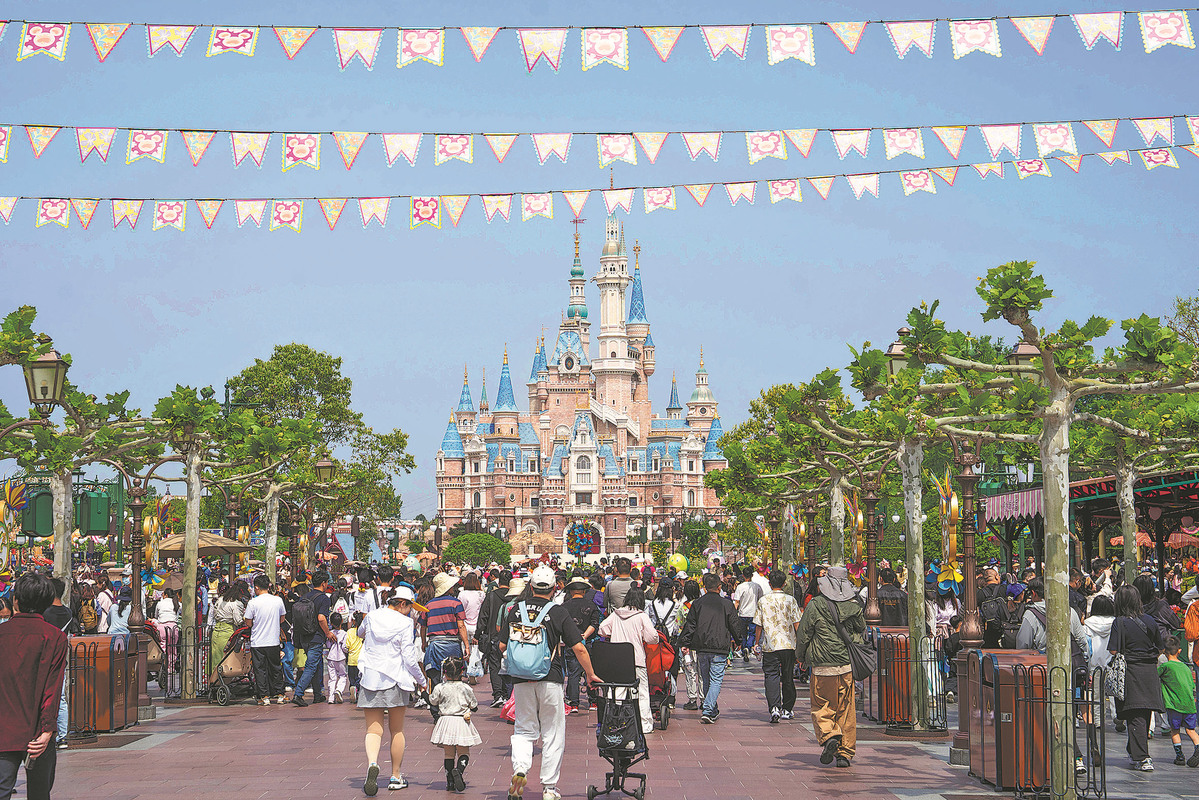
Minutes after the gates open each morning at Shanghai Disney Resort, the meet-and-greet queue for LinaBell reaches capacity. By the time most visitors have cleared the entrance, the wait might stretch even beyond 10 hours. For the fans who rise early enough to secure a spot, however, it remains well worth the effort.
LinaBell is no ordinary Disney character. Created in Shanghai in 2021 after extensive research into Chinese consumer tastes, the pink fox quickly earned the affectionate nickname "the Enchantress of Chuansha (the location of Shanghai Disney Resort)". Her popularity has since spread to other Asian Disney parks and to fan gatherings around the world, transforming her from a localized creative experiment into a global pop-culture export.
That a Shanghai-born character could command such worldwide appeal offers a striking measure of how far the resort has traveled since welcoming its first guests a decade ago.
A binational partnership
The concept first took shape in 1990, when then-Shanghai mayor Zhu Rongji proposed a Shanghai Disneyland during a visit to Los Angeles. Nearly two decades of negotiations followed before the project received national approval in 2009. Ground was broken in 2011, and the park opened five years later as a landmark cooperative venture between China and the United States.
The resort's ownership structure reflects this balanced partnership. Shanghai Shendi Group holds a 57 percent stake in the joint-venture owner companies, while The Walt Disney Company holds 43 percent. Meanwhile, Disney retains 70 percent of the management company, with Shendi holding the remaining 30 percent.
This spirit of high-level collaboration was reaffirmed in January, when Vice-Premier Ding Xuexiang met with then-Disney CEO Bob Iger in Beijing. Ding underscored that China's economy remains deeply integrated with the global market, and welcomed enterprises from all countries, Disney included, to continue investing in China, deepen their presence, and share in the country's development opportunities.
Iger echoed this sentiment, reiterating Disney's confidence in the Chinese market and its long-term commitment to expansion.
Cultural integration
At the 2011 groundbreaking ceremony, Iger articulated a philosophy that would define the resort's identity: "Authentically Disney, Distinctly Chinese".
The evidence is visible across the park. Tron Lightcycle Power Run is one of the fastest roller coasters in any Disney park worldwide. Treasure Cove was the first pirate-themed land in Disney's global portfolio.
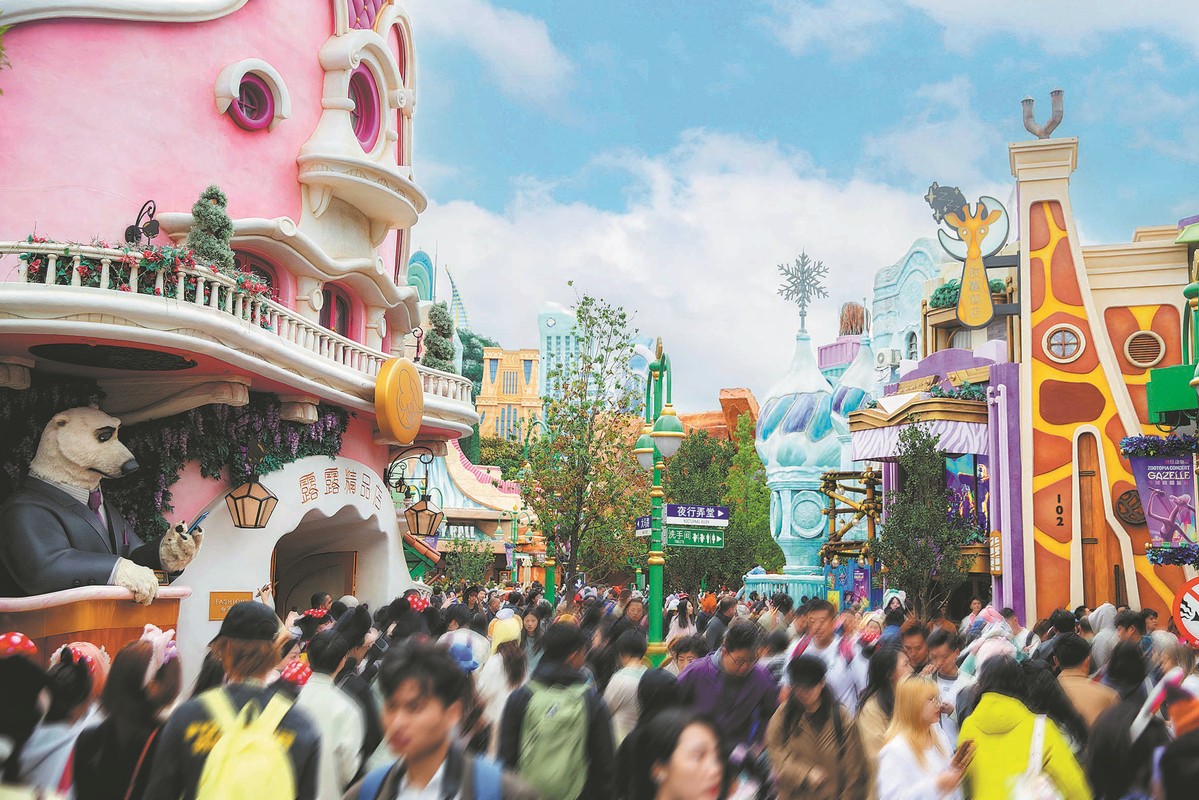
Meanwhile, Zootopia, which opened in December 2023, redefined what China-specific investment in a global franchise can achieve. Resort research found that about 97 percent of visitors knew about the Zootopia ride before arriving, and one-third cited it as their key motivation for traveling to the resort.
"For us, this represents a significant market opportunity," Andrew Bolstein, president and general manager of Shanghai Disney Resort, told Wenhui Daily. "We will continue to expand the storyline in the park."
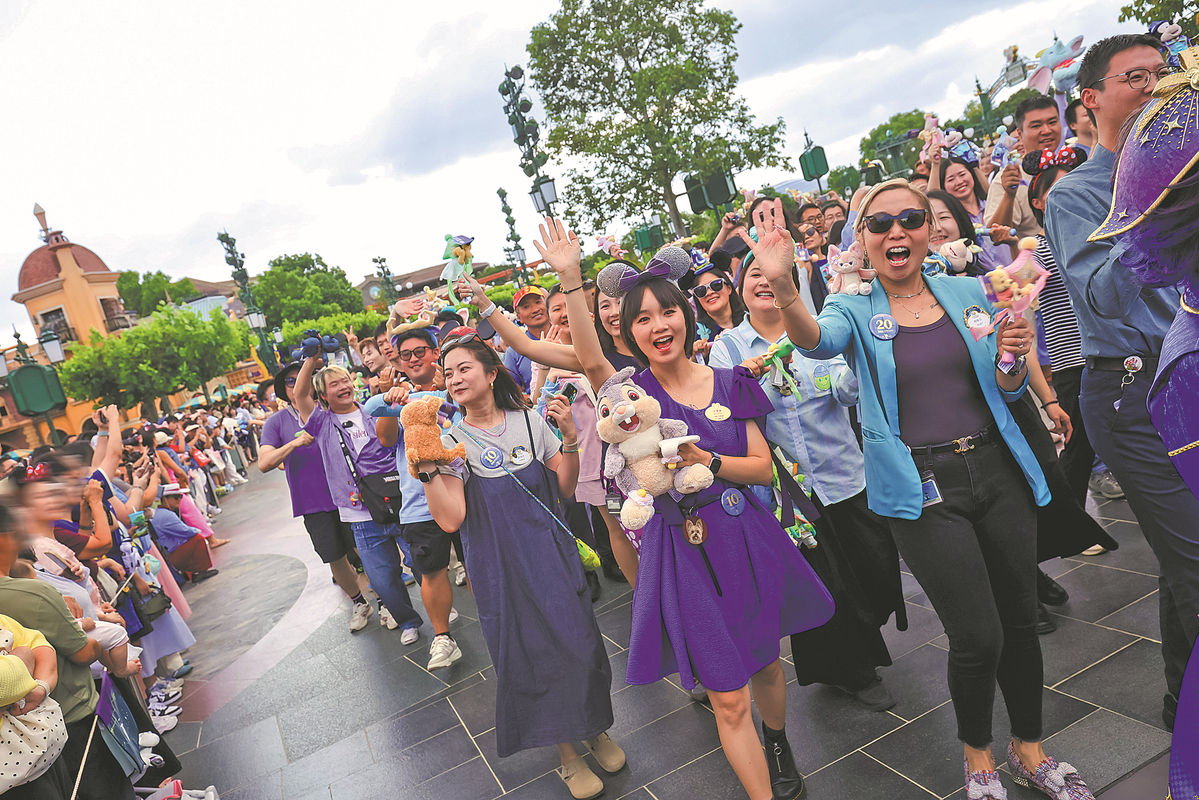
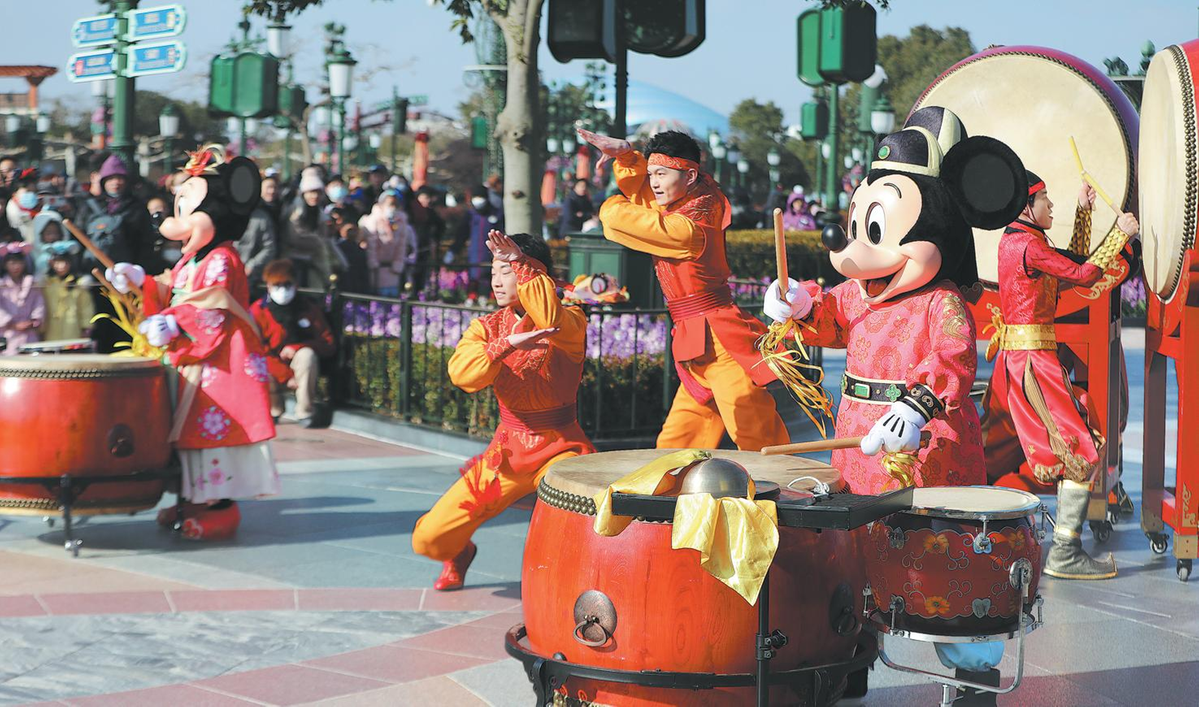
Cultural integration permeates every corner of the property. The Garden of the Twelve Friends introduces international visitors to Chinese zodiac traditions, while traditional sugar-painting techniques and regional ingredients, including Shanghai's renowned Nanhui peaches, feature on dining menus.
During recent Duffy Month celebrations, the resort partnered with the Shanghai Animation Film Studio, the porcelain town of Jingdezhen in Jiangxi province, and the Shanghai Huju Opera Theater. The collaboration produced short animations blending classic Chinese aesthetic elements with Duffy and Friends stories, handcrafted Jingdezhen ceramics, and theatrical performances featuring traditional Huju Opera elements.
"Our guests and fans, community and partners, cast and imagineers, and both shareholders have been the authors of the resort's story over the years," said Bolstein.
"As we continue the momentum built throughout the past 10 years, defined by continuous expansion and development, relentless innovation and a steadfast commitment to excellence, we are confident that the future of Shanghai Disney Resort is bright."
Reflecting on this synergy at the 2025 China General Chamber of Commerce-USA annual meeting, Bob Weis, former president of Walt Disney Imagineering, noted that the park's success would have been impossible without Chinese architects, engineers, artists, writers, and storytellers who tailored Disney's offerings to resonate genuinely with local audiences rather than merely translating them.
"The success of Shanghai Disneyland showed that working together creatively can overcome geographical boundaries," Weis said.
An engine of growth
Shanghai Disney's economic footprint extends well beyond its gates. A report released in April by the China Center for International Economic Exchanges highlights the resort as a case study in how an international brand can simultaneously drive growth, foster community integration, and advance sustainability.
Pan Feng, a council member at the center, and president of the Europe-China Economic Cooperation and Development Council, observes that the resort demonstrates how global commercial ventures can align with local aspirations for an enhanced quality of life.
The figures are telling. In the resort's opening year in 2016, the value-added output of Shanghai's tourism industry reached 168.97 billion yuan ($25.22 billion), accounting for 6.2 percent of municipal GDP and marking a 4.8 percentage-point acceleration over the preceding five-year average.
The resort's workforce has grown from roughly 10,000 cast members at opening to more than 15,000 today, with 99 percent being Chinese nationals. Additionally, the resort has provided more than 29,000 internship opportunities to students across China.
Lin Huanjie, president of the Institute for Theme Park Studies in China, points to a multiplier effect: every yuan of theme park revenue generates 3.8 yuan in broader urban economic activity, which cascades into six to 15 yuan across industrial chains spanning construction, logistics, hospitality, food services, and cultural products. Today, Shanghai Disney collaborates with more than 100 domestic brands and engages thousands of supporting enterprises throughout the Yangtze River Delta.
Shanghai Disneyland welcomed 14.7 million visitors in 2024, ranking as the fifth most-visited theme park globally and first in China, according to a report by the Themed Entertainment Association. Annual pass holders average 12 visits per year, and 85 percent of all visitors say they intend to return.
The ripple effects reach deep into surrounding neighborhoods. Qizao village in Chuansha new town, located just 3.3 kilometers from the park gates, has seen a tenfold increase in homestays since 2016.
"Disney has given Qizao village a growth opportunity," Zhu Qinghua, secretary of the Party general branch of Qizao village, told Jiefang Daily. He said that roughly 90 percent of guests staying in local homestays and hotels are Disney tourists, driving sustained daily occupancy rates of 70 to 80 percent.
A global business card
The resort's success has drawn further entertainment investment to the region. Legoland Shanghai Resort opened its doors in July 2025. China's first Warner Bros Studio Tour Shanghai — The Making of Harry Potter is under construction. A Peppa Pig outdoor theme park is in planning.
"Given Shanghai's population scale, incoming visitor flow, and urban influence, the market can accommodate three to five theme park projects of different formats," says Lin. "We are far from saturation."
He attributes this capacity to Shanghai's position as an international tourism hub, drawing local leisure visitors, domestic holiday travelers, and inbound foreign tourists alike, underpinned by the Yangtze River Delta's transportation network and a catchment population exceeding 100 million within a two-hour radius.
Lou Jiajun, a professor at East China Normal University who has tracked the project since 2009, notes the resort has transcended the boundaries of an amusement venue.
"Over 10 years, Shanghai Disney Resort evolved from a single theme park into a multiday resort, and ultimately into an industry benchmark for destination building and cultural-tourism integration," Lou says.
The innovation flows in both directions. Thomas Mazloum, chairman of Disney Experiences, notes that operational protocols, guest engagement techniques, and localization strategies first developed at Shanghai Disney Resort are now being adopted across the company's global portfolio.
"We found ourselves truly touched by many small, innovative initiatives born here that we believe have applications around the globe," he says.
"This park was built with the preferences, taste, and culture of the Chinese people at the forefront," says Tasia Filippatos, president and managing director of Disney Parks International.
The next chapter
As the resort enters its second decade, expansion continues unabated. A Spider-Man-themed land — its ninth — is under construction, featuring a large-scale roller coaster. Meanwhile, an expansion is planned for the popular Soaring Over the Horizon attraction. A third hotel, Shanghai Disney Enchanted Star Hotel, is nearing completion, with a fourth already announced. A residential community for cast members is being developed.
Guan Taoping, chair of Shanghai Shendi Group — the Chinese joint venture partner — views the milestone anniversary not as a destination, but as a new departure point.
She describes the past decade as a cooperative journey of deeply cultivating the local market, an exploratory journey of cultural integration, and a developmental journey driving regional linkage.
She pledges to build on the resort's success to transform the broader area into "a world-class multiday tourism destination" and to accelerate what she describes as a "culture-tourism-plus" industrial ecosystem.
Source: China Daily
