



今日上海
喜欢龙虾?在进博会遇见主宾国加拿大 - 2026年11月07日
Like lobster? Meet Canada the country of Honor at CIIE
It might sound strange to say about a trade show. But there is nothing else like CIIE anywhere in the world.
The China International Import Expo is, as the name says, about imports. Thousands of companies fly in from overseas with one goal: get their products into the Chinese market. Chinese companies show up too, looking for foreign brands to partner with, invest in, or buy from. This year that's 4,142 overseas exhibitors, with 162 countries, regions and international organizations taking part, all under one roof at the National Exhibition and Convention Center in Qingpu.
And the stuff. Surgical robots, MRI machines, cars, cosmetics, baby formula, wine, beef, cheese, a whole hall of seafood on ice, and things you didn't know were things. You walk it with sore feet and a bag full of brochures, and you come out knowing more about what the world wants to sell to China than any report could tell you. If you ever get the chance to go, go.
Every year, China names a handful of Guest Countries of Honor. They get the big pavilions, the matchmaking sessions and the spotlight. Last year there were six: Sweden, the United Arab Emirates, Colombia, Nigeria, Thailand and Georgia. This year there are two: Canada and Sri Lanka.
This piece is about tariffs, diesel and lobster, roughly in that order. Then it's about what you can buy. You don't need to be Canadian for any of it to matter. It's a story about how China trades with the world, told through one country that skipped the Country Exhibition for eight years and is now back in the front row.
Why Canada, why now
Canada has done this before. It was one of 12 Guest Countries of Honor at the very first CIIE in 2018, and its companies signed 48 agreements worth more than C$1.6 billion (US$1.14 billion) that year. Then it sat out the Country Exhibition for eight years.
So what changed? In a word, January.
Prime Minister Mark Carney flew to Beijing in January 2026, the first visit by a Canadian prime minister in eight years. He met President Xi Jinping, and the two sides announced a new strategic partnership. The headline numbers:
- Canola seed tariffs fell from roughly 85 percent to 14.9 percent.
- The extra tariffs on Canadian canola meal, peas, lobster and crab were suspended from March 1.
- Canada agreed to let in up to 49,000 Chinese electric vehicles at a 6.1 percent tariff, instead of the 100 percent surtax it had applied since 2024.
- Visa-free entry for Canadians. Beef shipments resumed.
Then, on November 4, the day before CIIE opened, the two governments agreed to keep that tariff relief in place for another two years, through the end of 2028.
The numbers are already moving. Canadian exports to China rose 30.1 percent in the first half of 2026, to C$21.74 billion, according to the University of Alberta's China Institute. Frozen boneless beef went from about C$0.5 million to C$156.6 million. Ottawa's stated goal is to grow exports to China by 50 percent by 2030.
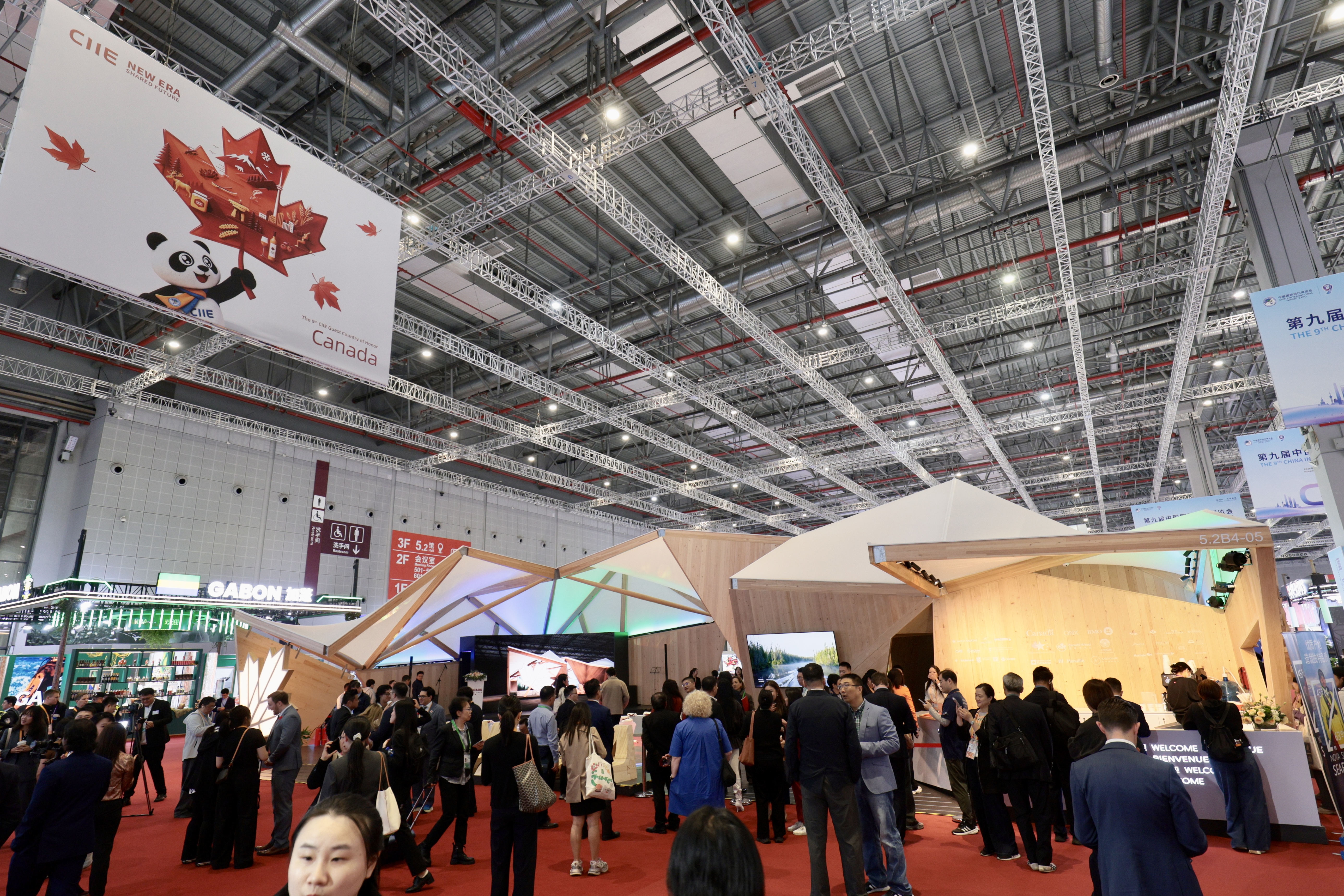
That is the backdrop. This is the result: the national pavilion in the Country Exhibition, another pavilion in the Agriculture and Food hall and Canadian companies in other areas, like medical tech and automotive.
That adds up to more than 120 Canadian companies, the most Canada has ever sent to CIIE, according to the embassy. The embassy also counts pavilions differently than I do. Its tally: one national pavilion, plus three industry pavilions for agri-food, natural health products and consumer products.
CIIE, said Mark Richardson, chargé d'affaires at the Embassy of Canada to China, is "an important platform to deepen commercial connections." That is the diplomatic version. The wharf version comes later, and it involves diesel.
Nova Scotia brings the lobster
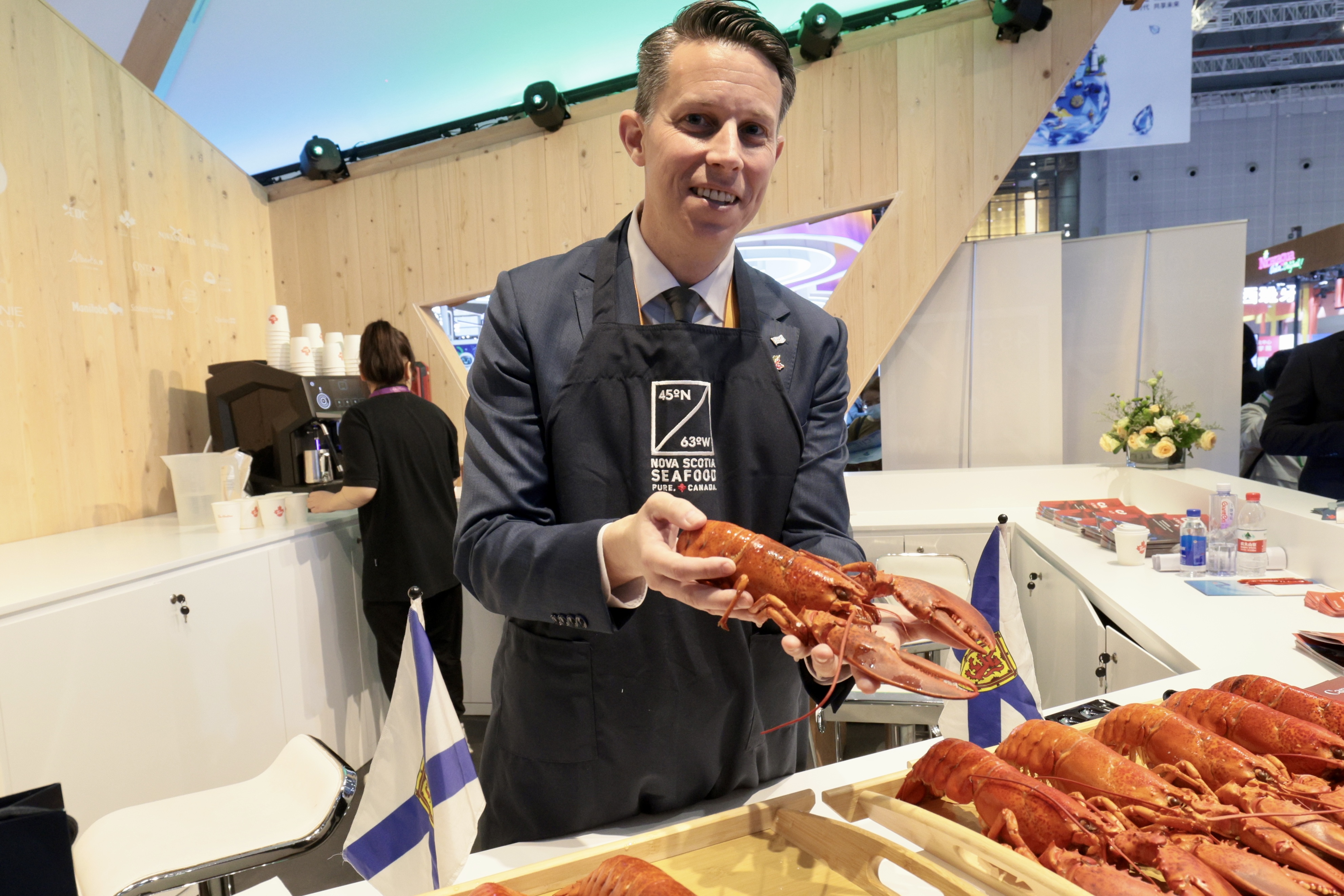
Jason Hollett is the Deputy Minister of Fisheries and Aquaculture and Agriculture for Nova Scotia, a small Atlantic province of fishing towns and very cold water. This is Nova Scotia's first CIIE.
"Nova Scotia is famous for seafood," he told me. "China is our second-largest market for exports."
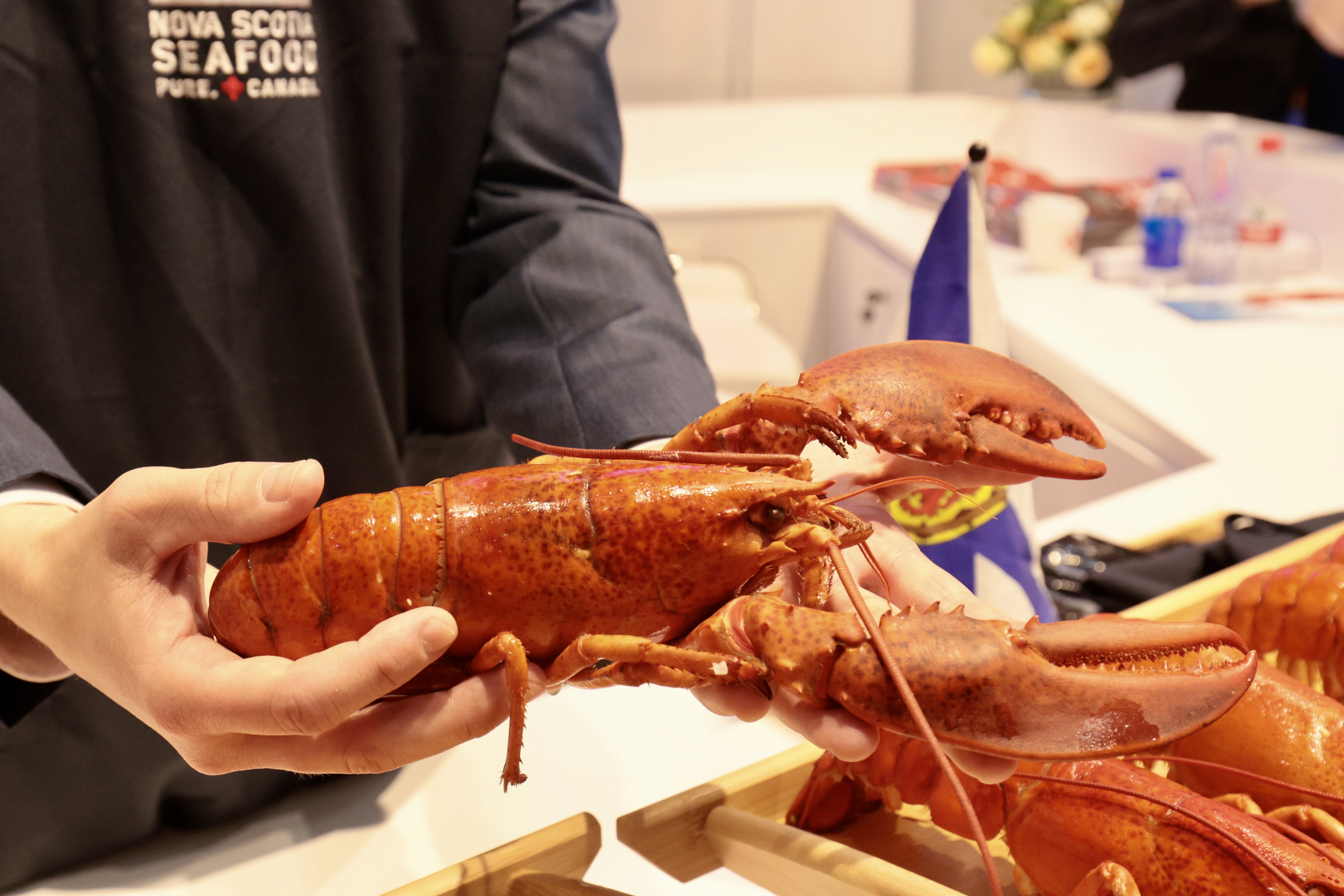
The booth has the obvious star, lobster, plus sea cucumber, clams, cold-water shrimp and, from the farm side, wild blueberry juice.
CIIE was the last stop on a longer trip. The delegation started at the seafood show in Qingdao with 10 Nova Scotia companies, moved on to Beijing, then spent three days in Shanghai meeting importers before the expo even opened. On the day we spoke, they were signing an MOU with a Chinese importer of Nova Scotia seafood to run joint promotions.
The timing was good. The tariff extension had come through just the day before.
"That gives our companies, and the companies here, some certainty on market access," Hollett said. "They can build on those relationships and bring more product in without tariffs being applied. That's most important."
Some of that work happens far from any expo hall. Hollett said the team goes with their importers to visit the final customer. They walk through restaurants and supermarkets to see how the product is sold and what Chinese shoppers want.
Energy shocks due to the war in Iran, went as far as impacting Canadian Lobster
Here is the part of trade most of us never consider.
Shawn Xu is sales manager at Louisbourg Seafoods, a family company in Nova Scotia founded in 1984. It runs five processing plants and hires more than 600 people during the fishing season. It has been selling to China for 15 to 20 years: lobster, snow crab, redfish, whelk, cold-water shrimp, sea cucumber.
In 2024, Louisbourg did at least US$10 million of business with China. This year, Xu estimates, it will be under US$3 million.
Here's why.
"It really is not about the market itself," Xu said. "The market can take more volume if we have the right products at the right price."
The tariff on lobster is gone. The problem is cost. Inflation pushed up the price of lobster at the wharf in Canada. And this year, with war in the Middle East and shipping through the Strait of Hormuz disrupted, diesel got expensive. "We use diesel for shipping products, we use diesel for catching the fish," Xu said. "So everything is related."
Frozen Canadian lobster simply priced itself out. Louisbourg scaled back frozen lobster production. The whelk catch also came in low, and other markets snapped up what there was. Louisbourg used to ship 20 to 30 containers of whelk to China a year. This year it shipped two.
So: same customers, same appetite, same ocean. What changed was the price of a liter of fuel on the other side of the world.
Now look at China.
China absorbed the same oil shock differently. More than half of new cars sold in China are electric, and the shift has hit freight too. Electric trucks were 13.6 percent of heavy truck sales in China in 2024. News flash, it doesn't matter what's happening with oil & gas, because EV trucks don't need diesel. China has been slowly insulating itself against such risks.
In September 2026, they were 50.3 percent, according to industry data compiled by Electrek. In the first half of this year, the International Energy Agency estimates, electric vehicles cut China's oil demand by about 1.35 million barrels a day.
I asked Xu whether Canadian companies had thought about buying Chinese electric trucks. He didn't hesitate.
"That would be one of the best things, in my opinion, that could happen for Canada as a country."
He was also practical about it. A Louisbourg truck drives at least 400 to 600 kilometers per run, and sometimes 1,500 to 2,000 kilometers, to Boston or Toronto. Chargers are thin on the ground. Winters drop below minus 20 degrees. Buyers will need to see batteries work in the cold. Newer Chinese heavy trucks now offer around 500 to 600 kilometers of range, with battery swapping to cut downtime. That's the pitch.
Xu was impressed by how China handled the oil shock. As one of the world's biggest oil consumers, he said, China was able to adapt right away and cut its purchases, which helped steady global prices. "That's something nobody else right now can do."
Dr Mark Ceolin, chairman of the Canadian Chamber of Commerce in Shanghai, says the door is already open. The 49,000 Chinese vehicles cleared for Canada are the start. "Major manufacturers like BYD, Chery and Geely are preparing their market entry strategies and actively seeking partners," he said. The Chamber's own white paper work points the same way: Chinese automakers exploring Canada, and Chinese robotics and automation going into Canadian factories.
I asked Mark, if the Canadian Chamber can serve as a connecting point for Chinese companies wanting to build conections in Canada, and the answer was an emphatic yes. Do you work at a Chinese company, wanting to work with Canada? Get in touch with CanCham.
"I look forward to seeing many successful collaborations where Chinese capital, manufacturing scale, and Canadian technology, or vice versa, complement one another," Ceolin said.
A Chinese truck hauling Canadian lobster to the airport for a flight to Shanghai. It's a tidy loop.
The Chamber: 300 members and counting
Ceolin founded the Canadian Chamber of Commerce in Shanghai in 2008. He also runs Red Gate International, a PR and marketing firm that started in Toronto in 2005. "So I'm a guy who's good at marketing," he said. Fair.
The chamber now has more than 300 members. In the 24 hours before we met, it signed up five more, one of them at the Platinum level.
Ceolin was in Beijing in January for Carney's visit. Since then, he says, it has been "delegation after delegation" of Canadian CEOs and senior executives. "I don't know if that's bucking the trend, but we are certainly riding a wave of optimism and trade growth between China-Canada."
The proof, for him, is small and specific. At the chamber's Business Impact Awards dinner on November 4 (more than 90 applicants across seven categories, 21 finalists), an import-export executive met a freight forwarder seated at a different table. They were signing a deal by the time we spoke. Some of the award winners weren't Canadian at all. They were young Chinese startups that wanted to get to know Canadian companies.
The member list reads like a map of the relationship: Manulife-Sinochem, Air Canada, Canpotex (Saskatchewan potash, by rail and ship), CN Rail and CPKC, Teck Resources, Magna, Linamar, Brookfield and the big banks, BMO, CIBC, Scotiabank and TD. At a forum this week, former Bank of Canada economist Mark Kruger presented data showing bilateral trade is up, Canadian exports included.
"Step by step, things are moving in the right direction," Ceolin said.
Next up, on November 19, the chamber hosts Goldy Hyder, CEO of the Business Council of Canada, and a group of Canadian CEOs stopping in Shanghai on their way to APEC in Shenzhen.

Canadian stuff you can actually buy here
OK. The practical part.
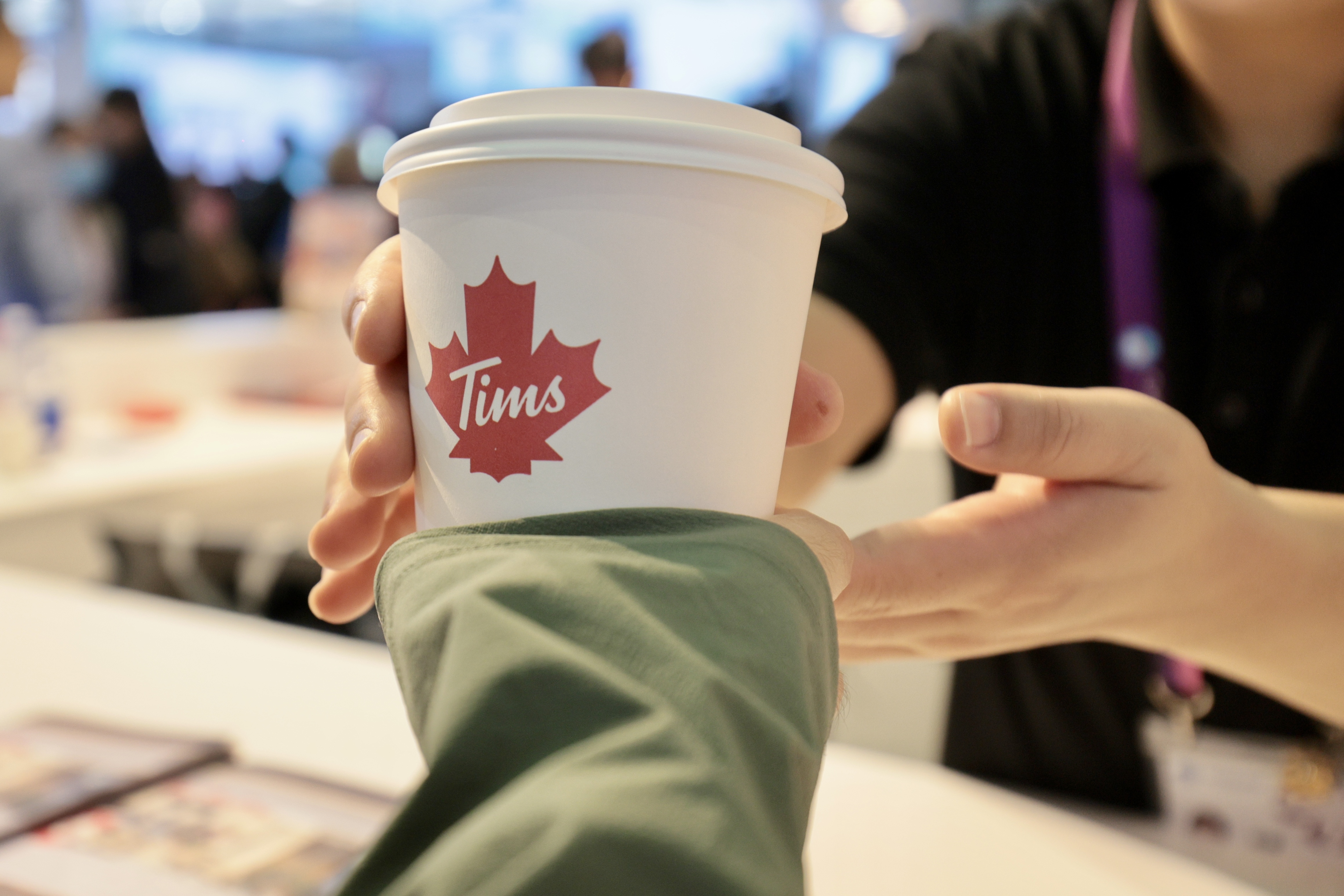
Tim Hortons. Tims arrived in China in 2019, opening first in Shanghai, and now has more than 1,000 stores in close to 100 cities. They served it at the pavilion's opening ceremony. Of course they did.
Lululemon. You already know. It's on every second yoga mat in Jing'an.
Arc'teryx. Founded in North Vancouver, owned by Finland's Amer Sports, whose largest shareholder is China's Anta Sports. A Canadian jacket, a Finnish parent, a Chinese owner, selling to Chinese hikers from about 140 stores in China. Globalization fits in one shell jacket.
Nova Scotia lobster. Look on Hema and JD.com, and in supermarkets. "Canadian Seafood is the brand," Hollett said. "If you see a lobster and it says Canadian Seafood, there's a good chance that it's from Nova Scotia." Clearwater Seafoods, another big Nova Scotia name, is exhibiting too.
Wild blueberry juice. Also from Nova Scotia, also at the booth.
Beef. Canadian beef is back on sale in China this year after a long gap.
Canola. You may already eat it without knowing. Canadian canola gets crushed into oil and meal, and the meal goes into animal feed.
Maple syrup. Members of the Chamber import it, Ceolin confirmed, though he couldn't remember who sent the samples. "Why, you want some?"
Inside the country pavilion
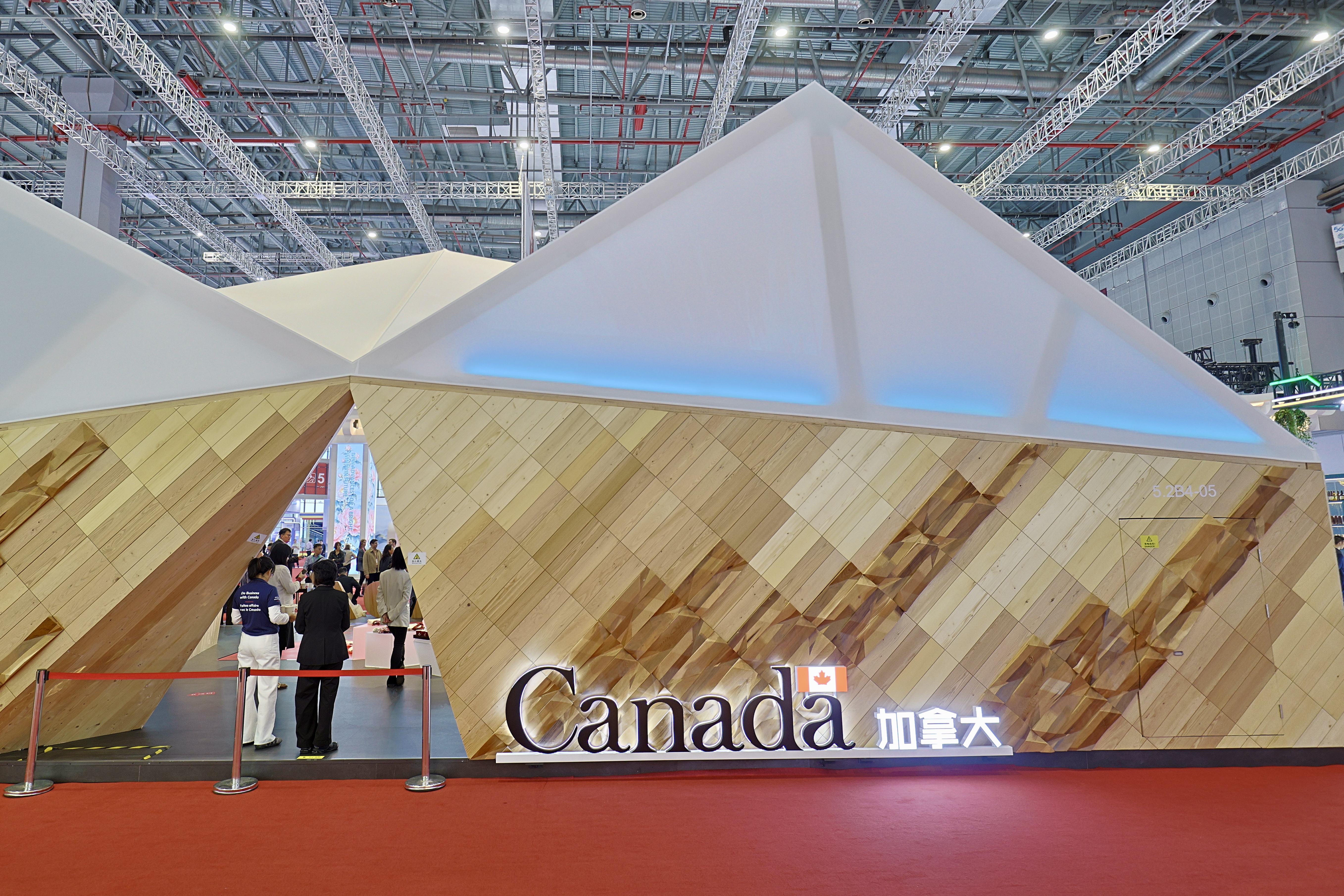
The pavilion itself is built from pale wood under white peaked canopies, a sort of mountain lodge with a big lit maple leaf. Inside, there was a Cirque du Soleil hand-balancing act (Cirque is from Montreal), a Toronto Symphony Orchestra violinist and Parka, the beaver mascot of Parks Canada, posing for photos.
The wood is 100 percent Canadian, the embassy says, which makes the building its own exhibit on sustainable construction. The official theme is "Canada: A Natural Partner for Tomorrow." The stage says it in four words: "Natural partners, shared future."
CIIE runs until November 10.
Now the food hall. Some of this is already on shelves here. The rest came to find a way in.
Inside Canada's Agriculture & Food pavillion
Canada Pork
First, the meat. Canada Pork had a white tower of a booth. Canada exports more than 60 percent of the pork it produces, and China has long been where the parts Canadians skip end up: snouts, feet, ears, organ meats.
A Canadian butcher sees offcuts. A Shanghai kitchen sees braised trotters. Trade, sometimes, is just two people agreeing that the other one can have that half of the pig.
Fatso
Fatso is peanut butter with extra fat in it, on purpose. Jill Van Gyn started it in 2016 in the back kitchen of a health food restaurant in Victoria, British Columbia, blending peanuts with coconut oil, MCT oil, chia and flax.
In 2023 it was bought by GE Barbour, a New Brunswick company founded in 1867, the same year as Canada itself. At home, Barbour's is better known for King Cole tea. At CIIE, the screen above the jars was in Chinese.
Fruit d'Or
Fruit d'Or is the world's biggest grower of organic cranberries. That is a narrower title than it sounds, and also a real one. Martin Le Moine switched his Quebec farm to organic cranberries in 1995, when, he has said, there really was no market for them.
He and other Quebec growers founded Fruit d'Or in 1998. Today it processes about 40 percent of the cranberries grown in Quebec and sells to more than 50 countries. It is also the second-biggest processor of organic wild blueberries, and at CIIE it was handing out frozen wild blueberries in paper cups with tiny spoons.
Organic cranberries need cold winters to keep pests and fungus down. Quebec has cold winters.
Petcurean
Petcurean makes premium dog and cat food, sold as Go! Solutions and Now Fresh, out of Chilliwack, British Columbia. Two friends, Ron Mayert and Dan Vanleeuwen, started it in 1999. It is still independent.
It is also already here. Petcurean sells in China through an exclusive distributor, Petjust. And in January, the two countries signed a new pet food safety protocol to speed up access for more Canadian pet food. The dogs of Shanghai eat well. Some of them eat Canadian.
Two companies from Winnipeg
Two companies from Winnipeg, a prairie city in the middle of Canada that gets very cold, share a corner.
Bliss Gourmet Baked Goods makes coconut florentines and almond toffee cookies. It is run by third-generation bakers whose parents came to Canada from Italy in the 1960s.
Medallion Milk Co. makes milk powder. The sign says since 1965. It uses a proprietary drying process that it says keeps the milk creamy once you add water, and a 1kg bag of its whole milk powder makes 8 liters of 3.25 percent milk, the same fat content as a carton of whole milk in Canada. The packaging carries the blue cow logo that marks 100 percent Canadian milk.
The banner on its website reads "Export Ready for China." Its products are registered with GACC, China's General Administration of Customs. That registration is the ticket in. Without it, no dairy crosses the border.
Canadian beef
Canadian beef was back after almost five years away. China reopened to it in January, and by the summer China was already Canada's sixth-largest beef market, according to Canada Beef.
The display case held thick marbled steaks and trays of thin-sliced beef rolled for hotpot. That is where a lot of it is going. Canada Beef says Canadian beef will soon be on the menu at major hotpot chains.
Great Mountain Ginseng
Here is one that surprises people. A lot of the American ginseng, or xiyangshen, sold in China is Canadian. Ontario growers have the largest production of North American ginseng in the world, and about 85 percent of North American ginseng is sold to Asia.
Great Mountain Ginseng was founded in 1976 and calls itself the first Canadian ginseng company run by Chinese entrepreneurs. It is now a third-generation family business with 13 stores in Canada, processing up to 1.2 million pounds of root a year. A ginseng root can take five years to grow.
The trade is older than Canada. In 1715 a Jesuit priest in Quebec recognized the plant from descriptions out of China and started shipping it east.
Icewine
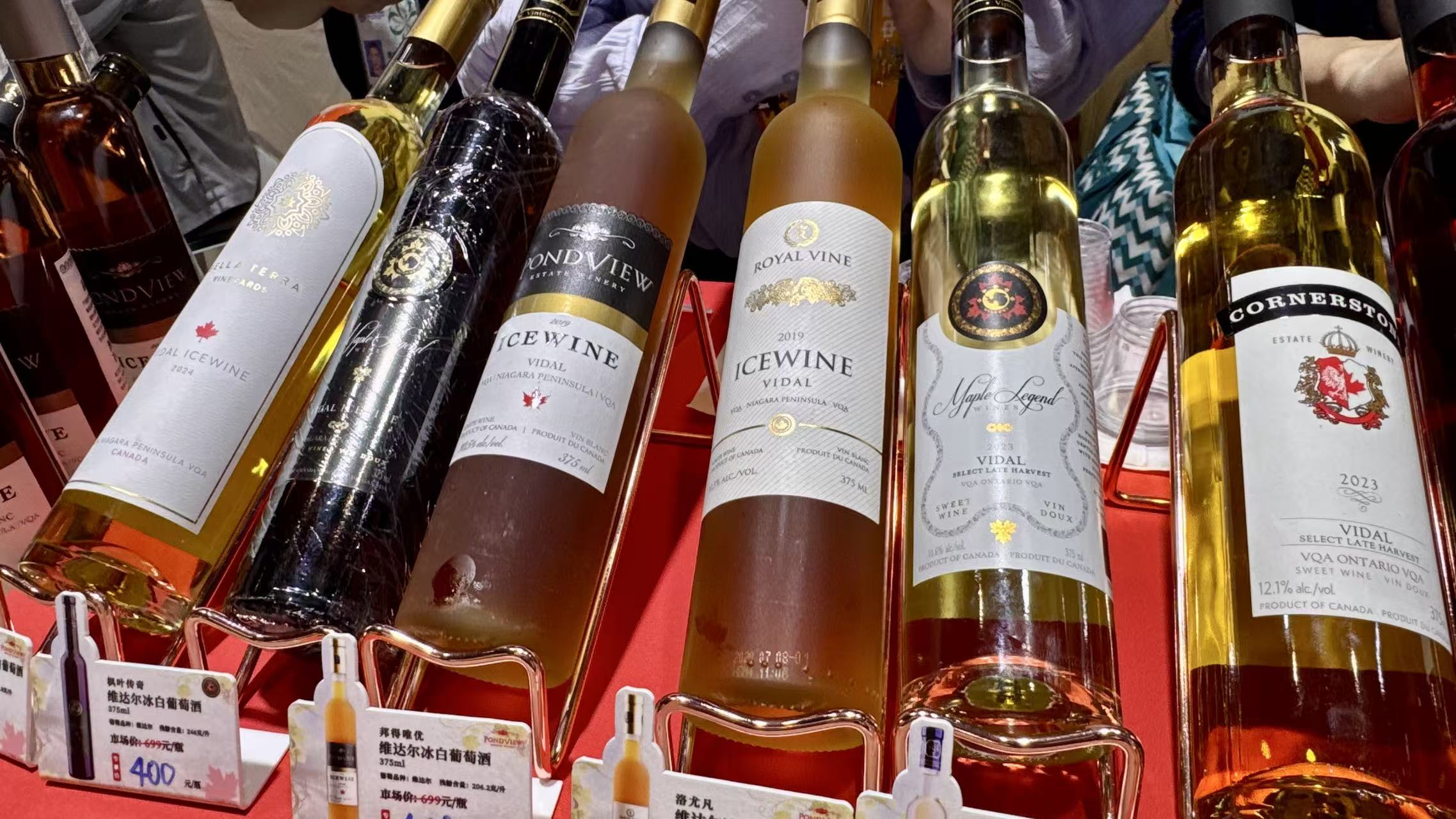
Icewine is the Canadian wine most Chinese drinkers already know. The real thing is strict. The grapes must freeze naturally on the vine at minus 8 degrees or colder, get picked by hand, often in the middle of the night, and get pressed while still frozen. Yields are tiny.
Buying tip: look for VQA on the label, plus a vintage and a grape variety. Real Icewine is spelled as one word.
Not everything was food
Not everything was food. A few steps over, the Natural Health Products Pavilion had supplements from Wide Naturals and a micro-pressure oxygen cabin that looked borrowed from a spaceship. CIIE is like that. You turn a corner and the category changes.
Jus Nova
Back to Nova Scotia, and back to blueberries. Wild blueberries are the province's number one fruit crop, worth around C$100 million. Jus Nova turns them into wine. Its poster, in Chinese, called them a small wild fruit that is extraordinary in its own way.
I got to try a sample of this wild blueberry juice. Wow. It is WAAAAY different, than any other sort of Blueberry juice you taste, which invariably is probably sweetend to high heaven. This wasn't very sweet, but neither was it overpoweringly tart either. It was reminiscent of tasting like fresh pomegranate juice, a sort of depth that screams fruit. It's like tasting good blueberries as God intended. Understated. Quite nice.
Saskatchewan
Saskatchewan came with its own trade agency, STEP, the Saskatchewan Trade and Export Partnership, and some of its companies. One makes Crush-It Hard Iced Tea, a Saskatchewan-made vodka iced tea that only launched in 2023. Three years from a prairie liquor store to the import expo in Shanghai is fast.
MAAS BBQ
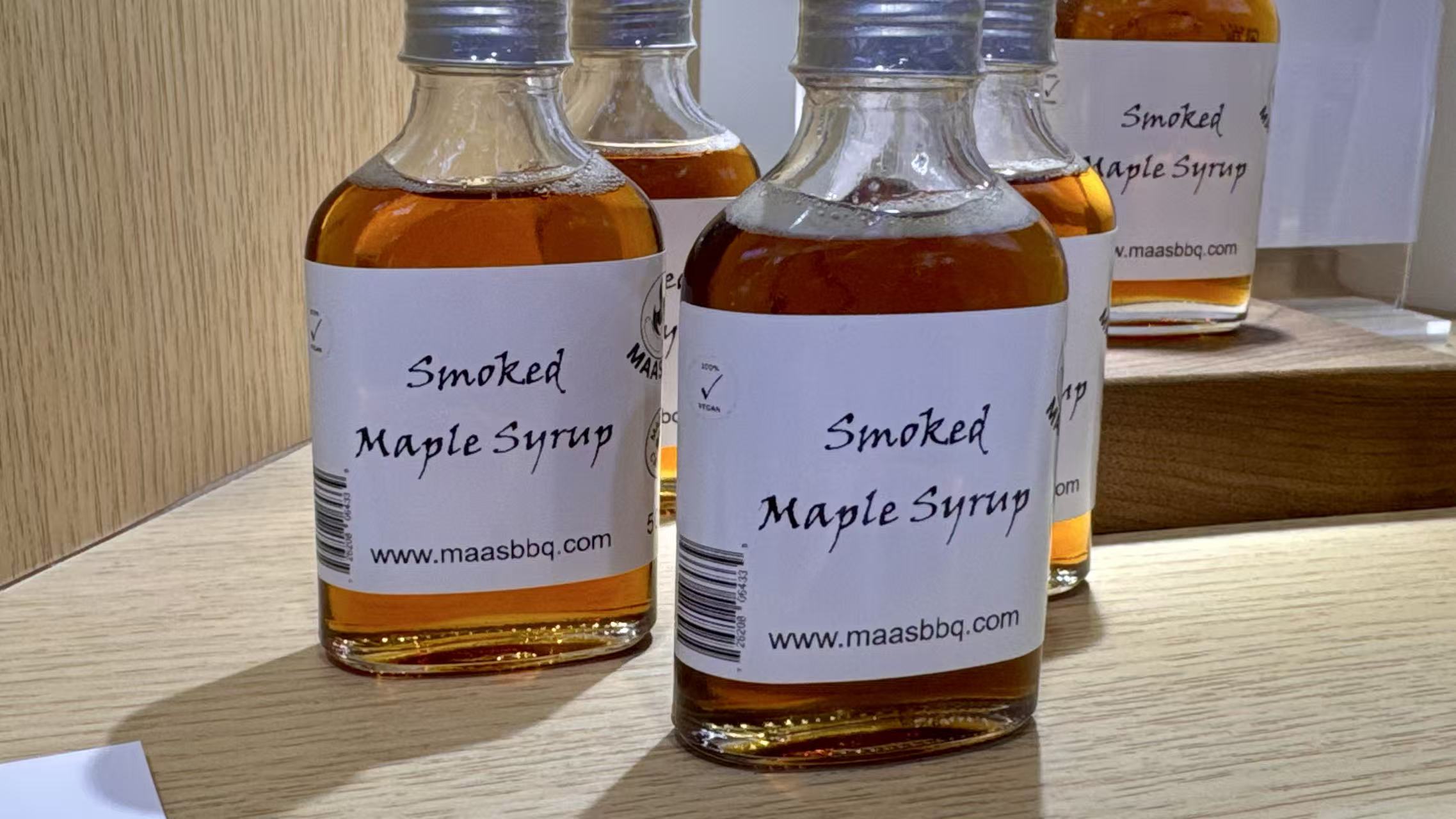
The most honest booth in the hall was MAAS BBQ. Small jars, simple labels: smoked maple syrup, smoky Dijon mustard and smoked olives that say "Product of Spain, smoked in Canada," which is an entire supply chain on one sticker.
The big sign above the booth said 寻找总代, looking for a general distributor. That is CIIE in four characters. You bring your jars. You hope someone with a warehouse walks by.
I asked Ceolin how the chamber judges whether Canadians are doing well in Shanghai. He pointed to the Maple Leaf Gala in September. Without critical mass, he said, nobody buys tickets to a gala.
The galas are full again, and what I took away from everyone I spoke to, is that the sky is the limit between China and Canada.
Source: City News Service
