



What Japan needs to tear off is far more than just a 'militaristic emblem' - 2026-05-06
Recently, a newly released emblem by the 1st Division of the Japan Ground Self-Defense Force's 1st Infantry Regiment has drawn strong criticism. The design, reportedly generated using artificial intelligence (AI), depicts an elephant dressed in military uniform, holding a rifle, wearing a skull emblem, and emitting a piercing blue glow from its eyes - an image steeped in combat symbolism. Forced by mounting public pressure, the unit has since announced that it has scrapped the emblem and deleted related posts.
This is not an isolated incident, but yet another detailed manifestation of the Japan Self-Defense Forces abandoning the principle of its "exclusively defense-oriented policy."
The emblem controversy is far from a simple "PR mishap," nor can it be dismissed as an "AI glitch." According to Japanese media, the redesign aimed to "boost morale and enhance a sense of belonging among our members." Yet it is difficult to believe that transforming a symbol of peace into a heavily armed figure adorned with symbols of death is merely an "aesthetic misjudgment." At the very least, it suggests that in crafting the prompts or inputs, Japan's Self-Defense Force personnel infused the AI with aggressive and destructive semantics - echoing remnants of militarist thinking that equate violence with "honor." The increasingly bellicose mindset being exposed within the Japan Self-Defense Forces is, in essence, a betrayal of the spirit of Japan's postwar pacifist Constitution.
A small emblem, like a coin with two sides, reflects two sharply contrasting attitudes within Japanese society. On one side, many Japanese netizens condemned it as "militaristic," "distasteful," and "military emblems that look like they're for killing." The swift removal of the emblem under public pressure demonstrates that voices of conscience and historical clarity are still present in Japan. Yet the other side of the coin is a cause for concern: How did such a design - so blatantly carrying militaristic overtones - get approved within the Japan Self-Defense Forces in the first place? The systemic and institutional regressive current behind this cannot be ignored.
Evidently, this is not an isolated case within the Japan Self-Defense Forces. Not long ago, a Japan Ground Self-Defense Force Second Lieutenant carried a knife and forcibly broke into the Chinese Embassy in a serious incident that has yet to fully subside. Soon after, a Japanese naval vessel transited the Taiwan Straits on the 131st anniversary of the signing of the Treaty of Shimonoseki, and Japan participated as a full member for the first time in the US-Philippines "Balikatan" joint military exercises. In 2024, a former senior Japan Maritime Self-Defense Force officer even assumed the top leadership position at Yasukuni Shrine. When the highest ranks of a military establishment openly align themselves with institutions like Yasukuni Shrine, which enshrines Class-A war criminals, it becomes obvious that extreme actions - whether storming an embassy with a knife or designing skull-emblazoned insignia - will emerge among its lower ranks as the bitter consequences of such alignment.
What Japan needs to tear off is far more than just a "militaristic emblem," but rather the entire ideological foundation, policy framework, and unresolved historical legacy underpinning its resurgent militarism.
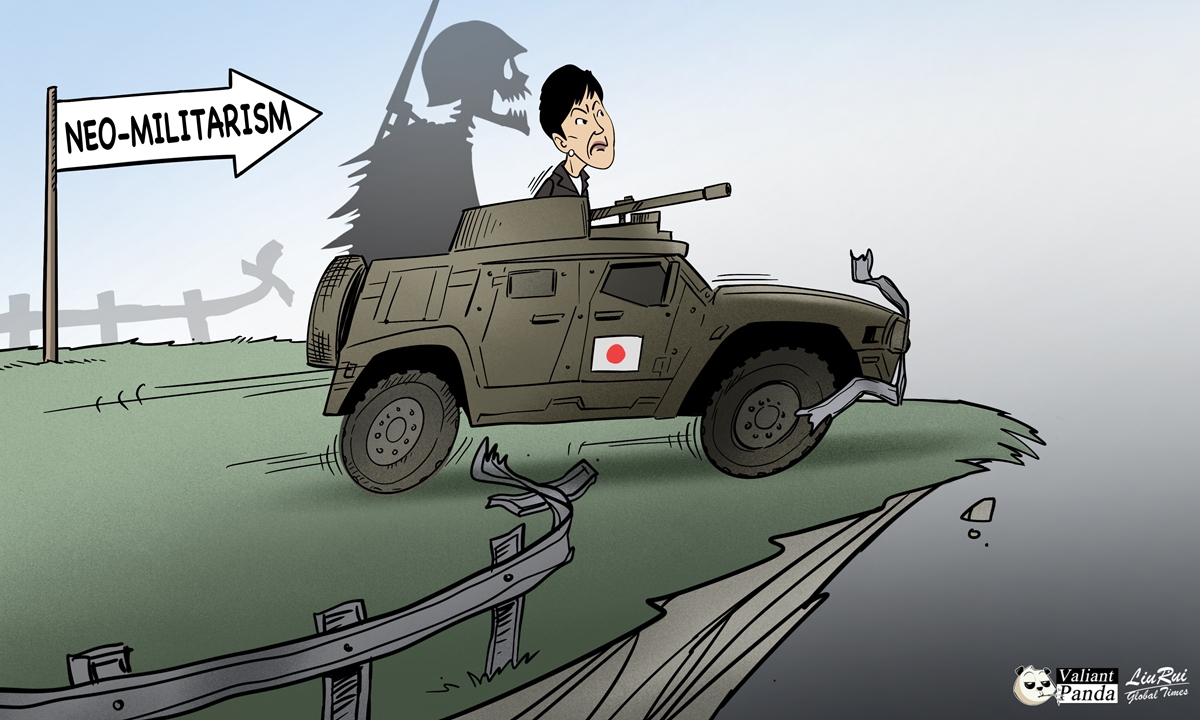
Since the Takaichi administration took office, it has embedded "enemy base strike capabilities" in the three national security documents, called for restoring the rank of "issa" (first field officer) in the Self-Defense Forces to the former Imperial Japanese Army's blood-soaked "Taisa," and pushed the annual defense budget past 9 trillion yen. While claiming to uphold the identity of a "country of peace," it has used terms like "exclusively defense-oriented policy" to cloak military expansion in legitimacy, gradually abandoning the core principles of pacifism.
Japan's "neo-militarism" is re-emerging along the trajectory of Takaichi's increasingly unchecked military agenda, and the international community must not underestimate the dangerous ambition of Japanese right-wing forces in manipulating public opinion and hijacking the future direction of Japan. May 3 marked the 80th anniversary of the opening of the Tokyo Trial. This historic trial, presided over by judges from 11 countries and lasting about two and a half years, established with overwhelming evidence the crimes of Japanese Class-A war criminals such as Hideki Tojo, nailing them to the pillar of historical shame. Accepting this verdict was a prerequisite for Japan's postwar return to the international community. The day also marked Japan's Constitution Memorial Day, and around 50,000 people gathered on the streets of Tokyo for an "anti-war, pro-Constitution rally."
However, 80 years later, at the former site of the Tokyo Trial, trial records that should be remembered are deliberately marginalized, while symbols of militarism such as military uniforms and swords are prominently displayed. All this demonstrates how deeply entrenched historical revisionism and militarist thinking remain in Japan. Japan's various dangerous trends in terms of distorted historical perspectives and "remilitarization" appear particularly glaring.
The wars of aggression launched by Japanese militarism once brought profound suffering to the people of Asia, including China, and to the world at large. The world has never forgotten the bloody history of World War II. Japan, as the initiator of the wars of aggression, has no right to "selective amnesia," let alone to seek a "reversal" of history or the revival of militarism. For Japan's current rulers, removing that "militaristic emblem" is far from enough. What must also be "torn off" are its distorted understanding of history, the factual trampling of the pacifist constitution, and the war ambitions lurking behind constitutional revision and military expansion. Stopping the worship of war criminals and adhering to the path of peace are the minimum sincerity that Japan should demonstrate to its neighbors and the international community, as well as the basic morality it must uphold.
Source: Global Times