



Resilience and vitality through innovation - 2026-10-14
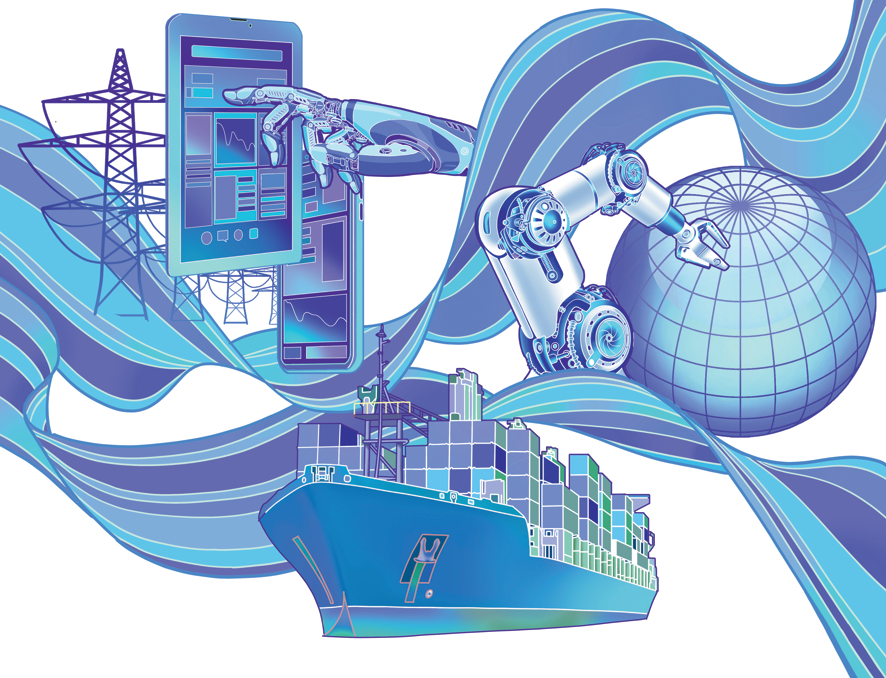
AI's promise depends on access
By Vijay Prashad
When we talk about AI, we must first consider electricity. For millions of people around the world, access to electricity remains unreliable or out of reach. Even basic activities such as charging a phone or using a computer at night can be a challenge, let alone making use of AI.
This is where the discussion about AI and the Global South must begin. Electricity is not simply a technical requirement but the foundation for broader access to technology and its benefits.
But access alone is not enough. We must also integrate AI into the development of productive forces. Its true value lies not merely in creating memes or advancing financial technology, but in enhancing our ability to produce goods and provide services efficiently.
For developing countries, the challenge is to move beyond their roles as mere suppliers of raw materials that power the AI industry. Copper, lithium and other minerals are important, but developing countries should not merely extract them while the greater value is created elsewhere. They must also become users, developers and producers of technology, moving up the value chain.
China's technological advancements offer an important lesson. It has challenged the notion that only a handful of countries can produce sophisticated technologies. This matters not simply because China competes in AI, but because its experience can inspire other countries to overcome the obstacles to technological development.
Such progress requires self-reliance, investment in infrastructure and opportunities to develop technological capabilities.
Ultimately, AI is not socially neutral. Its impact depends on how it is developed and used. The goal should be to enhance human capabilities, expand opportunities and ensure that technology serves people rather than the other way around.
AI's progress should therefore be measured not by the power of its models or the scale of its computing infrastructure but by whether more people can use it to improve their lives, whether more countries can develop their productive capacity, and whether the benefits of technological progress can reach beyond those who already possess the greatest resources.
AI's promise will remain incomplete until more of the world has the power — both literally and technologically — to take part.
Innovation is more than invention
By John Ross
Innovation is often associated with new products: the next smartphone, a breakthrough technology or something that has never existed before. But innovation can take another form: making an existing product significantly cheaper through technological progress.
Economists call this cost innovation. A product that delivers most of the quality at a fraction of the price can reach a much larger market. The goal is not simply to cut costs or rely on cheap labor, but to use technology to improve production and make useful products more affordable.
China's industrial experience exemplifies this approach. Companies initially build competitiveness by producing quality goods at lower costs, then move toward product innovation. This stage is more demanding because research and development requires investment, and not every experiment succeeds.
BYD's journey illustrates how these stages can work together. Two decades ago, it was primarily a battery producer that had just ventured into automobile manufacturing. Its progress shows why cost competitiveness should not be seen as the opposite of technological advancement.
The value of AI does not depend only on how powerful a model is, but also on whether businesses, researchers and ordinary users can afford to put it to work. If the cost of using advanced technology is too high, its benefits may be limited to a few organizations. Lower costs can enable more people to experiment, develop applications and improve productivity.
Open-source technology can help widen these opportunities by allowing developers to access, use and adapt models.
This is particularly important for developing economies. Not every country can afford to build advanced technology from scratch.
More affordable tools can help businesses improve services, raise productivity and develop their own capabilities. The challenge is to move beyond merely using technology to adapting, improving and eventually producing it.
Cost innovation alone does not guarantee success. It must be accompanied by continued research, better products and the ability to learn from failure. Yet it offers a useful way to understand how technological progress can spread.
Innovation is not just about creating something new. It is also about making technology more accessible, improving what already exists and creating the conditions for the next breakthrough.
The hidden cost of global efficiency
By Hal Tagma
In March 2021, a container ship ran aground in the Suez Canal, bringing one of the world's busiest trade routes to a standstill for many days. The incident was a reminder of how closely connected the global economy had become — and how quickly a local disruption could affect businesses and markets around the world.
Modern trade depends on speed. Companies seek to reduce costs, shorten delivery times and move goods from producers to consumers as efficiently as possible. Yet the systems designed to maximize efficiency can also become vulnerable when an unexpected disruption occurs. The challenge is not to abandon efficiency, but to balance it with resilience.
History offers an unusual example of how people respond when trade routes are blocked. After the Suez Canal closed in 1967, 14 merchant ships were stranded in the Great Bitter Lake. Their crews remained there for years, unable to resume their journeys. Under difficult circumstances, they formed an association, organized sporting events and even issued their own postage stamps.
They could not reopen the canal, but they found ways to maintain a sense of community and keep daily life going. Their experience demonstrated a simple but important lesson: when circumstances are beyond people's control, cooperation and creativity can make a difference.
The contrast between these two episodes is instructive. The 2021 blockage revealed the vulnerability of a highly connected trading system. The stranded crews of the Great Bitter Lake showed how people can adapt when normal arrangements break down. Together, the stories point to a broader question: how can the global economy remain efficient without becoming excessively dependent on systems that have little room for disruption?
Resilience and efficiency are sometimes treated as competing priorities. Maintaining backup capacity, alternative routes or additional inventories can raise costs during normal times. But having no alternatives can prove far more expensive when a major disruption occurs. Businesses and economies must therefore consider not only how to optimize everyday operations, but also how to prepare for unexpected events.
Technology can help here. Better information systems, improved logistics and more effective planning can make supply chains more responsive.
The experience of the stranded crews is a reminder that cooperation need not wait for the ideal circumstances. Even when larger problems cannot be resolved immediately, people can still find practical ways to respond to shared challenges.
No trading system can eliminate uncertainty, and no single solution can prevent every disruption. But economies can become better prepared by combining efficiency with flexibility and by recognizing the value of cooperation.
Global trade depends on ships, ports and infrastructure. It also depends on the people who keep goods moving and find ways forward when normal routes are blocked. True resilience lies not in preventing every disruption, but in ensuring that when one occurs, the system can adapt and recover.
Building trust in the global economy
By Glenn Diesen
For decades, the international economic system has helped countries trade, invest and grow through increasingly interconnected markets. Today, economic activity depends not only on the movement of goods, but also on technology, transport corridors, banking, currencies and payment systems. These connections create opportunities for growth, but they also raise an important question: how can we make the global economy more stable and resilient?
Economic interdependence has brought considerable benefits. Businesses can source materials from different markets, reach customers across borders and use established infrastructure to move goods efficiently. Yet when critical supply chains or financial networks face disruptions, the effects can spread beyond individual companies or countries.
Stability therefore requires more than efficiency. Businesses and economies must consider how to manage risks, diversify supply sources and maintain alternatives when unexpected disruptions occur. Depending too heavily on a single supplier, transport route or essential service can leave an otherwise efficient system vulnerable. Building resilience means ensuring that economic connections remain reliable even when conditions change.
Technology and infrastructure are central to this effort. Advances in manufacturing, logistics and digital systems can improve productivity and make supply chains more responsive. Reliable transport links and effective banking and payment networks are equally important. As these systems become more closely connected, their development must be accompanied by appropriate standards, clear rules and effective coordination.
Governance, however, cannot be treated as a purely technical exercise. International economic activities involve different markets, institutions and priorities. Cooperation requires communication, mutual understanding and mechanisms that allow participants to address shared challenges.
International organizations and multilateral cooperation can help provide a framework for such efforts. As new technologies and industries develop, existing rules and institutions may need to adapt. The challenge is to establish arrangements that reflect changing economic realities while remaining practical, transparent and inclusive. Countries need opportunities to participate in emerging industries, develop new capabilities and benefit from cross-border cooperation.
There is no single formula for ensuring economic stability. Different economies face different risks, but share an interest in reliable supply chains, predictable financial arrangements and effective channels for cooperation.
A more resilient global economy does not require countries to eliminate their interdependence. It requires a better balance between efficiency and security, national capabilities and international cooperation, and technological progress and sound governance.
Ultimately, stability depends on more than the strength of individual economies. It also depends on whether the systems connecting them can adapt to change, manage uncertainty and continue to support shared economic development. Strengthening these foundations is essential to building confidence in the global economy and ensuring that its benefits remain widely accessible.
Source: China Daily