


Shanghai Today
Pudong accelerates as China's reform and innovation flagship - December 09, 2025
浦东加速成为中国改革创新的旗舰
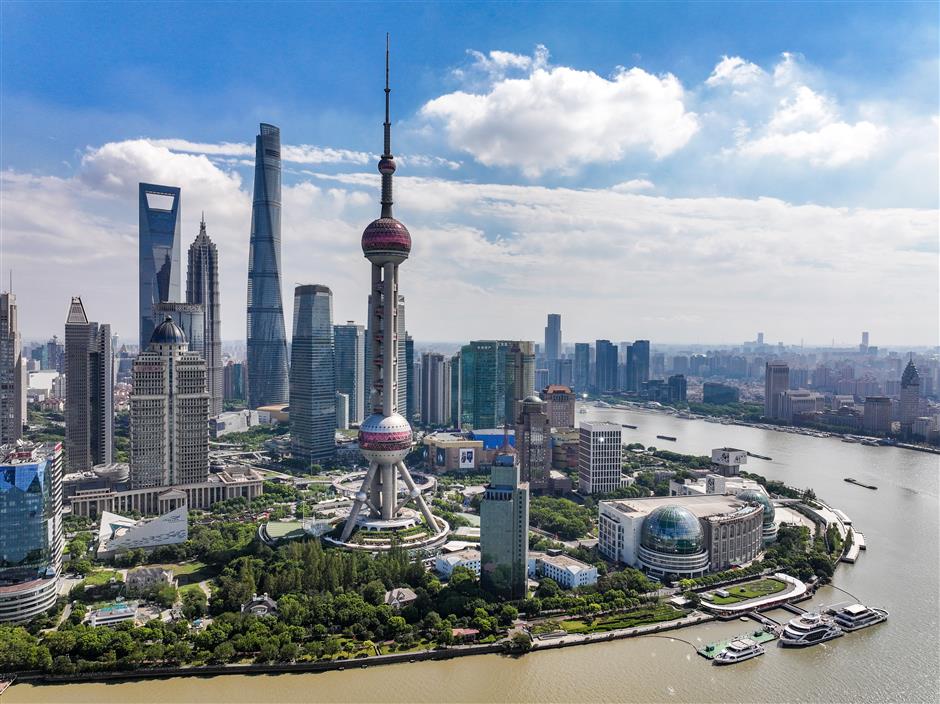
A bird's eye view of Lujiazui.
While the Pudong New Area has developed over 35 years into a hub of reform, innovation and global engagement, this year celebrates its fifth anniversary as a designated pioneer area for socialist modernization, highlighting its role in shaping China's development future.
Pudong, Shanghai's flagship zone for reform and opening-up, has long symbolized China's modernization drive. Established in 1990 as a testing ground for bold economic initiatives, including the country's first pilot free trade zone, Pudong has consistently led China in innovation, urban development and global trade.
In 2020, President Xi Jinping designated Pudong as a pioneer area for socialist modernization. Since then, the new area has accelerated economic growth, technological innovation and urban transformation.
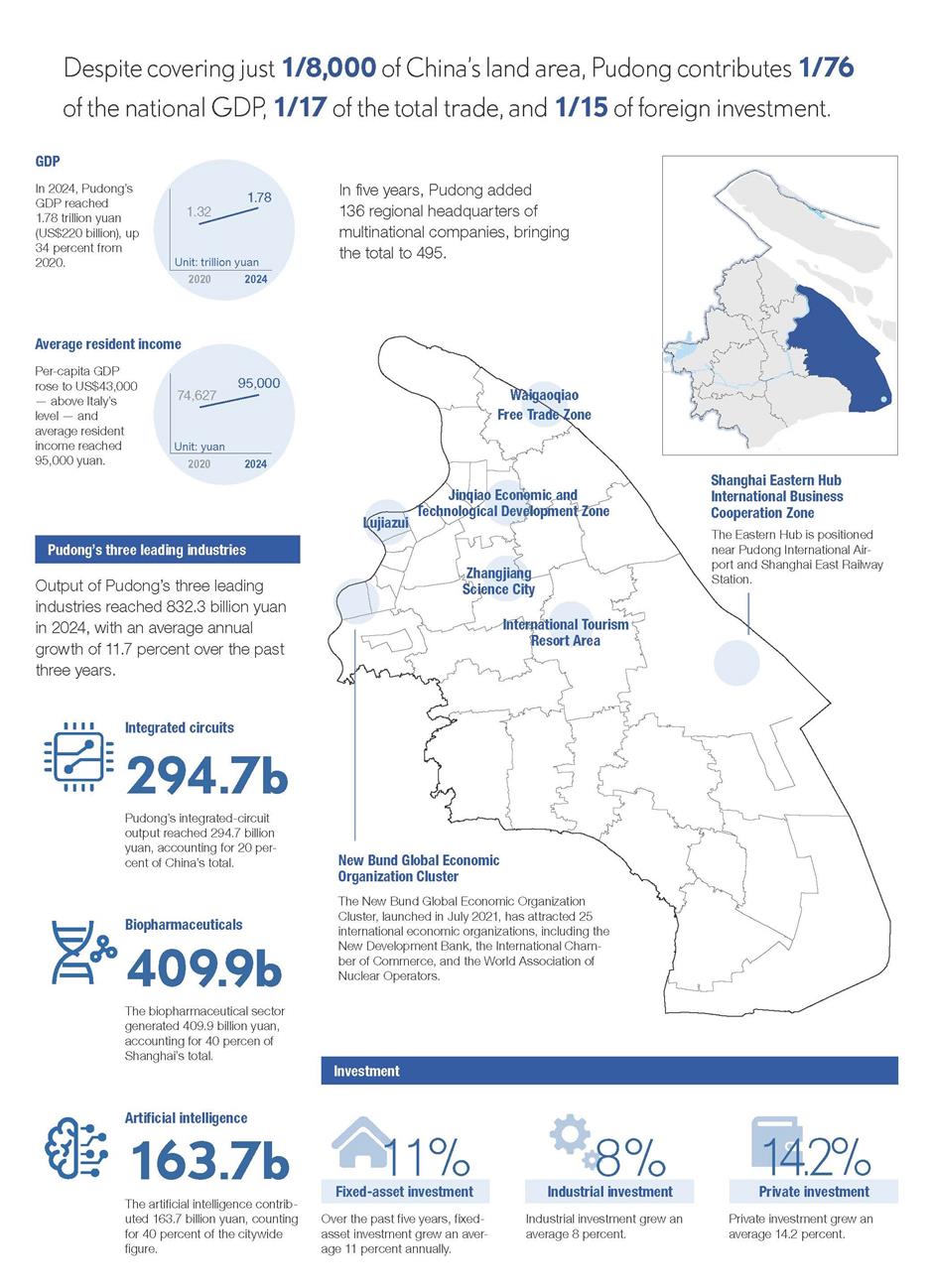
Pudong's GDP reached 1.78 trillion yuan (US$220 billion) in 2024, up 34 percent from 2020, and grew a further 6 percent in the first three quarters of 2025. During that period, per-capita GDP rose to US$43,000 – above Italy's level – and average resident income reached 95,000 yuan. Over the past five years, fixed-asset investment grew an average 11 percent annually, industrial investment 8 percent, and private investment 14.2 percent. From January to October 2025, industrial investment surged 36.7 percent, surpassing last year's total and marking a new high.
Despite covering just 1/8,000 of China's land area, Pudong contributes 1/76 of the national GDP, 1/17 of the total trade, and 1/15 of foreign investment. In the first three quarters of 2025, GDP growth remained strong at 6 percent year-over-year.
A national innovation engine
Pudong has strengthened its technological capabilities and high-end industrial base, emerging as a national model for homegrown innovation.
The share of fiscal spending devoted to science and technology has risen from 3.9 percent in 2020 to 9.2 percent, helping drive an average annual increase of 11.2 percent in total R&D investment.
State-backed scientific resources are concentrated in Pudong, which hosts 14 major research facilities and leads the Human Phenotype Project. Key breakthroughs include China's first homegrown large passenger jet, the C919; the domestically built cruise ship Adora Magic City; and MicroPort's Toumai four-arm laparoscopic robot, the country's first commercialized surgical robot.
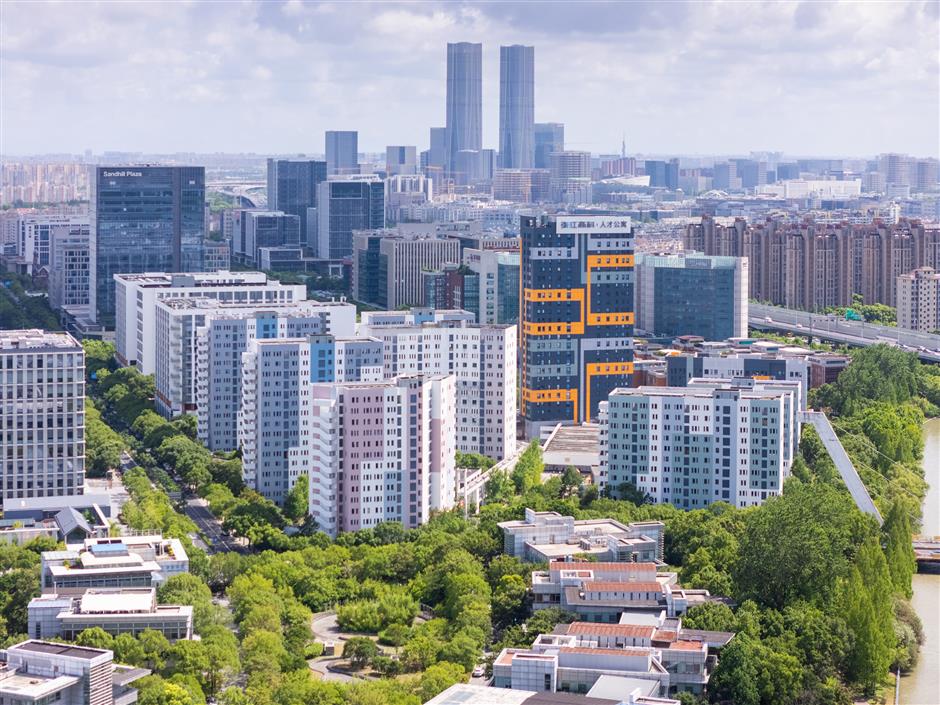
Zhangjiang Science City.
Pudong is anchored by three high-tech pillars – integrated circuits, biopharmaceuticals and artificial intelligence. Their output reached 832.3 billion yuan in 2024, with an average annual growth of 11.7 percent over the past three years. At the heart of Pudong's innovation is Zhangjiang Science City, home to 24,000 technology firms and 550,000 professionals. Its annual revenue has risen 10.5 percent on average.
• Integrated Circuits: Pudong has built a complete chip ecosystem, spanning EDA software and design to manufacturing, packaging, and testing. Its integrated circuit industry has doubled in size, rising from one-sixth to one-fifth of the national total.
• Biopharmaceuticals: In the first ten months of 2025, Pudong's biopharmaceutical sector generated US$24 billion in overseas licensing deals, 9.7 percent of the global total. It has piloted schemes for importing research materials and cross-border supervision, and China's first CAR‑T therapy has been approved for domestic use and export.

Humanoid Robot (Shanghai) Co Ltd.
• Artificial Intelligence: Humanoid robots are at the forefront of Pudong's AI ambitions. The district hosts the world's first open-source full-size humanoid robot community, Open Loong, and a national-local innovation center, with shipments expected to reach 5,660 units this year.
Policy pilots scale nationwide
Pudong has basically completed the 121 tasks outlined in the central government's "pilot area" guidelines.
China has scaled up several of these initiatives nationwide: In December 2024, the National Development and Reform Commission approved the expansion of 11 Pudong practices, and in July 2025, the State Council cleared 77 measures from the China (Shanghai) Pilot Free Trade Zone for rollout to other FTZs.
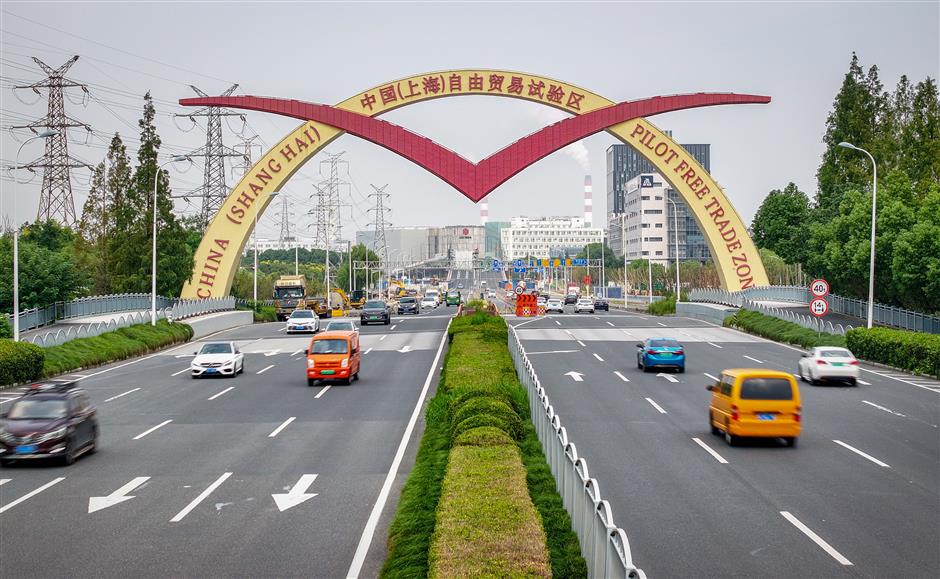
China (Shanghai) Pilot Free Trade Zone.
These measures cover services, goods and digital trade, intellectual property, government procurement and risk control. Forty-three initiatives, including cross-border e-payments, commercial encryption testing recognition, and new data-security certification rules, will apply nationwide.
Pudong has deepened capital market reforms. The STAR Market has introduced a market-maker system and a new "growth tier" for tech companies. In the past five years, 52 firms have listed on the STAR Market, valued at1.9 trillion yuan, or 18 percent of the national total.
The new area is also building out the data economy. By February 2025, trading on the Shanghai Data Exchange reached about 580 million yuan, with over 5,000 products listed. The exchange issued the world's first rulebook for a dedicated data marketplace, launched specialized trading sections, and created an international board.
Talent recruitment reforms include e-visa services, fast-track confirmation letters for high-level foreign professionals, and updated lists recognizing overseas qualifications. Financial pilots, such as China's first cross-border digital-renminbi settlement for crude oil, continue to expand. Trade facilitation has improved through the China (Shanghai) International Trade Single Window.
Since 2019, Pudong has issued over 90,000 China Compulsory Certification exemption certificates, roughly one-third of the national total.
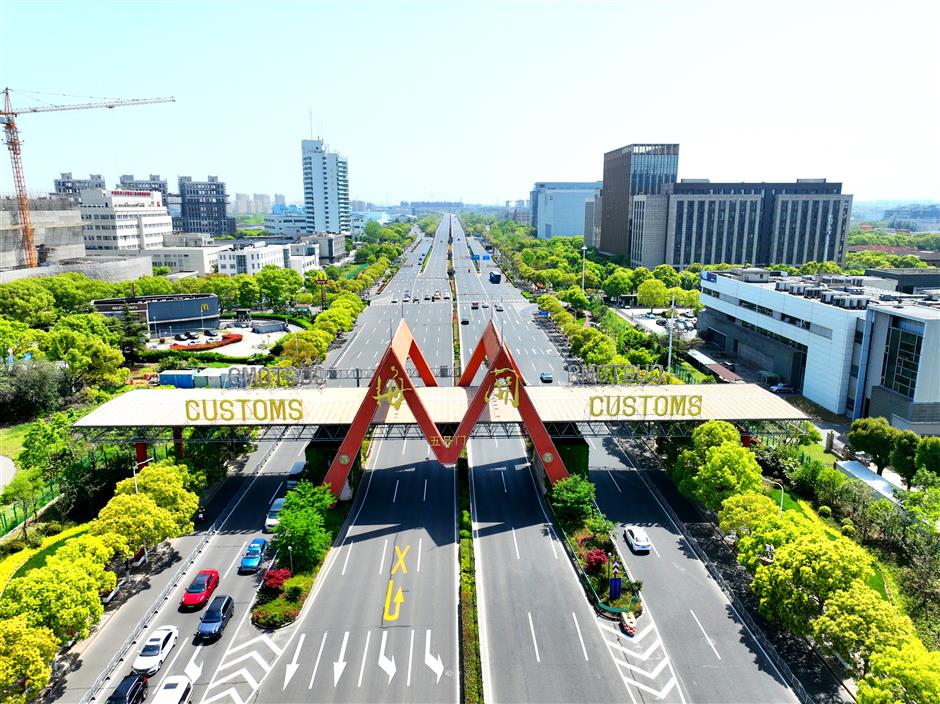
Waigaoqiao Free Trade Zone.
Pudong emerges as global resource hub
Pudong is reinforcing its role as a global hub for finance, trade, and shipping. The new area has optimized resource allocation to strengthen support for the real economy while building an open system aligned with international standards.
Landmark financial openings include China's first wholly foreign-owned securities firm, J.P. Morgan Securities (China); early Chinese-foreign wealth-management joint ventures such as BlackRock CCB Wealth Management; and the first wholly foreign-owned mutual fund firms, including Neuberger Berman, Fidelity, and Schroders. Over the past five years, Pudong has added 136 regional headquarters of multinational companies, bringing the total to 495.
The New Bund Global Economic Organization Cluster, launched in July 2021, has attracted 25 international economic organizations, including the New Development Bank, the International Chamber of Commerce, and the World Association of Nuclear Operators. Construction has begun on the Shanghai Eastern Hub International Business Cooperation Zone to deepen global business links.
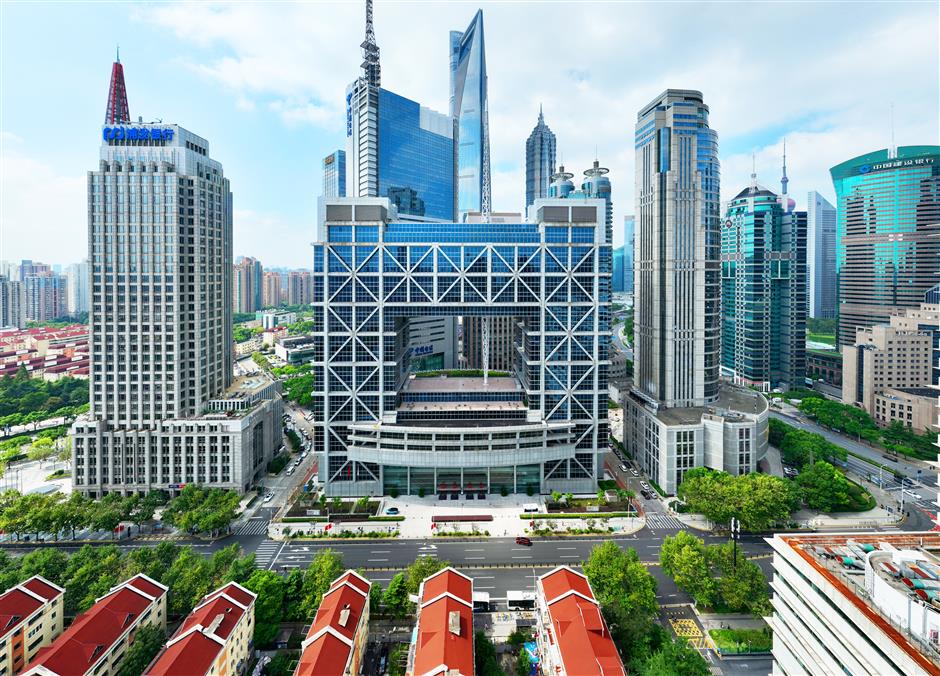
Shanghai Stock Exchange.
Pudong is expanding its commodities trading role: The Shanghai Futures Exchange offers crude oil options, Europe-bound container freight index futures, and options for lead, nickel, tin and alumina. The Shanghai Gold Exchange opened its first offshore gold delivery vault in Hong Kong, enabling physical gold settlement in offshore yuan.
The new area has also built new trade and financial platforms, including a registry for bulk-commodity warehouse receipts and an international reinsurance trading center, while piloting imports of remanufactured products and bonded remanufacturing outside special customs zones. Offshore trade exceeded US$90 billion in 2024 under a preferential stamp-tax policy.
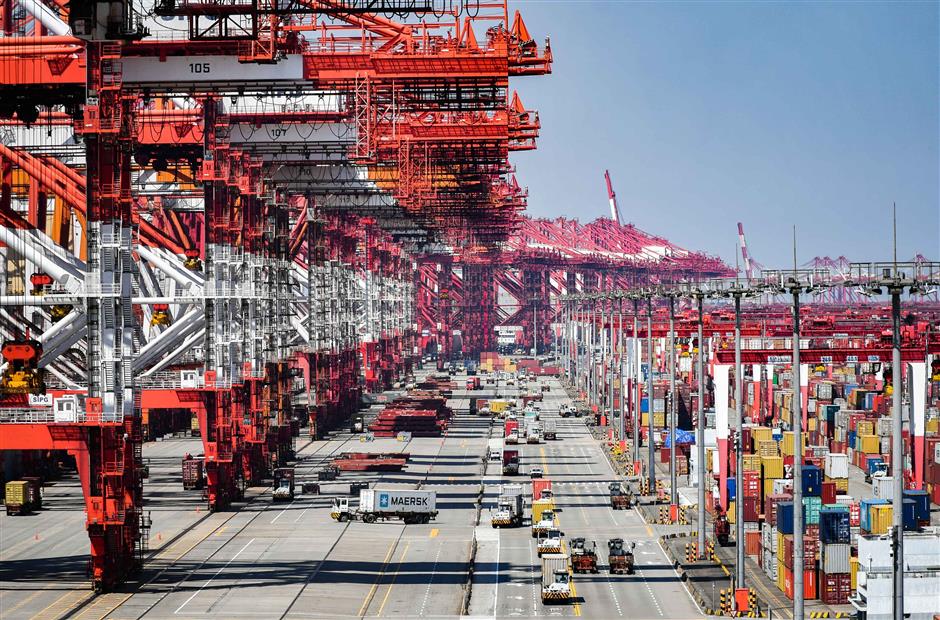
Yangshan Port.
Pudong's shipping and logistics capacity continues to expand. Its port handled 45.88 million TEUs in 2024, ranking first globally for the 15th consecutive year, while Pudong International Airport ranked second worldwide in cargo and mail throughput.
Cross-border e-commerce and international consumption
Pudong is emerging as a hub for cross-border e-commerce, global product launches, and diverse high-quality services.
The Silk Road e-commerce pilot zone continues to expand its footprint. The "Global Hub" in the Waigaoqiao Free Trade Zone spans 12,000 square meters and hosts 34 national pavilions and product centers.
In 2024, trade with Silk Road partner countries reached 281.05 billion yuan, up 7.8 percent, accounting for 22.9 percent of the bonded zone's trade. The hub has also facilitated imports of premium goods and services through integrated online and offline platforms.
The new area has launched a digital shipping and trade platform offering fully digital, contact-free release using blockchain electronic bills of lading, covering over 80 countries. Under the Asia-Pacific Electronic Port Network framework, Pudong has linked with Singapore to enable "single declaration, bilateral clearance" and expand commercial cooperation.
Pudong has piloted value-added telecom services, including ICP and IDC operations. By February 2025, four foreign-invested firms received pilot licenses in emerging sectors such as digital healthcare, fintech and new HR services, driving "digital-plus-physical" innovation and strengthening Pudong's global data aggregation capabilities.
Pudong also introduced "instant refund" duty-free shopping for departing travelers, boosting Shanghai's duty-free sales 85 percent year-on-year in the first half of 2025. Initiatives like the "Pudong Carnival" retail brand and a global brand cluster program, which has attracted over 1,000 first-store launches, are positioning Pudong as China's largest distribution hub for imported consumer goods.
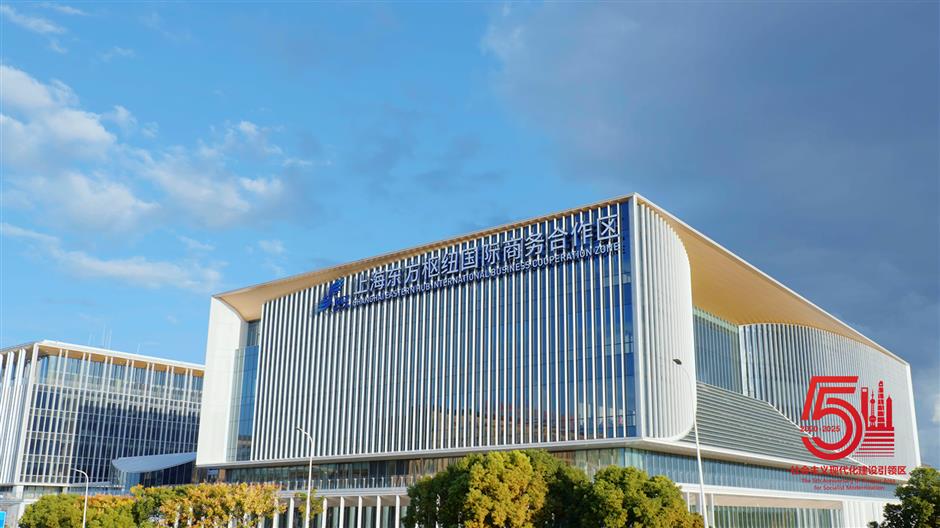
Shanghai Eastern Hub International Business Cooperation Zone.
Modern urban governance as a model
Pudong is advancing a "people-centered" urban model, pioneering high-quality development and full-lifecycle city governance for megacities.
Over the past five years, the new area's transport hubs have strengthened: Pudong airport leads China in passenger traffic and ranks second globally in cargo and mail throughput, while the international container port maintains its top-tier status. Major infrastructure projects, including Xiaoyangshan North Operations Area, Shanghai East Railway Station, and Pudong Airport Phase IV, are progressing rapidly.
The rail network now spans 15 lines, 343 kilometers and 160 stations, fully integrated with bus services, including customized routes. Expressway coverage is 82 percent, with 20 cross-river channels linking Pudong and Puxi, supporting major industrial clusters such as the Eastern Hub and Zhangjiang Science City.
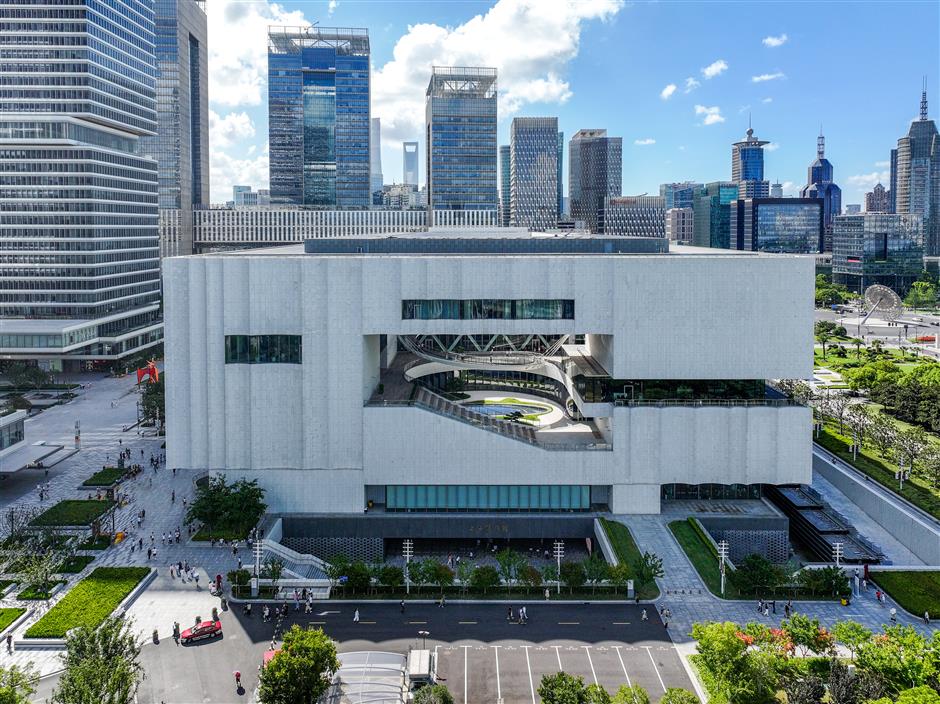
Shanghai Museum East.
Cultural and sports landmarks, including Shanghai Museum East, Shanghai Expo Culture Park, and SAIC Motor Pudong Arena, have opened. "15-minute community life circles" now provide 95.6 percent of essential services within reach.
Governance is becoming smarter, with online portals, AI-enabled functions, and automatic approvals offering faster services.
In urban renewal, Pudong has transformed the 150-year-old EKA Tianwu Park, a former maritime instrument factory, through tailored renovations of over 40 buildings. Historic elements such as red brick facades, chimneys and tree-lined streets were preserved, creating a vibrant cultural and commercial landmark combining architectural aesthetics, maritime heritage, flagship retail and community activity.
Source: Shanghai Daily