


Shanghai Today
Foreign firms ride strong growth arc - March 08, 2026
外国公司乘势而上,实现强劲增长
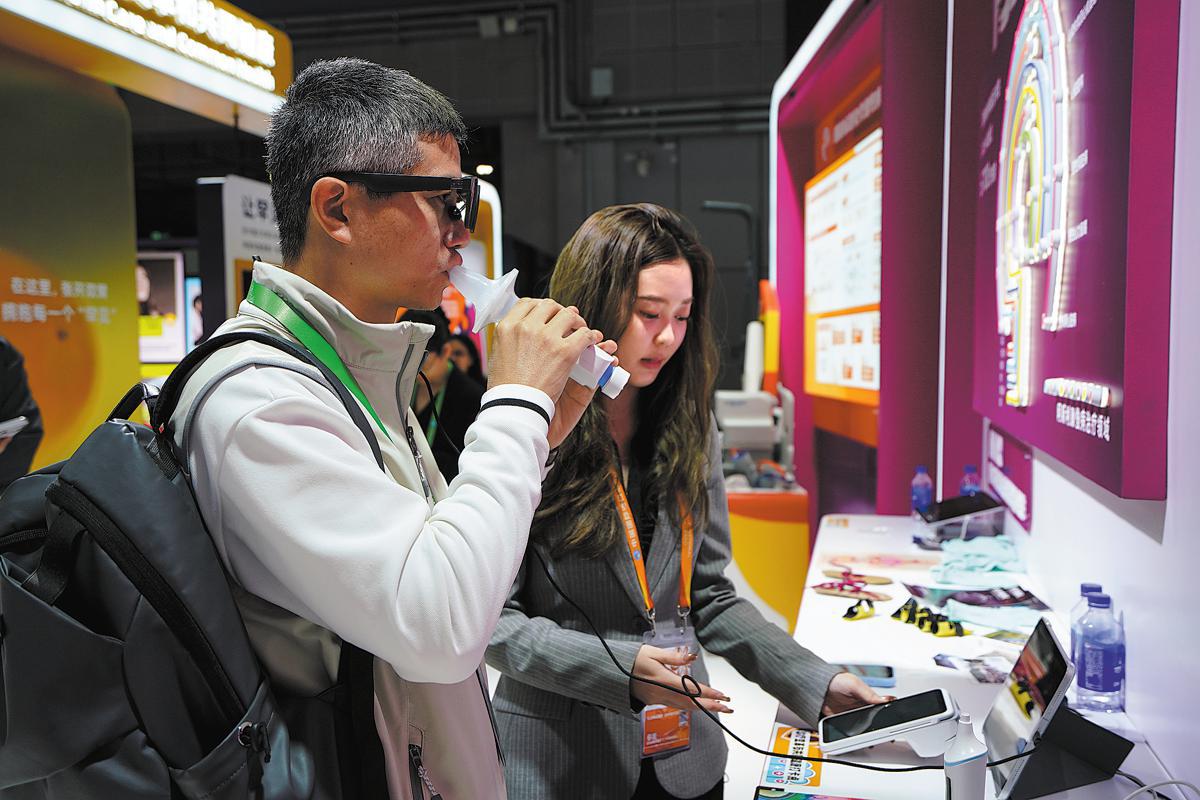
A visitor tries a lung function testing device at AstraZeneca's booth at the 8th China International Import Expo in Shanghai on Nov 7.
A growing number of multinational corporations are deepening their roots in China amid global uncertainties, drawn by the country's rapidly advancing innovation capabilities, the sheer scale of its domestic market, and a fresh policy push to create a more welcoming business environment, officials and executives said.
The trend, evident across sectors from advanced manufacturing to consumer goods and financial services, reflects a recalibration by global companies seeking to capitalize on China's evolving economic strengths and robust policy support, they added.
Business leaders around the globe are closely following the ongoing two sessions — the annual meetings of China's top legislature and top political advisory body — that serve as a critical window to observe the country's development plan for the new year.
In particular, opening-up policies deliberated here to further stabilize foreign investment, expand market access, and align domestic rules with international standards will have a significant impact outside the country's borders.
Despite protectionism and unilateralism being on the rise elsewhere, Commerce Minister Wang Wentao stated in late January that "China possesses various strengths in attracting foreign investment".
As the world's second-largest importer, accounting for over 10 percent of global imports — second only to the United States' 13.6 percent — China continues to position itself as an indispensable node in global investment networks, Wang said.
He also noted that the country's economic heft is underpinned by a comprehensive industrial system encompassing more than 200 mature industrial clusters that span everything from consumer electronics to advanced materials and new energy vehicles.
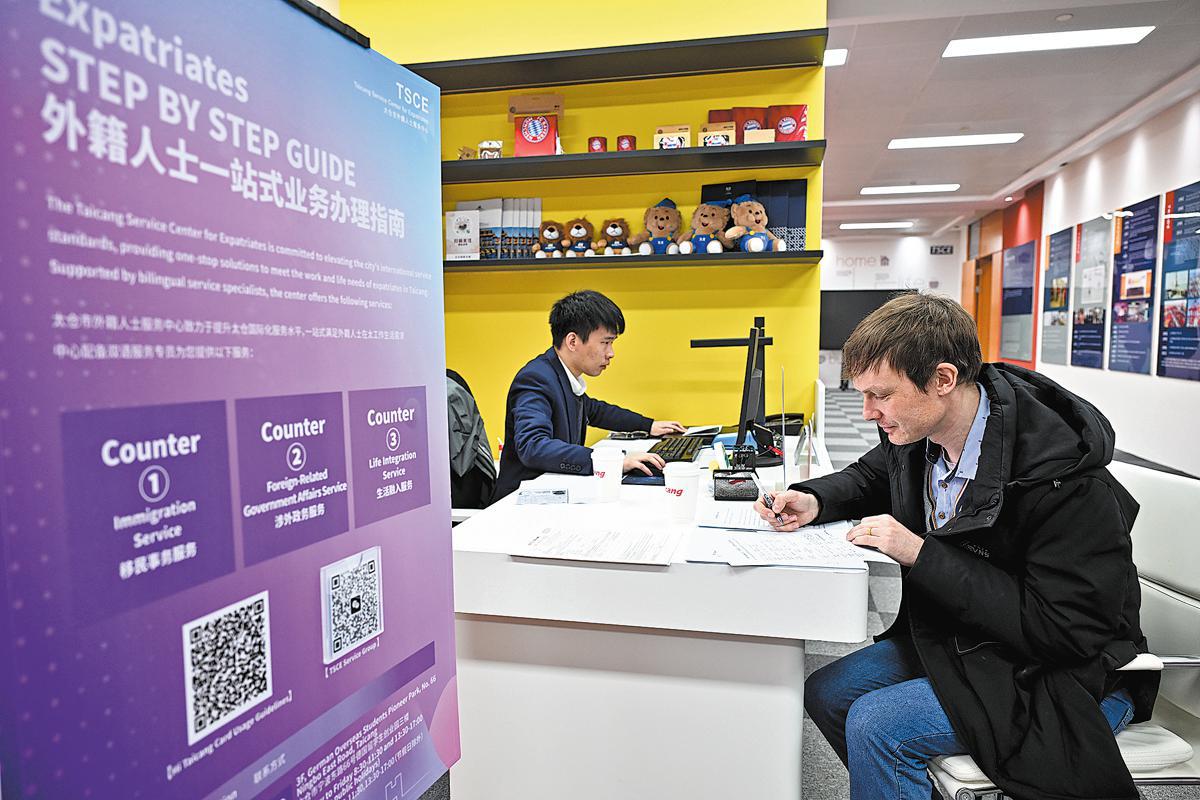
A German company's employee is served at the expatriate service center in Taicang, Jiangsu province, on Feb 25.
Beyond industrial infrastructure, China's human capital landscape, as highlighted by Wang, is undergoing a fundamental evolution — the country now possesses the world's largest pool of scientists and engineers, with its full-time equivalent of R&D personnel ranking first globally.
The combination of market scale, industrial depth, and talent density ensures that China remains a central consideration in multinationals' strategies, global business leaders said.
"Structural innovation and ongoing upgrades in the Chinese market are leading multinational companies to reassess their strategies in China," said Michael Jiang, head of clients and markets at KPMG in China.
Companies are investing in local innovation and digital transformation to enhance operational efficiency, optimize pricing, improve profit margins, and build strategic competitiveness in the Chinese market, he added.
Some 75 percent of multinational companies planned to maintain or increase their China investment in 2025. A total of 83 percent have already localized or plan to localize key aspects of their China operations, especially manufacturing, supply chains and R&D, according to KPMG's 2025 MNC China Outlook Report in December.
AstraZeneca announced in late January that it will invest more than 100 billion yuan ($14.39 billion) in China by 2030 as the drugmaker increasingly sees China as central to global pharmaceutical innovation.
"We have been very committed to China for many years," said Pascal Soriot, CEO of AstraZeneca. "In the last five or six years, China has become a fundamental part of innovation in our sector, with great science and increasingly strong companies."
Under the plan, AstraZeneca will expand pharmaceutical manufacturing and R&D in China through 2030, leveraging the country's scientific research strengths, advanced manufacturing capabilities and growing biotechnology ecosystem.
China's emergence as a global innovation hub has fundamentally altered the calculus for multinationals like AstraZeneca. No longer content to simply manufacture in China for export, a growing number of foreign companies are establishing R&D centers, partnering with local tech companies, and co-developing products tailored to Chinese consumer preferences.
"The quality of engineering talent, the speed of digital adoption, and the willingness of Chinese consumers to embrace new technologies create an innovation ecosystem that is difficult to replicate elsewhere," said Zhou Mi, a senior researcher at the Chinese Academy of International Trade and Economic Cooperation.
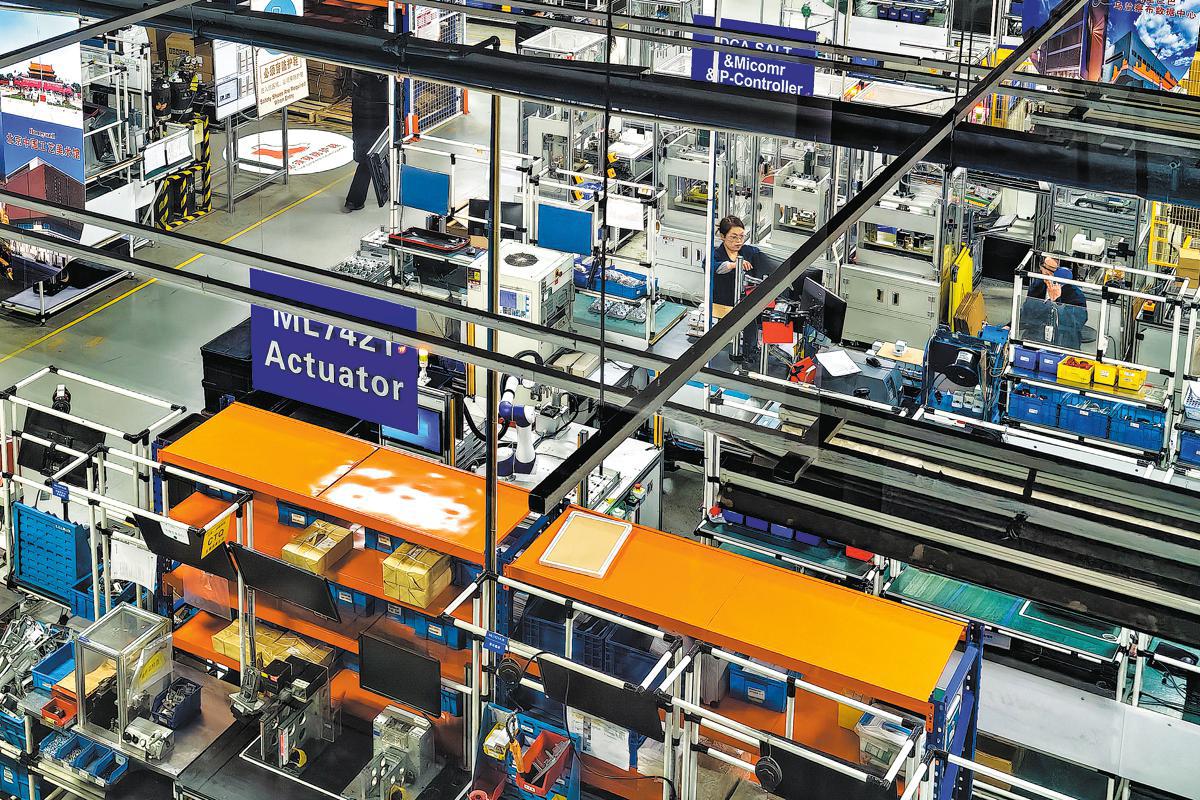
Employees work on the production line of the Honeywell factory in Tianjin on Jan 21.
China saw 70,392 new foreign-invested companies established last year, a year-on-year increase of 19.1 percent, according to data released by the Ministry of Commerce.
In February, German optics company Zeiss kicked off construction of Zeiss Greater China headquarters campus in Shanghai, marking the largest single infrastructure investment that it has ever made in China.
Andreas Pecher, president and CEO of Zeiss Group, said: "This marks another significant step forward in localization in this promising land. The strategic investment is not just financial, it is a commitment to future growth in China and innovations that will benefit the world."
The new campus is positioned as a key global innovation hub, which will enhance its research and development capabilities, foster closer collaboration with local customers and partners, and accelerate the development of new technologies.
Oliver Oehms, chief representative of the Delegation of German Industry and Commerce Beijing, said that future Sino-German economic relations should not be defined by zero-sum competition, but by "mutual success driven by innovation".
He noted the strong, complementary potential in areas like biopharmaceuticals, smart manufacturing, digital transformation, green and sustainable development, and education and vocational training.
The supersized domestic market, anchored by a middle-income group now exceeding 400 million people, continues to exert powerful gravitational force. Multinationals across sectors noted that China's consumption upgrade trajectory — from basic goods to premium, health-conscious, and experience-oriented products — offers growth opportunities increasingly scarce in mature markets.
"The market is massive in scale and very diverse, from top-tier cities to lower-tier cities that are also growing in wealth with advanced demands," said Hubert de Haan, senior vice-president and chief sales and marketing officer of BSH Home Appliances Group Region Greater China.
"Chinese consumers are eager to try new things and have high demands for innovation. For BSH, China is an important place to be. We need to be here because this is the global powerhouse of home appliances and it's a huge market where we need to be successful. With the competencies and capabilities that we gain here, we can also win in other parts of the world," he said.
"The high acceptance of innovation in China and the level of opening-up are a good push to speed up our innovation cycles. With our innovation center here, we attract the best engineers and suppliers to develop products and bring the innovations to global markets," he added.
This confidence has been met with active policy reinforcement from the Chinese government. As 2026 unfolds — the inaugural year of the 15th Five-Year Plan period (2026-30) — Beijing is sharpening its focus on creating a first-class business environment.
China is prioritizing the expansion of market access, particularly in services sectors such as telecommunications, medical services, education, and culture, on a pilot basis.
Commerce Minister Wang said China will continue to further slash the negative list — the document specifying sectors where foreign investment is restricted or prohibited.
Concurrently, China will implement the new version of the encouraged industry catalog, which offers preferential policies for foreign investment in sectors aligned with China's development priorities, including advanced manufacturing, modern services, and green technologies, Wang added.
"We will translate lists of operational challenges and policy recommendations collected from foreign enterprises into actionable service commitments, so that they are willing to come to China, able to stay, and positioned to thrive," Wang said.
To make the Chinese market truly shared by all, experts said the key is whether China can leverage higher-level opening-up to build competitive advantages, support the upgrading of demand with higher-quality supply, and enhance market transparency through higher-standard governance.
This means continuously improving the business environment, strengthening the protection of property rights, and refining rules in emerging areas such as cross-border data flow and digital trade, said Cui Fan, a professor of international trade at the University of International Business and Economics in Beijing.
Higher-level institutional opening-up through expanding market access and the scope of national treatment, promoting broader alignment with high-standard international trade rules, and safeguarding the stability of industrial and supply chains through multilateral and bilateral channels are also required, Cui added.
Source: China Daily