


Shanghai Today
Grassroots entrepreneur Zhang Xue puts global vroom in China's motorcycle industry - April 12, 2026
草根创业者张雪为中国摩托车行业注入全球动力
Last weekend, the ZXMoto dealership in Shanghai was packed with a steady stream of customers coming to browse, test ride or simply snap photos. It was the store's busiest day since it opened years ago.
The excitement stems from the World Superbike Championship race held in Portugal in late March, where a rider on a Chinese manufactured ZXMoto clinched victories in two races, shattering the long-standing monopoly held by European, Japanese, and the US brands.
Behind this triumph lies the Cinderella story of Zhang Xue, a grassroots entrepreneur who founded ZXMoto.
Born in 1987 in a poverty-stricken mountain village in Hunan Province, Zhang developed an almost obsessive passion for motorcycles as a teenager. Bound by his family's financial struggles, he took a roundabout path to fulfill a dream. At 16, he became an apprentice at a repair shop, dismantling bikes, studying mechanics by day and poring over engines late into the night. By 17, he used his meager savings to open his own repair shop, officially stepping into the motorcycle industry.
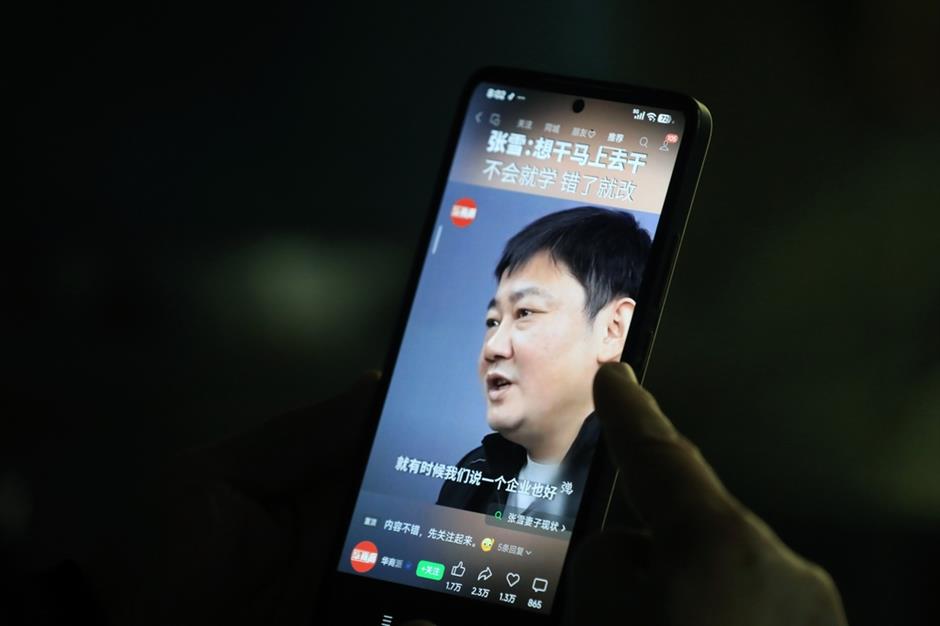
Zhang Xue, 39, has become wildly popular online in China.
Over the years, he traveled extensively, working as a full-time racer and holding various roles in motorcycle factories. Through such hands-on experience, he mastered the entire research and development process – from maintenance and modification to manufacturing. His ultimate goal: Build high-performance motorcycles for the Chinese people.
In 2013, with 20,000 yuan (US$2,777) to his name, Zhang headed to the city of Chongqing, China's "motorcycle capital," to officially start his business. As he later said in an interview, "Trying to build a motorcycle with 20,000 yuan is basically a joke."
Arriving with no resources or connections, he had to start with custom modifications. After building a prototype, he documented the process on a motorcycle online forum. His deep understanding of performance and the trust he built with fellow riders led more than 30 people to fork over 500,000 yuan in startup capital. In that first venture, he sold over 100 bikes and earned his first 100,000 yuan.
However, competitors quickly copied his model, so Zhang pivoted and hired a design firm to help develop a new motorcycle model. At the same time, he became a one-man show, handling everything from running an online store and writing marketing copy to customer service and after-sales support. Through sheer grit, he drove his brand to the top of the e-commerce platform's motorcycle category, amassing the capital and user base needed for his next big move.
In 2017, Zhang co-founded Xizang Summit Colove Motorcycle Co with two partners, launching the Kove brand and officially entering full-scale motorcycle manufacturing. Under his leadership, the team produced several hit models, and annual revenue quickly soared past hundreds of millions of yuan. However, fundamental disagreements with investors over his strategic focus on deep high-end technology and track validation led to a breaking point.
In 2024, Zhang walked away from the brand he had built from scratch to start over once again. Using the initials of his name, he founded ZXMoto. That same year, the company unveiled its first model, the ZX-500RR. Powered by a self-developed four-cylinder engine and priced in the 30,000-yuan range, it rapidly captured market share. In 2025, sales of 25,000 units secured its place in the top tier of domestic mid-to-large displacement brands.
This year the company released the 820RR, a mass-produced three-cylinder sportbike featuring all domestically sourced core components. Priced at just 43,800 yuan, it aims to rival international models in the 200,000-yuan bracket, further cementing the brand's foothold in the high-performance market with an extreme cost-to-performance ratio. It was this very bike, modified for the track, that led to the victories at the World Superbike Championship.
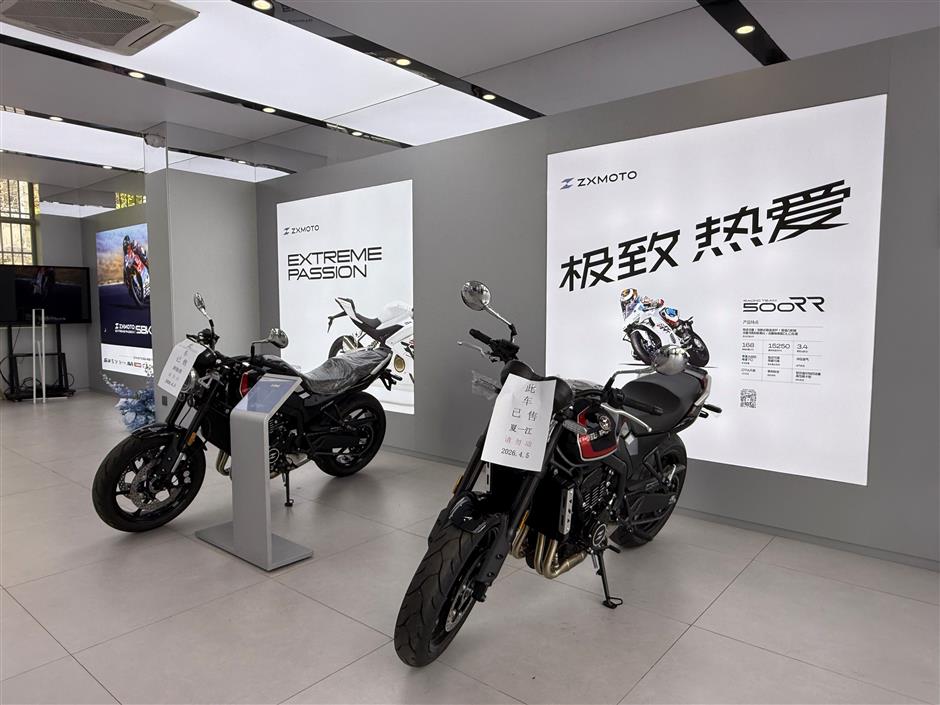
ZXMoto's dealership in Shanghai has become so trendy that motorbikes with "sold" tags bear buyers' names.
Yuan Lixin, founder of Shanghai Yuanle Motorcycle Trade Co and operator of the Shanghai dealership, said he has met Zhang only once but likened his work ethic to that of a "madman."
Yuan was among the first dealers to sign on back in 2024, when Zhang had no factory and no products, yet demanded a franchise fee of around 2 million yuan. Many other potential dealers deemed it far too risky.
"People said he didn't have much formal education, the industry environment was tough and launching a new brand in such a brutal market was a long shot," Yuan told China Biz Buzz.
But Yuan saw things differently.
"We chose his brand because he's a former racer and mechanic," he said. "He intrinsically knows what makes a bike good or bad. His fanatical passion for motorcycles is unmatched. When someone pursues something with that kind of madness, they push boundaries and build products that surpass the competition."
Yuan praised Zhang's execution speed, noting that he acts immediately on his ideas. "An engineer once told me about working with Zhang," Yuan said. "When Zhang asked him to develop a system, he just asked for the price and immediately transferred the money via WeChat. No hesitation, no endless meetings and no 'let me think about it.'"
The success of ZXMoto is deeply ingrained in the rapid evolution of China's motorcycle manufacturing industry. The China Chamber of Commerce for Motorcycles said that this championship victory was no accident. It is the culmination of the domestic industry's long-term commitment to technological innovation, product refinement and brand building.
China is already the world's largest motorcycle manufacturer and exporter. In 2025, the country produced approximately 22 of the bikes, accounting for nearly 40 percent of global production. Yet, in top-tier international racing, China had long played also-ran. Historically, the podium was dominated by legacy teams like Ducati, Yamaha, Kawasaki and Honda.
Thirty years ago, ZXMoto's achievement would have been unimaginable.
"Back then, the competitors were like 100 years ahead of us," Yuan said. "To be blunt, domestic bikes couldn't even manage a decent visual copy. Craftsmanship and durability just weren't there. But after three decades of development, Chinese brands have massively improved their quality control. I feel China's motorcycles have now surpassed many traditional European and American brands in terms of quality, especially in common tolerance."
This progress is heavily reliant on a massive, comprehensive supply chain. Chongqing boasts the country's most complete motorcycle manufacturing ecosystem, home to 51 major manufacturers and over 410 parts suppliers.
This network provides annual production capacity of over 20 million vehicles and 20 million engines. Last year Chongqing produced more than 7.8 million motorcycles, or 35.5 percent of the national total.
Li Yao, chairman of Loncin, a major engines and motorcycle manufacturer in Chongqing, highlighted the efficiency of this system, using motorcycle chassis as an example.
"You can take a blueprint for a non-standard part and get a prototype molded without even leaving the industrial park in Chongqing," he told Chongqing Daily. "We have mature test benches running day and night for tens of thousands of metal fatigue tests. This incredibly short supply chain radius allowed Zhang to build his chassis with minimal trial-and-error costs."
Simultaneously, the overseas expansion of Chinese motorcycles is in full swing. According to the data from the motorcycle chamber of commerce, export value in the first two months of this year surged 30 percent from a year earlier to US$1.5 billion, with shipments hitting 2.2 million bikes.
In 2025, Latin America and Africa ranked as the top two export destinations. Notably, exports to the African market grew by 59 percent, becoming a crucial growth driver, while the European market, with its higher unit prices, provided vital support for value enhancement.
Insiders believe that the global share of Chinese motorcycles will rise, especially in Europe.
"We believe that by 2030, the market share of Chinese brands in the recreational motorcycle sector will surge from its currently low base to 30 to 40 percent," Gong Min, head of China Autos Research with UBS, told a conference earlier this year.
Source: City News Service