



Shanghai Today
How Disney built a theme park economy in Shanghai — and reshaped the city's leisure industry - April 13, 2026
迪士尼如何在上海构建主题公园经济——并重塑这座城市的休闲产业
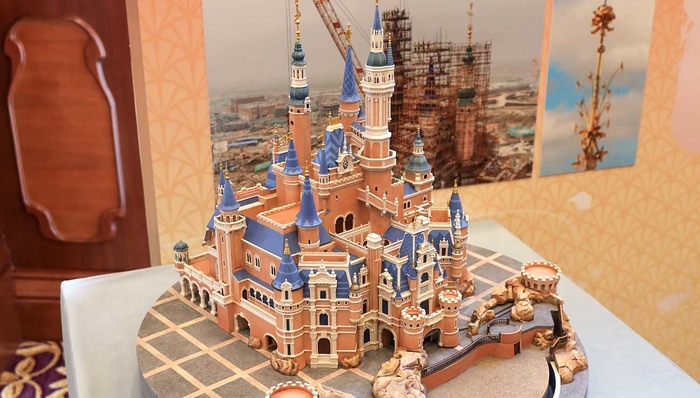
A decade after opening, Shanghai Disney Resort has attracted more than 100 million visitors, cementing its place among the world's most successful theme parks, a report by the China Center for International Economic Exchanges on April 8.
The milestone shows how a single global brand helped turn Shanghai into China's leading theme park hub — while widening the gap with domestic rivals.
Before Disney's arrival, Shanghai had just two major parks, each attracting roughly one million visitors a year. Today, the city hosts at least eight large-scale parks — including Legoland, Haichang Ocean Park and Maya Water Park — drawing tens of millions of visitors annually.
That shift reflects Disney's role in building a broader industry cluster.
From a single project to an industry ecosystem
Construction began in 2011 and the park opened in 2016, later becoming a benchmark for large-scale tourism and entertainment projects in China.
HE Jianmin, a professor at Shanghai University of Finance and Economics, said Disney's broader economic impact has been significant, with the services sector's share of Shanghai's GDP rising from about 58% some 15 years ago to more than 79% today, based on his estimates.
Beyond direct spending, the park has helped build a local supply chain spanning construction, logistics, food services and merchandise, linking hundreds of local brands with thousands of suppliers across the Yangtze River Delta, forming a well-developed supply network for the city's theme park industry.
For many local firms, working on Disney projects has raised technical and operational standards.
A technician who worked on installing lighting for the park's castle said Disney imposed exacting standards, down to the placement of each screw and the cleanliness of equipment. "Every cabinet had to be dust-free and wiped repeatedly, while all elevated lighting had to be fitted with safety ropes," he recalled. The process was demanding, but it raised technical standards.
Even traditional trades were integrated into the project. During construction of the Pirates of the Caribbean area, a Shanghai family business with roots in the fishing trade was brought in to handle rope work and mooring, showing how specialized local skills were integrated into the project.
Disney's economic impact is evident in jobs and spending.
The resort's workforce has grown from about 10,000 at launch to more than 15,000 today, with about 99% of employees from China. Industry estimates suggest each direct job supports six to seven indirect jobs.
Data cited in the report show that between mid-2016 and mid-2019, Disney-related fixed-asset investment contributed an average of 0.13 percentage points a year to Shanghai’s GDP, while spending at the park contributed about 0.21 percentage points.
The resort has also experimented with localized programming, including shows in the Shanghainese dialect.
Competition intensifies as local parks struggle to keep up
As more large-scale parks open, competition has intensified.
Legacy attractions such as Jinjiang Action Park have seen declining visitor numbers and are undergoing redevelopment. Media reports said weekday attendance had fallen to fewer than 1,000 visitors before the park closed for renovation. The site is being redeveloped as a Harry Potter studio tour attraction, with reopening expected after 2027.
Meanwhile, Haichang Ocean Park reported revenue of about 1.55 billion yuan in 2025, down 14.8% year on year, with net losses widening further. Its cumulative losses over the past four years have approached 3.3 billion yuan.
He said domestic parks still lag in planning, operations, ongoing upgrades and long-term sustainability. They also trail global operators in service standards and consistent visitor experiences — an area where Disney has set a high bar.
A major challenge remains intellectual property. While global operators rely on well-developed IP systems and continuously refreshed content, domestic parks often struggle to build characters and storylines that resonate with younger audiences. Licensing overseas IP remains an option, but it is costly and capital-intensive. Disney's multi-zone design and varied in-park experiences help keep visitors engaged and encourage repeat visits.
In recent years, Shanghai Disney Resort has drawn more than 14 million visitors annually, accounting for nearly 40% of the city's total theme park attendance and making it the main pillar of Shanghai's theme park economy.
The resort is still expanding. New hotels are under construction, expanding capacity for popular rides such as Soaring Over the Horizon, and additional themed areas — including a Spider-Man attraction — are in development.
Source: Jiemian