



Shanghai Today
The finish line is only a starting point for robotic deployment in factories, homes - April 27, 2026
对于工厂和家庭中的机器人部署而言,终点线仅仅是起点
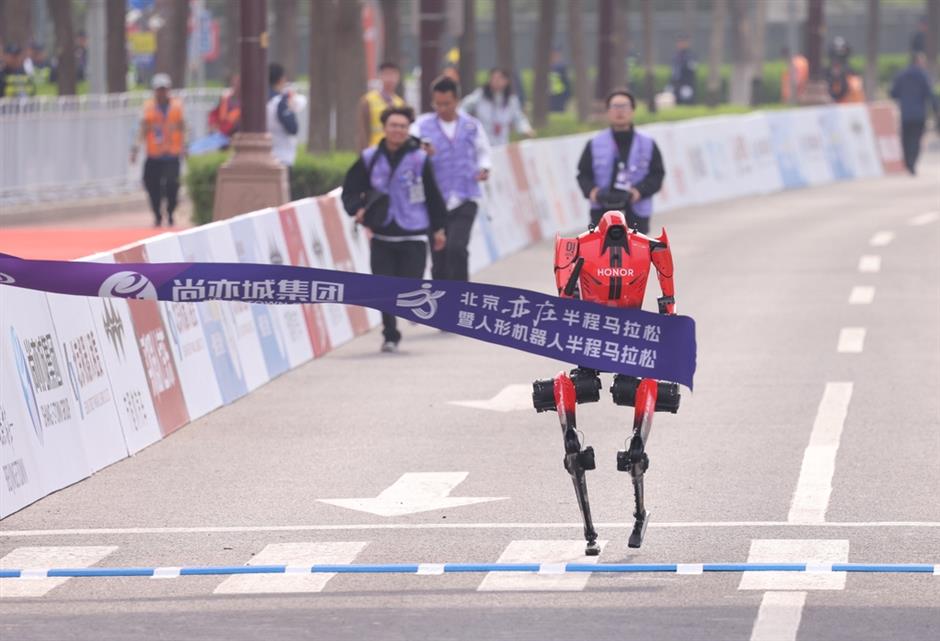
Honor's Lightning wins championship of a recent half-marathon race in Beijing with 12,000 human competitors.
In a display of mechanical prowess that blurs the lines between sci-fi and reality, humanoid robots outpaced the fastest human endurance speeds at the Beijing Humanoid Robot Half-Marathon. A bipedal humanoid robot called Lightning, developed by Chinese smartphone maker Honor, bested all 12,000 human competitors to win the race, surpassing by nearly seven minutes the human world record for the half-marathon set by Ugandan long-distance runner Jacob Kiplimo in Lisbon last month.
In addition to Honor, the event featured a prominent list of China robotic developers, including Unitree, Tiangong and MagicLab.
The race was more than just a spectacle; it served as a powerful benchmark for China's accelerating progress in humanoid robotics. After years of research and development and relentless fundraising rounds, the industry is now sprinting on two parallel tracks: commercial success in factory and household application and a high-stakes tech rivalry with US competitors like Nvidia and Tesla.
According to research firm International Data Corp the industry has shifted from "mere task completion" by robots to "genuine value creation. The data provider forecasts global humanoid robot sales will before long reach 510,000 units, fueled by a staggering annual growth rate of over 95 percent.
Numbers coming out of Shanghai-based AgiBot underscore this momentum. The company reported a landmark 1.1 billion yuan (US$161 million) in revenue for 2025 and expects sales of 10,000 units each for its primary models this year, doubling 2025 overall output. AgiBot founder Deng Taihua has outlined a roadmap targeting 10 billion yuan in revenue by 2027.
AgiBot's 2026 lineup is headlined by the A3, a full-size humanoid featuring dual battery packs and a 10-hour runtime. These are no longer just lab prototypes; they are entering the workforce. In a partnership with Haidilao, China's largest hotpot chain, AgiBot robots have evolved from performers into digital employees, managing customer call-outs and providing seating guidance.
Capital markets have become a critical factor in this technological expansion.
In March, the Shanghai Stock Exchange accepted an IPO application from Unitree Robotics for its tech-focused STAR market. Unitree plans to raise 42.02 billion yuan, seeking to become the first humanoid robotics maker listed on the Chinese mainland's Class A-share market. According to its prospectus, Unitree's 2025 revenue is estimated to have exceeded 1.7 billion yuan, a 335 percent increase from a year earlier.
Often cited as China's answer to Tesla's Optimus program, Hangzhou-based Unitree has built a formidable technical moat in both humanoid and quadruped, or "robot dogs." Its initial public offering signifies a new era for the sector, moving from experimental tech to large-scale capital integration.
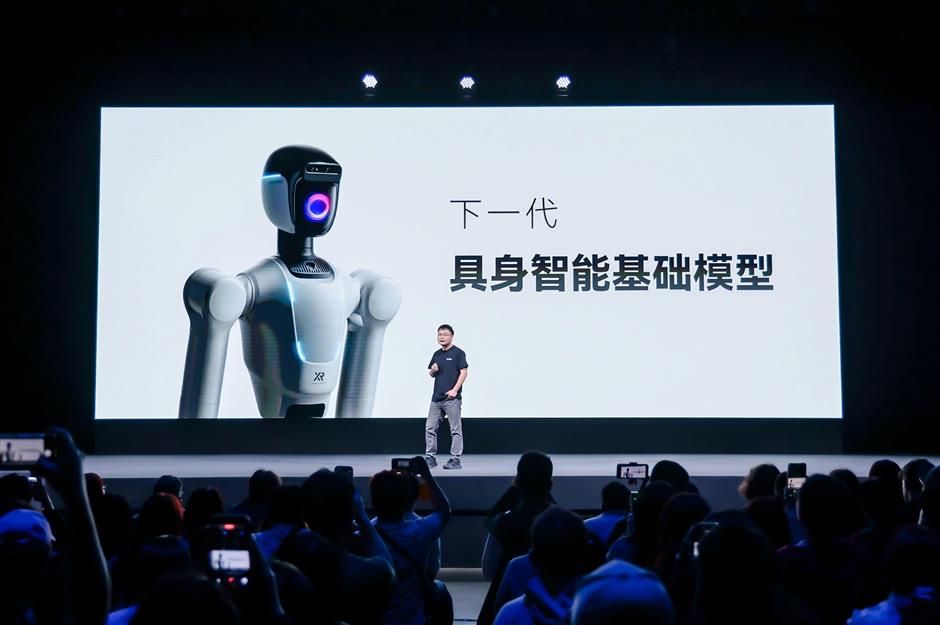
X Square Robot, a general embodied intelligence startup backed by Xiaomi, Alibaba and ByteDance, is set to release its Wall-B robot in families next month.
The next frontier is the fragmented and ever-changing environment of robotic applications in households.
X Square Robot, a general embodied intelligence startup backed by Xiaomi, Alibaba and ByteDance, is set to release its Wall-B robot next month. Designed to handle daily chores without remote control, Wall-B utilizes a "world unified mode" or WUM that learns and evolves independently.
Wang Qian, founder and chief executive of X Square, said deployment in homes is a big challenge. Currently, no robot in the world can independently complete comprehensive tidying tasks without remote control.
Meanwhile, Lightning, the Beijing race champion, also showed up in Honor's recent gaming laptop release, including super-light model MagicBook Pro. Honor is integrating humanoids into a broader ecosystem of laptops and smartphones. As IDC said, consumer electronics brands will soon use edge computing and vision models to make robots a household staple.
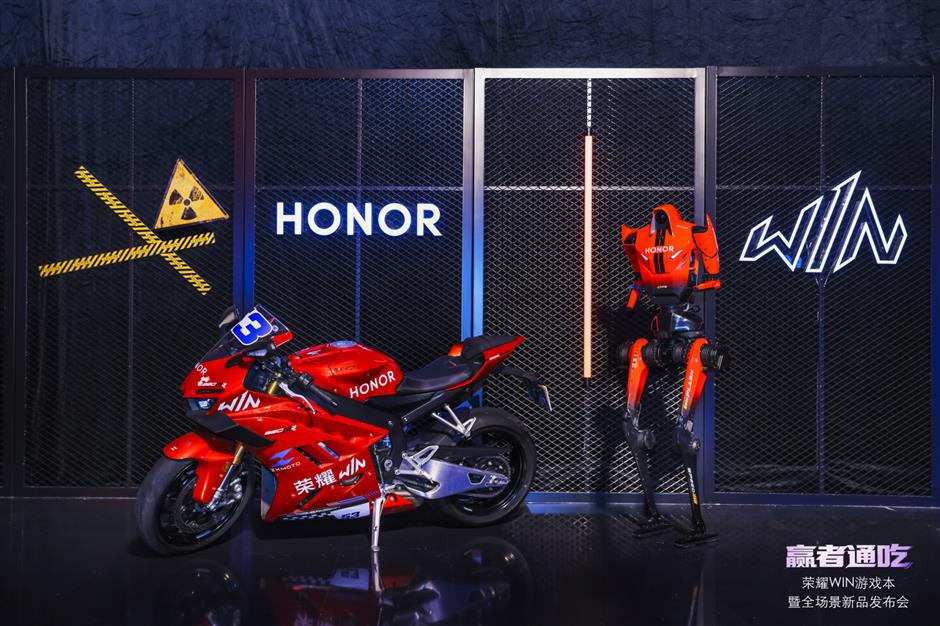
Honor's Lightning robot presents in its gaming laptop release.
As Chinese firms scale up, they face formidable competition from the US. Nvidia is helping robotics companies move AI systems from simulation into real-world deployment. Chief Executive Jensen Huang recently predicted every industrial company will eventually become a robotics company.
Simultaneously, Tesla is pivoting its focus toward AI-powered robotaxis and humanoid robots. Elon Musk raised Tesla's 2026 capital expenditure forecast to US$25 billion and indicated that Optimus is moving toward a concrete window for broader deployment next year.
Shipments of humanoid robots from Chinese manufacturers are expected to account for 95 percent of the global total, establishing an absolute dominant position in hardware manufacturing and mass production, IDC said.
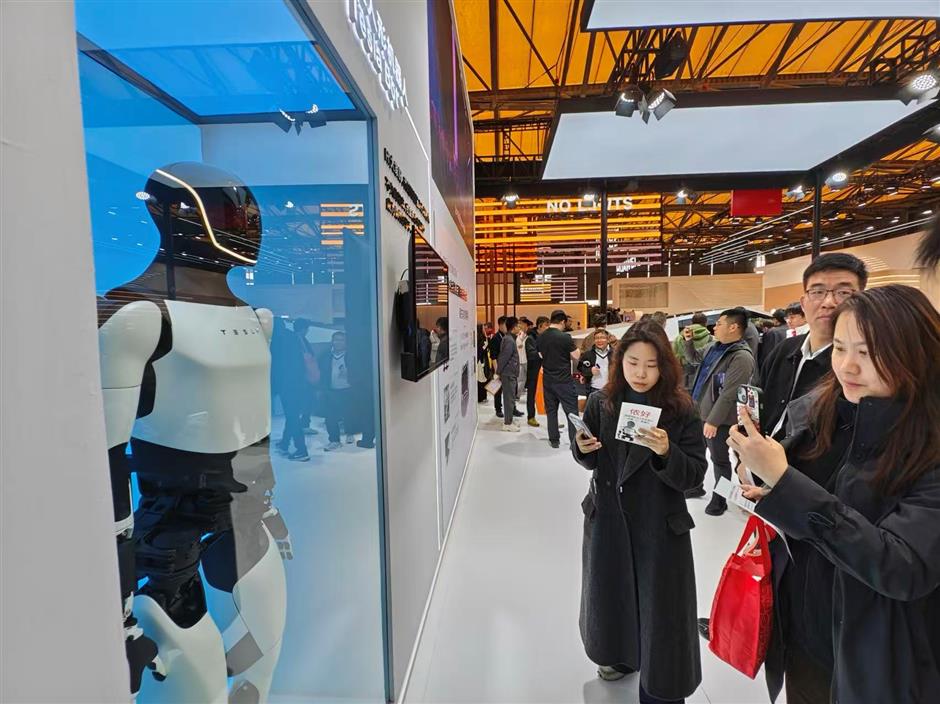
Visitors take photos of a Tesla robot at Shanghai AWE in March.
While Chinese robots are beginning to appear in domestic car factories and restaurants, their makers are also targeting global markets. AgiBot's overseas business is projected to grow to 50 percent of total revenue, with its leasing platform ShareBot already launched in 13 international markets, including the US, Germany and the United Arab Emirates.
China Customs also reported that the humanoid robot export category has risen to 13 now from five just several years ago, showing China's increased export capacity and tech evolution.
While the marathon for dominance continues, the rapid integration of humanoid workers has raised global concerns about human job displacement. Verizon Chief Executive Dan Schulman was quoted in the Wall Street Journal as predicting up to 30 percent unemployment from robotic replacements in the next two to five years.
As robots leap from the race tracks of Beijing into the kitchens of families and the floors of factories, the industry must now solve a problem far more complex than running speed: How to balance a booming robotic economy with the survival of the human labor market.
Source: City News Service