



Shanghai Today
Emotion-driven, experiential consumption the new retail driver - June 09, 2026
情感驱动、体验式消费成为新零售驱动力
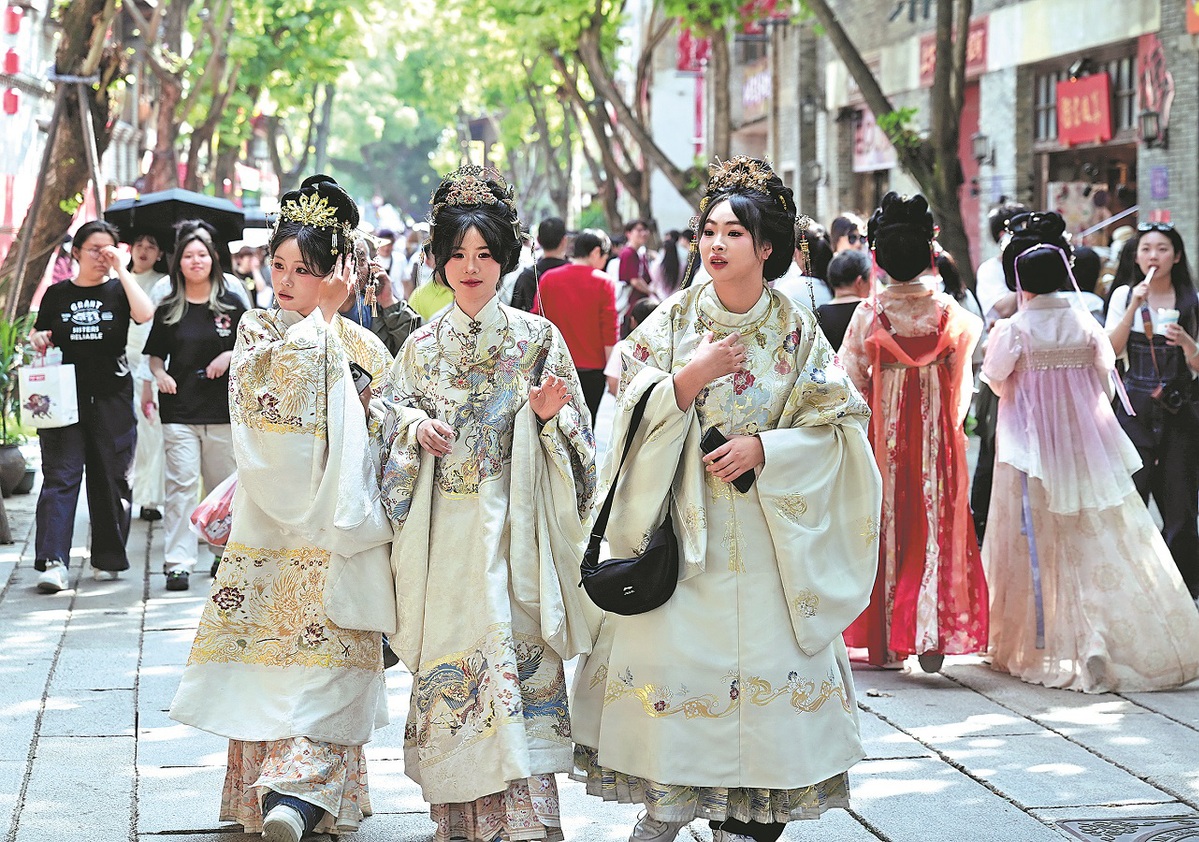
Visitors enjoy themselves at the Shangxiahang historical and cultural street in Fuzhou, Fujian province, on May 2.
Shanghai recently witnessed the birth of an unlikely internet sensation — a 5.2-meter-high "scruffy dog" topiary in central Shanghai's Jing'an district.
Originally designed for the 2026 Shanghai International Flower Show from April 18 to May 5, the West Highland White Terriershaped shrubbery, made up of more than 20 types of flowers and plants, has become so popular that the city decided to keep it on display for another three months. In less than a month, more than 30 million people have flocked to see it.
The local government has also invited people to give it a name based on its shape and the rapidly growing greenery it is made of.
The cute attraction, located in the outdoor area of Shanghai Suhe MIXC World, is also being credited with triggering skyrocketing sales in the vicinity.
Retailers located around the topiary reaped over 2 billion yuan ($295 million) in sales during the official exhibition period. Total sales revenue has jumped 49.22 percent year-on-year to nearly 61.6 million yuan since "scruffy dog" was unveiled. A total of 1.7 million consumers visited the mall over the period, up 192.53 percent from a year earlier.
"People have come for the scruffy dog. They linger, take pictures, then find themselves grabbing a coffee, sitting down for a meal, and strolling through the nearby shops. Wrapped in a sense of calm, consumption unfolded as a natural afterthought," officials from the commerce bureau of Jing'an district said.
Han Meiyi, a human resources specialist in Shanghai, is one of the many fans of the topiary puppy. She made a trip to the mall on a rainy day to attend an ongoing bread festival. Despite the weather, she encountered flocks of people wanting to see the novel attraction.
Han described the day as a "sweet memory", with the aroma of bread wafting in the air.
"I bought bread from five different bakeries, enjoyed two milk teas while shopping for bread, and of course, took pictures with the iconic scruffy dog, and loved every minute of the day," she said.
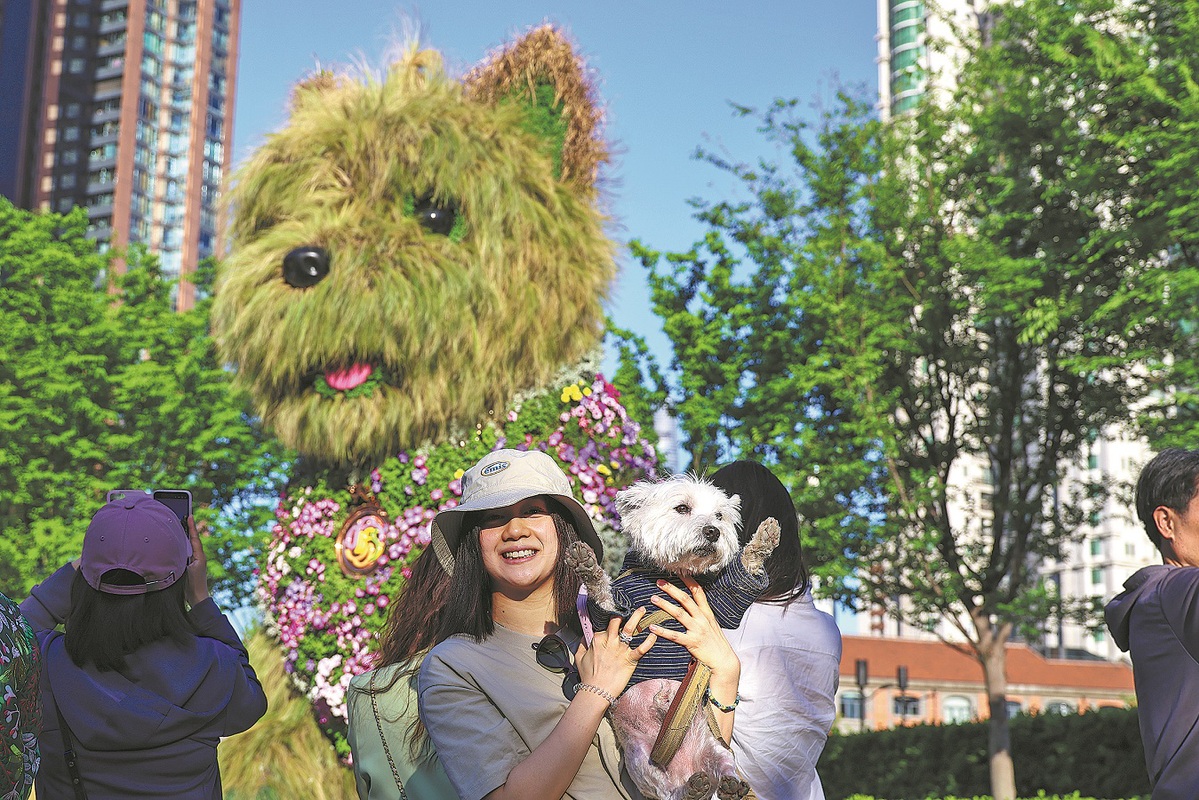
Tourists visit the "scruffy dog" topiary in Jing'an district, Shanghai.
Emotional value
The topiary dog is now being considered for cultural and creative product development, according to Jing'an district officials.
At a news conference in mid-May, Shen Weihua, director of the Shanghai Municipal Commission of Commerce, defined the retail boost associated with the popular attraction as "emotion-driven consumption". The city will come up with more unconventional scenarios to provide new consumer experiences, he said, adding that stimulating consumption would be a major mission for the municipal government in the coming years.
The Chinese consumer market has entered a new age, according to Joanna Lu, a partner at consulting company Bain & Co. "The core of consumption is 'love'. People are looking for meaning and emotional value from different experiences. That is why consumption is more driven by scenarios, social groups and sentiments," she said.
Liu Gongrun, deputy director at the CEIBS Lujiazui International Institute of Finance, said the Chinese consumer market has been undergoing a revolution, moving from buying tangible goods to savoring intangible services. Consumer satisfaction has been upgraded from goods to value, Liu said.
In 2025, China's sales of services grew 5.5 percent from a year earlier, 1.7 percentage points higher than that of goods, according to the National Bureau of Statistics.
Moreover, service consumption has consistently outpaced goods consumption for years.
A look at the consumption habits of wealthy Chinese also provides an insight into the changing consumer market, as industry figures predict future lifestyle trends.
Consumption in China has been rapidly transforming from "possessing things" to "prioritizing experiences", the Hurun Research Institute, which has been researching affluent Chinese for nearly three decades, said in a report in January.
The size of the Chinese high-end consumer market contracted 5 percent year-on-year to 1.56 trillion yuan in 2025. In addition, the super rich plan to cut their annual expenditure on luxury watches and jewelry by 10 percent over the next three years. However, they have increased their budgets for experience-based consumption, such as travel and health management, by 12 percent.
"The super rich no longer consider consumption as a tool to demonstrate their identity. Life quality and emotional satisfaction are of greater value to them," said Rupert Hoogewerf, founder and chief researcher of Hurun.
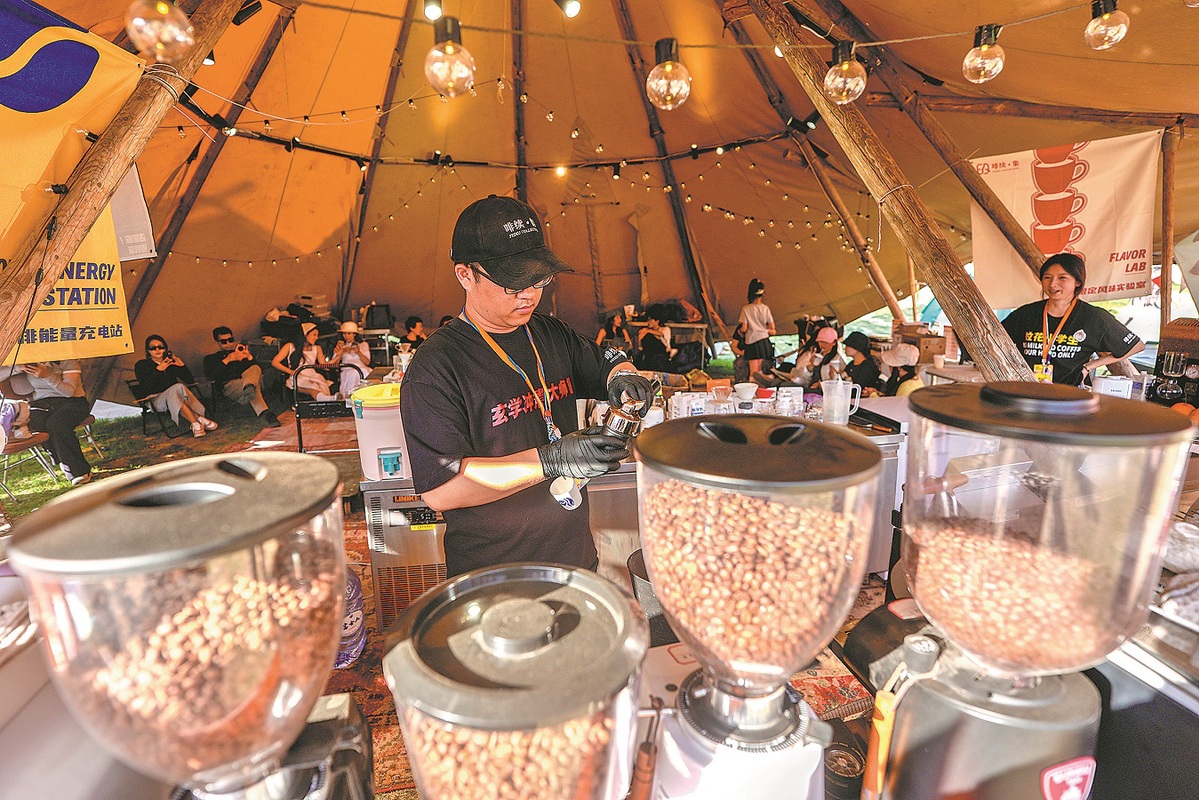
A barista prepares coffee at the 2026 Yinchuan Coffee and Music Carnival in a forest park, Yinchuan, Ningxia Hui autonomous region, on May 4.
Worthiness wins
A similar consumption trend is happening among younger Chinese.
Guochao, or China chic, reflects their close connection to Chinese culture with aesthetic value and shopping experiences overtaking brand cachet, said Liu from the institute of finance.
The younger generation's greater demand for experiences is making the focus of domestic brands more international, as younger consumers are well-educated with a global outlook. This means brands will have to be more innovative to provide "extraordinary" experiences, Liu said.
Purchasing domestic brands can evolve from a one-time shopping spree to repeated purchases, he added.
"The core targets of the guochao brands, which are younger consumers aged between 20 and 30, are more rational and less easily drawn to the traditional internationally well-established brands. To them, consumption is an expression of their own value. The product's worthiness outweighs affordability when they buy something," Liu said.
According to market consultancy iiMedia Research, the guochao market size reached 2.5 trillion yuan in 2025, with the figure expected to top 3 trillion yuan in 2028.
The rise in China chic has also been boosted by inbound travelers looking for different consumer experiences in China, iiMedia analysts added.
The pursuit of new shopping experiences, however, is not restricted to categories or age groups.
China's domestic tourism market is a good example. It hit record numbers last year in both the number of trips taken and total spending, according to the Ministry of Culture and Tourism.
Domestic tourists made 6.52 billion trips throughout 2025, up 16.2 percent from a year earlier. Their travel spending jumped 9.5 percent year-on-year to 6.30 trillion yuan."Immersive experiences" were listed as top priorities for traveling.
The elderly, those age 60 and above, were important contributors to the travel industry. According to the Chinese domestic travel agency HopeGoo, they accounted for over 70 percent of tourists who booked outbound luxury cruise trips and over 90 percent who took polar cruises. Their average expenditure on a single trip exceeded 12,000 yuan, higher than all other age demographics.
Their demands for tailored travel experiences have also increased.
International language training institution EF said it has seen elderly Chinese people's rising interest in overseas study programs. In 2019, only 3 percent of the program participants were aged above 50. But that ratio rose to 20 percent in 2023.
Retired doctors, engineers, teachers and company executives aged between 55 and 65 make up most of the participants.
The two — to four-week programs, priced at 20,000-70,000 yuan per person, are affordable for well-off people, EF said.
"When people have time, they can become easily bored. In other words, they are more willing to pay for experiences like studying abroad, making their life more colorful while fulfilling their childhood dream," said Wu Mianqing, CEO of data service provider BigOne Lab.
Importantly, the purchase of language courses by elderly Chinese travelers was preceded by the experience of overseas travel. "Based on my parents' experiences, they expressed strong willingness to learn English after several overseas trips. Now they have become loyal subscribers of a paid language-learning application. It forms a perfect loop for such travel service providers," Wu said.
A recovery in the capital market is likely to generate more income for Chinese consumers, making them more optimistic and confident to buy, he added.
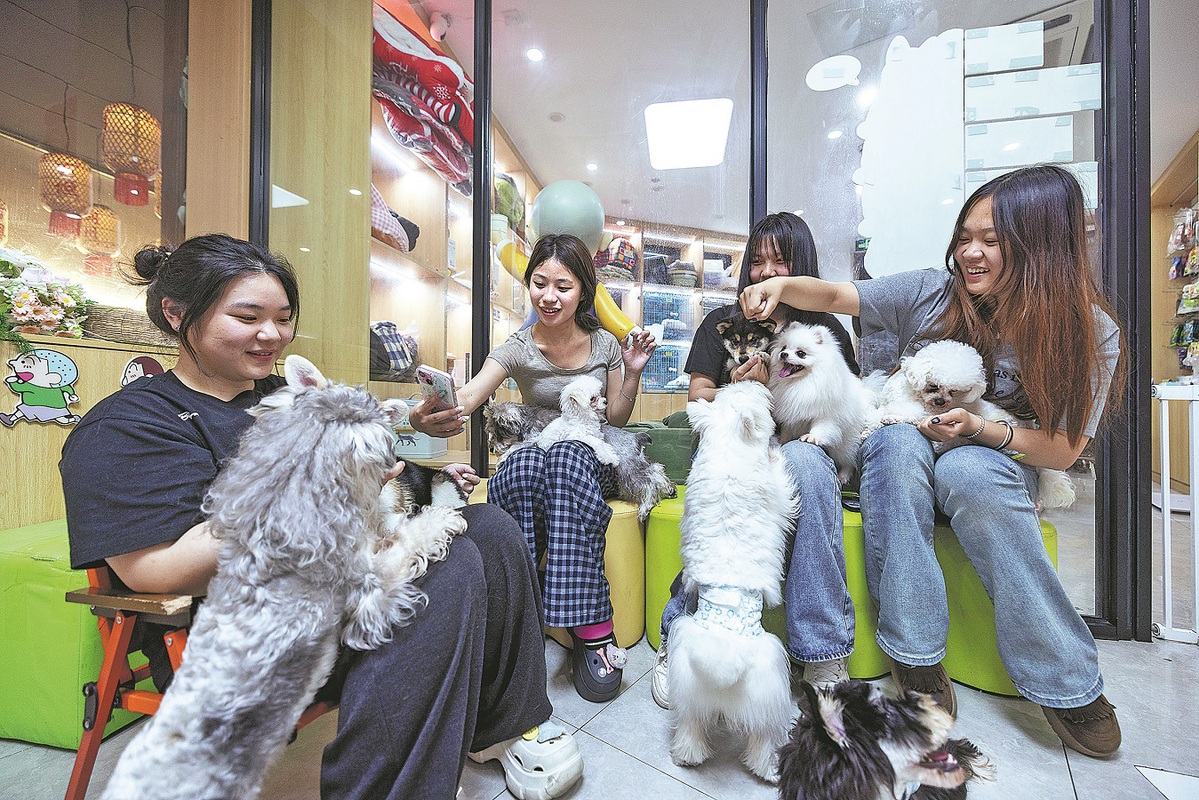
Customers interact with dogs at a pet shop in Huzhou, Zhejiang province, on April 27.
Experiential, it's a thing
Some financial analysts argue that the Chinese consumer market has slowed down, but Qin Shuo, a Shanghai-based financial commentator, explained that this is only one side of the coin.
In certain situations, consumers see value-for-money purchases as the priority. However, when it comes to experience or sentiment-related consumption — such as travel or raising pets — they spend generously.
A "K-shaped" economy, where growth and decline are taking place simultaneously across different segments, has been used to describe the current Chinese consumer market.
But Qin believes that is an oversimplification of the bigger picture. It is true that the consumer price index has not been rising significantly, he said, but that is a reflection of prices, not the size of consumption. In addition, low prices are a result of strong supply, he said.
A more important factor is the maturity of Chinese consumers, who are looking for "high-quality and fair shopping experiences", according to Qin.
Online retailers, for example, have made products once only sold in first-tier cities available to consumers in lower-tier cities and counties.
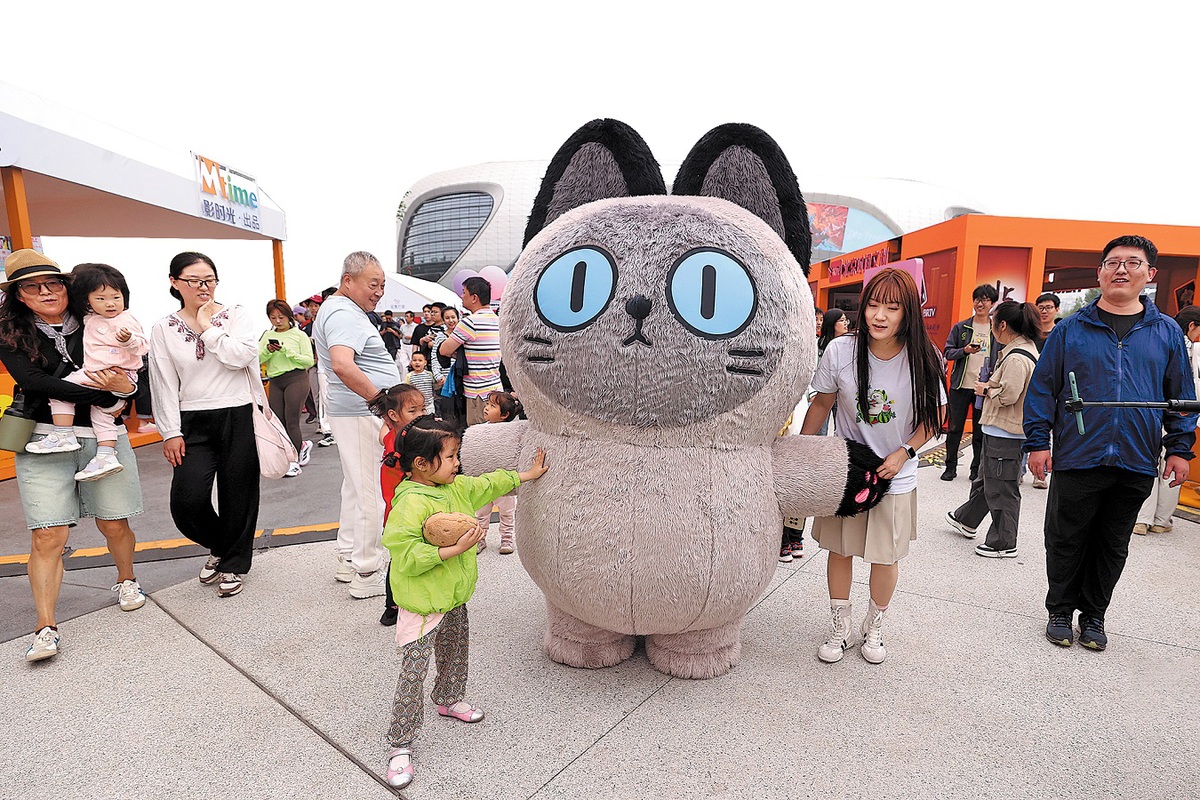
Visitors interact with an AI plush toy at the 2026 China New Cultural and Creative Market and Trendy Carnival in Beijing on May 16.
Lu of Bain & Co said the current maturity of Chinese consumers should be measured against the development of consumerism in the country over the last five decades.
Before the 1980s — which was the age of scarcity of goods — consumption was all about "having it or not". Brands barely mattered. The market was driven by supply, which meant that if a company could make the product, someone would definitely buy it, Lu said.
Entering the 1990s, Chinese consumers began to tell the world who they were with what they had bought.
Between 2000 and 2010, there was an abundance of supply and Chinese consumers shopped for products to fit their taste, style and identity. Self-expression was the key reason for consumption during this period, Lu said.
"Chinese consumers now have a 'value awakening'," she said.
"More and more consumers are willing to pay for emotional value and spiritual satisfaction. Consumers are no longer buyers. They wish to express their emotions, seek out experiential scenarios, participate in culture and even co-create brand stories with each purchase," she said.
"All these demands have posed higher requirements on brands, pushing them to come up with deeper insights into human nature and more refined crafting of experiential settings," she added.
Source: China Daily