



Shanghai Today
Where China's growth hides: visible from your neighbourhood - September 23, 2026
中国增长藏于何处:就在你的社区里
The new economy you've already seen is silver
Go to any gym in this city at 10am on a Tuesday morning and count the people over sixty.
Not the park. The park has been full of that generation for decades, doing tai chi and square dancing and the thing with the big brush and the water. I mean the gym. Treadmills, weights, a personal trainer, a proper kit bag. Then go home and look at who is on Xiaohongshu at 11pm at night, reading about collagen and knee health and which brand of fish oil is worth the money.
Economists have a name for what you are looking at. They call it the silver economy, and over one morning at the China-Britain Business Council summit, I heard four different people, from four completely different jobs, describe it to me as one of the biggest openings in this market.
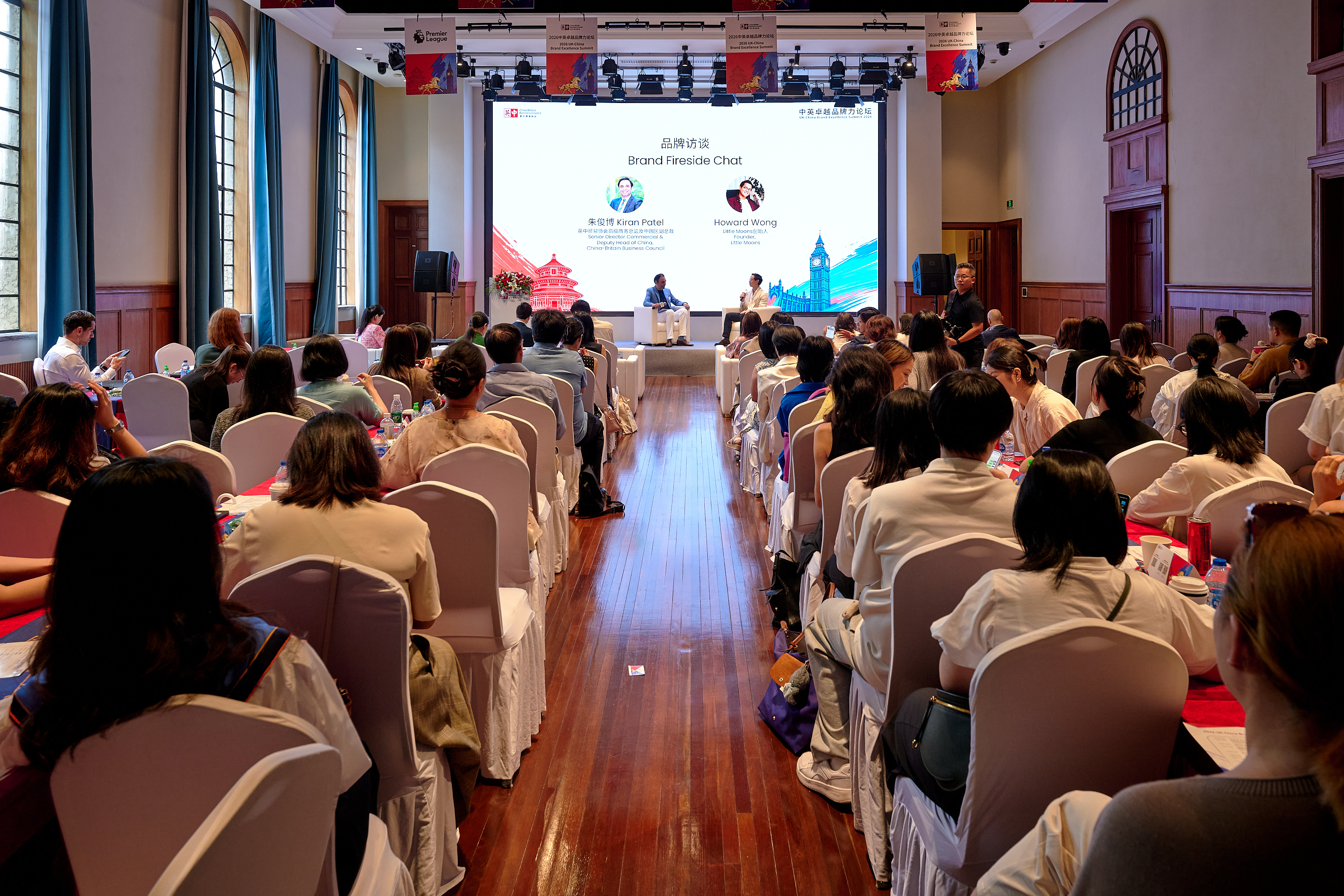
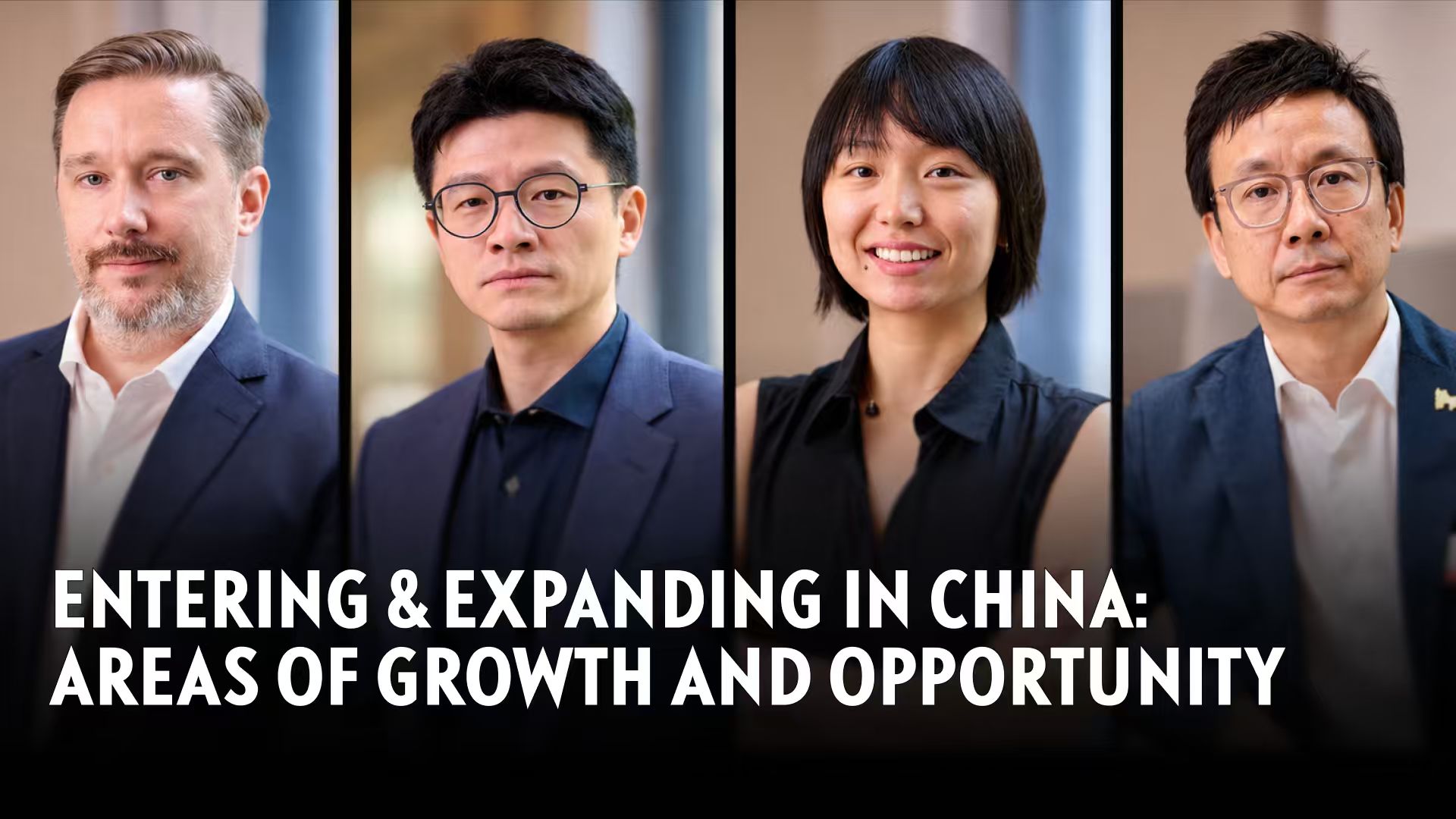
That was the pattern all morning. A macroeconomist, a woman who launches foreign brands here for a living, the man who runs the British business council's China operation, and an official from the Xuhui district government. Four altitudes, four professional vocabularies, and between them three answers: where the growth actually is, how you reach it now, and what it costs you to wait. Strip the vocabulary out and most of it is visible from your own building.
The aunties are a market, and almost nobody is selling to them
Emma runs Yaso China, which helps foreign brands launch here. She sells things and watches the numbers come back, and the numbers have been telling her something the marketing industry keeps ignoring.

"Media and conferences constantly focus on Gen Z, often noting their financial constraints, while overlooking the silver lining demographic," she says. Which is a polite way of saying: everyone is chasing broke 22 year olds while a generation with savings, time and a serious interest in staying healthy is sitting right there.
Her evidence is the gym thing. Recent retirees in Shanghai are not just walking laps anymore. They are working out and thinking hard about aging well. And they are online far more than brands assume, with older women in particular growing fast on Douyin and Xiaohongshu. In health supplements, Emma says, brands that talk directly to that customer about her actual concerns see it in the sales almost immediately, mostly because so few competitors are bothering to talk to her at all.
"They are just as curious and receptive to fresh ideas as Gen Z," she says.

Now here is the part that makes it more than one saleswoman's hunch. Wei Si, who runs the Economist Corporate Network and spends his days with spreadsheets rather than dashboards, got to the same place from the opposite direction. We spoke to him at greater length in another piece which you can read here.
Wei Si presented that by 2030, more than 30 percent of people in China will be 60 or older. Government policy is actively building out that market over the next five to ten years: healthcare, wellness products, services for older people.
A woman reading sales data and a man reading national statistics arrived at the same customer.
The city you've only seen from a train
The second overlap was geography, and it also involves something you have seen.
You know the cities you pass through on the high-speed train to Beijing. The ones with the enormous new stations and the skylines you cannot name. Most foreign brands still treat Shanghai, Beijing, Shenzhen and Guangzhou as the whole country and everything else as a rounding error.
Emma thinks that is backwards. The customer base out there is much bigger, she says, and the decision to buy arrives faster, because people in those cities are not drowning in the sheer volume of options and opinions that makes a Shanghai shopper think about a moisturiser for three weeks. Say clearly what your product is and what it does, and that customer can become the core of your business.
Wei, again from the other direction, has the numbers. Roughly 67 percent to 70 percent of China's population now lives in cities, with real room still to grow compared with Japan or the United States. As that continues, the Economist expects more than 60 percent of Chinese households to be middle-income by 2029 or 2030, which would be one of the largest middle-class populations the world has seen, with the spending power to match. For anyone in Shanghai who assumes China has already arrived, that is the correction: we are still only partway up the mountain.
He also flags specific regional clusters in the southeast, the eastern coast and the southwest where the population skews younger and birth rates run above the national average.
Getting out there is a different problem from spotting it. A company that has only ever operated in Shanghai or Beijing arrives in those cities with no local relationships and, as Wei puts it, "very limited knowledge of the local market ecosystem." His advice is to stop treating it as a solo expedition and go looking for collaboration instead, ideally with a Chinese counterpart that already has the supply chain and the marketing channels in that region. The route into those markets already exists. It just belongs to somebody else.
Two people, two methods, same two conclusions: the customer you are ignoring is older than you think, and she probably does not live here.
Why so many brands got this wrong
If you have lived here five years or more, you have watched foreign brands arrive with a lot of noise and quietly disappear. Emma's explanation of why is the clearest I have heard.
The old way to enter China was to find a distributor. You sell them your stock at a 70 percent or 80 percent discount; they take it from there, and you go back to head office and tell everyone you are in China now. What you have actually done is go blind. "When you want to reclaim ownership, you don't know where to begin because you don't know who they're selling to, at what prices, or through which channels." If you ever want your brand back, you are starting from zero.
The other option was doing everything yourself. Own office, own staff, own marketing team, learning how this market works from scratch while the costs stack up and the brand is still too small to get anyone to turn up to its launch party.
Yaso sits in the middle. The brand keeps control of its own pricing and its own identity. Yaso finds smaller distributors to move product, but within price limits the brand sets, runs the marketing, and puts the whole thing behind a dashboard so the brand can actually see what is happening to it in China rather than receiving a quarterly summary from someone with an interest in how it reads.
Emma describes the marketing side as an orchestra. You make noise on Douyin and Xiaohongshu, where people actually spend their evenings. You work with the KOLs your customer already follows. And then Tmall and JD sit underneath as the backbone that converts all that attention into orders and keeps the relationship with the customer.
"Once it functions like an orchestra, it gives the brand breathing room," she says.
The new model fits inside your phone
Tom Simpson, who runs the China-Britain Business Council across China, sees the same shift from a much higher vantage point and calls it asset light. Strip the jargon and it means this: no shops, no warehouses full of your own stock, no enormous local head office. The brand exists here almost entirely on your phone.
His favorite example is Iceland, the British frozen food chain. In the UK it is a shop on a high street. In China it is essentially an online business and nothing else. "It's a model that, for the business, only really exists for them in China in this way. And that's great."
The hard part, he says, is not the mechanics. It is getting a company in Britain to accept that the thing that works at home is not the thing that will work here, and then to trust a partner to do it differently.
Caption: Directed by Jacob Aldaco. Shot by Jacob Aldaco. Edited by Oleg Danisin.
The brands getting that right are showing up. Holland & Barrett and Charbonnel et Walker have both arrived recently. Vivienne Westwood has been growing steadily. Jaguar Land Rover is designing cars just for this market. And there is a whole group of British brands now coming back for a second run at China, having tried a different approach in an earlier era, on the evidence that the name and the heritage held their value in the meantime. "If you can get it right," Tom says, "there's still a future."

Why the launch invitation never came
Foreign brands land in Shanghai constantly without telling any local media they exist. I always read that as evidence that they had no idea where they were. Emma's answer was better than my observation.
Media is not the first move. It is the third. First, work out whether the product even fits: the packaging, the positioning, whether it means anything to a Chinese customer. Second, KOLs, because a KOL audience will tell you the truth faster than any focus group. They will say the scent is wrong, or the box looks cheap, or nobody wants this in that size. You fix the product against that. Then, and only then, you do the proper launch and invite the newspapers, because that is the point where broad awareness is worth paying for.
So the invitation that never came was often not a snub. It was a schedule.
The bit that changed the price of your whisky
Some of this you have already felt in your own life.
Compared to the previous conservative government in the UK, the Labor Government has taken considerable steps to improve the relationship between the UK and China over the last two years. The relationship has improved considerably with a steady stream of visits, the energy minister, two foreign secretaries, a healthcare delegation, and the Prime Minister's visit earlier this year in January have all contributed to a bilateral relationship experience continual improvement.
Two outcomes are worth knowing about. Tariffs on British whisky were cut from 10 percent to 5 percent at the start of February, a change the UK government values at US$334.8 million over five years, and one you can reasonably expect to notice on a shelf. And British passport holders can now come here without a visa for stays up to 30 days, which mainly means your mum can finally visit without the paperwork.

Tom's point is that the handshakes get photographed and the useful part does not. Alongside every one of those visits are working talks that produce the actual results. The one he is watching now is a pair of studies, one by the UK's trade department and one by China's commerce ministry, looking at whether the two countries could do a deal on services rather than just goods. Banking, travel, professional services. Less photogenic than whisky. Worth considerably more.
The people who make the paperwork disappear
Then there is the layer nobody ever writes about, which is the one that decides whether any of this happens on time.
The Xuhui District Business Services Center does the part of setting up a company that never makes it into a press release. Registration. Licenses. Approvals. Dealing with the various government bodies so a newly arrived company does not have to work out which door to knock on. When a company commits to the district, it gets a dedicated team through the whole setup and a named person to call afterwards, when something inevitably goes wrong in year one.
This is the part foreign companies most often miss: there are government bodies built specifically to help foreign businesses set up and succeed here. I spoke with the center's director, Xu Hui, at length, and you can read that interview here. It is worth the time if you handle government relations or run a business in China.

What struck me was how little of the job is about money. Their main work is policy support for investment, and he is quick to say that it "goes far beyond financial subsidies or direct funding." A lot of it is closer to what an ayi does for a household, at the scale of a company.
Talent is the clearest example. The center handles work permits and visas, and then keeps going: "making sure your staff is taken care of when relocating, settling in, and living here comfortably." Anyone who has moved a family across the world for a job knows that the visa is the easy half of that sentence.
The rest of the list is similarly unglamorous and similarly decisive. Protecting intellectual property. Getting goods through customs. Helping a company that has landed in Shanghai sell to the rest of the country. Finding it somewhere to sit, which they argue they can do better than an agent can: "Because we know the district inside and out, we can recommend spaces that genuinely fit an enterprise's industry profile and growth trajectory."
"All of these advisory services are completely free of charge," he says.
How can Xuhui do that? Because of a network assembled over three decades, tying municipal bodies like the Commerce Commission and the Science and Technology Commission to district development companies and the local neighbourhood administrations. The result is visible on the map you already walk around. "This has been Xuhui's approach for nearly thirty years," he says. "Thanks to that consistency, Xuhui now hosts the highest concentration of regional headquarters and multinational corporations in downtown Shanghai."
Thirty years of doing the same unglamorous job without stopping turns out to be very hard to compete with. You cannot build that in a budget cycle.
The green opening is in the buildings that already exist
Back up an altitude, to Wei. The other thing I put to him was where the green transition actually leaves a foreign company, given that Beijing has spent a decade making clean tech a national project. On the policy, he is unambiguous: the leadership's green agenda holds over both the medium and long term, so the demand is real. On the competition, he is realistic. In several of these fields the Chinese players are now at the technology frontier, and they are not only competing with multinationals here, but they are also competing with them in overseas markets too.
The opening he points to comes out of something that reads at first like bad news. Construction in China is shrinking and will keep shrinking for the next few years. What the government has announced instead is an ambitious programme of urban renewal: revitalising the buildings that already stand, upgrading commercial and residential stock to higher environmental standards using green tech. Retrofitting an old building is a different trade from putting up a new one, and it is the trade foreign firms have spent decades refining in markets where almost nothing new gets built. "These are areas where multinationals normally have a comparative and competitive advantage," he says.
So the growth is not on the empty lot. It is in the thirty-year-old block behind your compound, and everything it will take to bring that up to standard.
Nobody here thinks China is losing the supply chain If you have been reading about this economy from abroad, the supply chain question looks very different from inside it.
When the Strait of Hormuz seized up after the Iran conflict in March, the countries that felt it were the neighbors: South Korea, Vietnam, Thailand, Malaysia, Pakistan, Bangladesh. China largely did not, cushioned by its strategic reserves and the speed of its renewable buildout. Wei's reading is that energy stability has quietly become another comparative advantage, and that China came out of the episode with a stronger position in global supply chains rather than a weaker one, with production here still moving up the value chain into higher-end manufacturing.
What he sees multinationals doing is not decoupling but diversifying, with China still the anchor. The R&D stays here. So does the most advanced manufacturing, along with a robotics and advanced manufacturing workforce that is genuinely hard to reproduce anywhere else. The alternative markets are being folded into a China-centred system rather than replacing it, and he expects that to hold for years.
So should you wait?
This is the question every head office asks once the growth rate stops being double-digit, and the answer I got pointed the other way firmly. It is, Wei says, exactly the right moment to be exploring entry and expansion.
His argument is that the aggregate number is not the thing you are buying. Not every company in every industry from every country gets a new opening. But structurally, the sectors that line up with the 15th Five-Year Plan, the "new productive forces" and the industries of strategic importance, will get government attention and grow faster than the average. On the consumer side, he lists household wellness, healthcare and medical care, which is the silver economy arriving again, this time from the policy direction.
What has to change is the posture. These segments ask more of global leadership than a distribution agreement does, and the companies that do well treat China as an R&D and innovation centre rather than a final consumer market or one link in a global supply chain. Used as a springboard and an experimental field for the whole company, he says, they tend to be far more successful.
On timing, he is blunt. Earlier beats later. Build a brand here properly and the growth compounds, in a market whose middle class and spending power are both still expanding. Waiting is not a neutral choice. What it costs you is the compounding you never got.
What it adds up to
Four people, four jobs, three answers.
The first: the growth is in specific places, and most of them are still under-tapped. The customer nobody is talking to. The city you have only seen from a train. The 30-year-old building that needs bringing up to standard. And the product that is genuinely better rather than merely imported, which is the one advantage foreign brands have never stopped holding. Premium categories here keep growing, Wei says, "provided products deliver genuine quality and reliability, an area where foreign brands traditionally hold a competitive edge."
The second: how you get there has changed completely. Keep control of your own brand. Watch your own numbers. Make the noise where people actually are, which is on their phones, and let the big platforms do the converting. Fix the product before the launch instead of afterwards.
The third: waiting is the expensive option. The headline growth rate is not going to look better before you arrive, and it was never the number that decided whether your brand worked here. Wei's advice is to come early, commit properly, and use the place to build things rather than just to sell them.
That is a more demanding brief than the one foreign brands used to be handed. It is also a much clearer one. And the useful thing about all four of those conversations is that you do not need a degree in economics to check the work. Most of it is happening in your gym, on your phone, and in the cities you have only ever seen from a train.
Source: City News Service