



政府新闻
“你们专注于创新,我们负责后端”:上海临港向全球初创企业发出邀请 2026-01-27
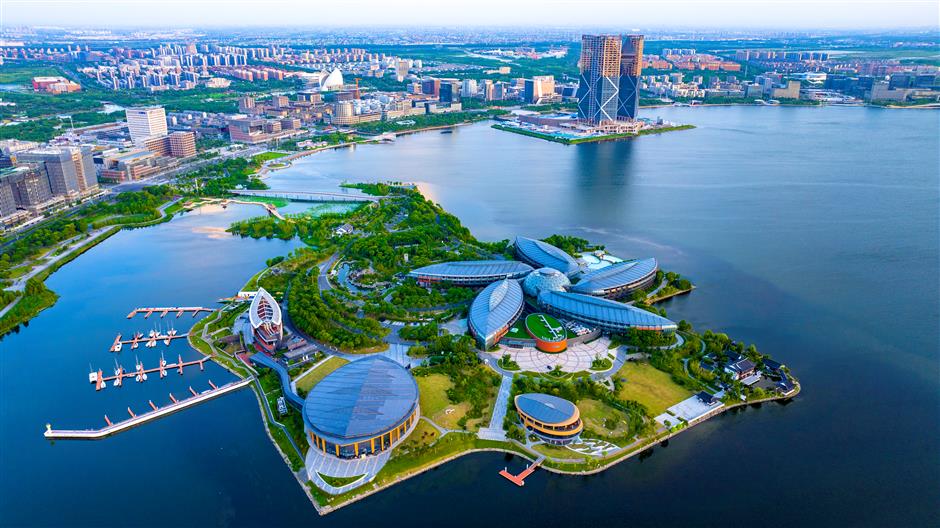
New research hubs, innovative communities and waterfront public spaces are being built around Dishui Lake in Lingang Special Area.
Grand narratives rarely influence the decision of many foreign professionals to relocate to China. Small, everyday questions, such as the ease of dealing with visas and paperwork, the availability of suitable jobs, the speed of start-up after arrival, and the manageability of daily life, typically drive their decision.
Shanghai's Lingang Special Area has unveiled a blueprint to establish a "Sci-Tech City," aiming to attract global talent by reducing red tape and easing early-stage hurdles. The plan is designed to anchor more researchers and founders while strengthening Lingang's role in Shanghai's ambition to become an international science and technology innovation hub.
By 2027, Lingang wants seven top research institutions, 2,000 high-tech companies, and 40,000 innovators and entrepreneurs. The area aims to be one of Shanghai's main engines for turning research into business, nurturing emerging industries, experimenting with new models, and helping young entrepreneurs build companies and careers by 2030.
To meet these goals, Lingang will establish four flagship innovation communities in artificial intelligence, integrated circuits, cross-border finance, and digital services. Technology commercialization, frontier industry development, talent programs, early-stage capital support, and ecosystem building will support these communities.
"You focus on innovation and entrepreneurship. Lingang takes care of the backend," said Li Xiangcong, director of the high-tech division at the Lingang Special Area Administrative Committee, at a policy briefing.
Handling the 'Backend'
Lingang's idea of "handling the backend" covers everything from visas and subsidies to office space, housing, and day-to-day administration.
The "Little Blue Whale" program targets university students and recent graduates, reflecting this approach. Under the scheme, interns will receive monthly subsidies of 1,000 to 5,000 yuan (US$144 to US$719) and transport allowances, depending on their academic background.
Short-term accommodation support is also provided. For eligible high-level recruits, housing subsidies can reach up to 5 million yuan.
Lingang is also preparing a "Big Blue Whale" program aimed at experienced professionals from China and abroad. According to Li, the scheme, expected to be launched in the first quarter of this year, will focus on practical issues such as permanent residence facilitation, income incentives, and support for cross-border digital and financial activities.
Once the talent arrives, the plan shifts its focus to cutting down on paperwork and time-consuming procedures.
Lingang's International Talent Service Hub has been upgraded to handle more than 60 services through a single service window, covering matters such as residence permits, household registration (hukou) consultations, and talent introduction procedures. Most applications can now be submitted and tracked online.
That promise of handling the "backend" is already being tested on the ground. One example is Pulse Vision, a US-based startup with more than a decade of experience in ultrasonic medical devices, which has anchored part of its operations in Lingang with the help of local partners.
"We handled everything from company registration and intellectual property transfer to office space and team relocation," said Li Sihua, head of Synlinx, a platform specialising in semiconductor commercialisation that assisted the move. "Left to their own devices, it might have taken two years. With our support, they could focus entirely on the R&D that matters."
Within a year, Pulse Vision grew to more than 20 employees and completed its angel funding round.
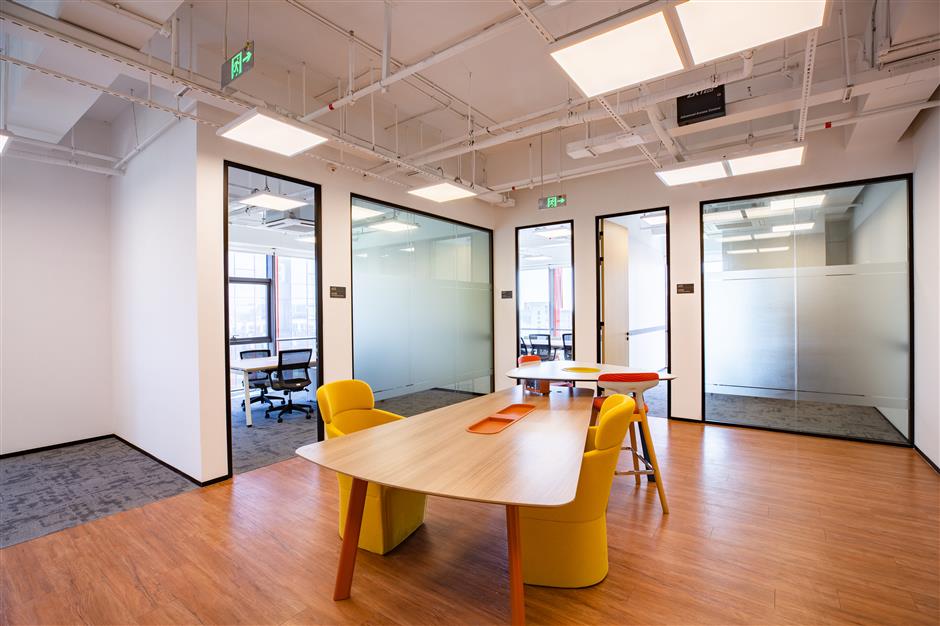
A rent-free office space in Lingang
Bridging the 'Death Valley' of Innovation
Innovation experts call the early stage the "death valley," when promising technologies struggle to move beyond the lab due to high costs, limited funding, and low revenue.
Lingang's response is to step in early, targeting this gap from several angles.
One pillar is access to capital. The area's 6 billion yuan (US$862 million) Qihang Fund will shift support from one-time grants to equity investment in early-stage startups, where private capital is often hesitant to invest first.
"Our role is not just to provide funding, but to step in early," said Wang Xingwei, an investment manager involved in the Qihang Fund. The fund is part of a broader Lingang investment platform that has participated in 27 investment funds with a combined scale exceeding 174 billion yuan, facilitating nearly 55 billion yuan in coordinated investment tied to industrial projects.
Beyond funding, Lingang is also putting its research infrastructure to work. A Global Offshore Innovation Base connects overseas research teams and startups to local companies, investors, and application scenarios, while large research platforms enable early testing and pilot production.
Lowering startup costs is another factor. Lingang's "Maker Home" initiative offers over 300,000 square meters of low-cost workspace and over 5,000 talent housing units, including 1,000 rent-free youth apartments to help young entrepreneurs get started. Early-stage teams can test technologies and business models quickly and cheaply.
Some startups are already experiencing the impact. One example is OSYX Technologies, a company developing safety-critical operating systems for intelligent vehicles.
"The process moved very quickly," said founder Zheng Huizhe, a Ge-Z returnee entrepreneur. "We arrived last August, applied within about two months, and had the funding in place before the end of the year."
Backed by an initial 2-million-yuan investment through local policy support, the small team has since delivered production-ready solutions and secured clients, including Infineon Technologies and CATL.
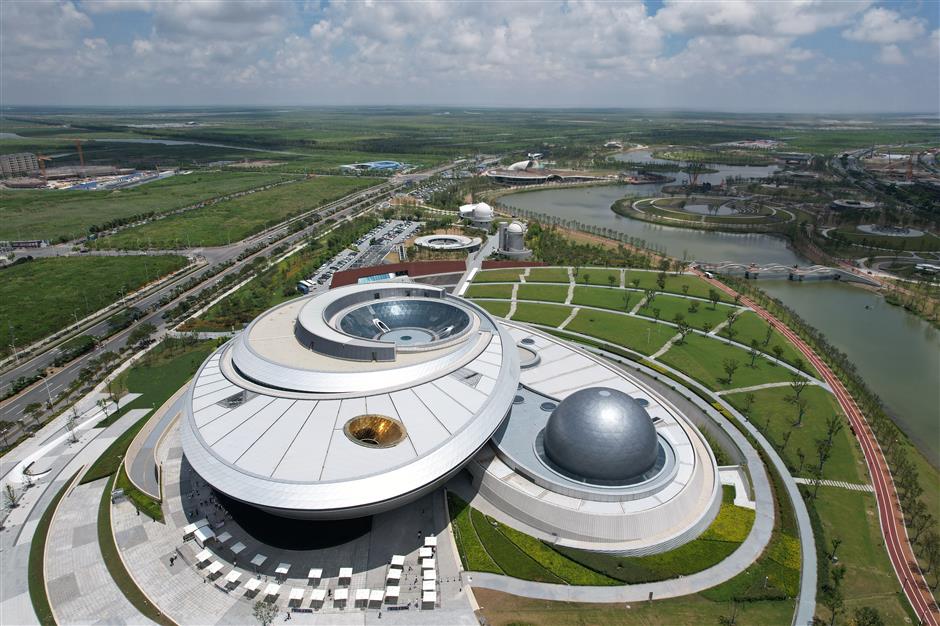
Shanghai Astronomy Museum
From Manufacturing to New Frontiers
Industrial development remains a core focus.
Lingang is expanding into fourth-generation semiconductors, next-generation energy storage, and AI computing chips while strengthening its manufacturing base in integrated circuits, civil aviation, intelligent vehicles, and high-end equipment.
The area wants to grow cross-border digital services like digital content, live streaming, e-commerce, and value-added telecom services. This is possible because of better data processing and related infrastructure.
The blueprint also highlights the role of cultural and lifestyle amenities.
Digital cultural industries and large-scale events are encouraged, with venues such as the Shanghai Astronomy Museum, Shanghai L+SNOW Indoor Skiing Theme Resort, and Shanghai Haichang Ocean Park cited as anchors for exhibitions, sports events, and cultural activities.
Fireworks still light up the skies over Dishui Lake every Saturday night, Li noted. "What we hope to see," he said, "is more backpackers and makers watching that moment unfold together."
Source: City News Service
