



Government News
Beijing, Hangzhou, Shanghai are China’s healthiest cities, Tsinghua University report shows 2025-12-24
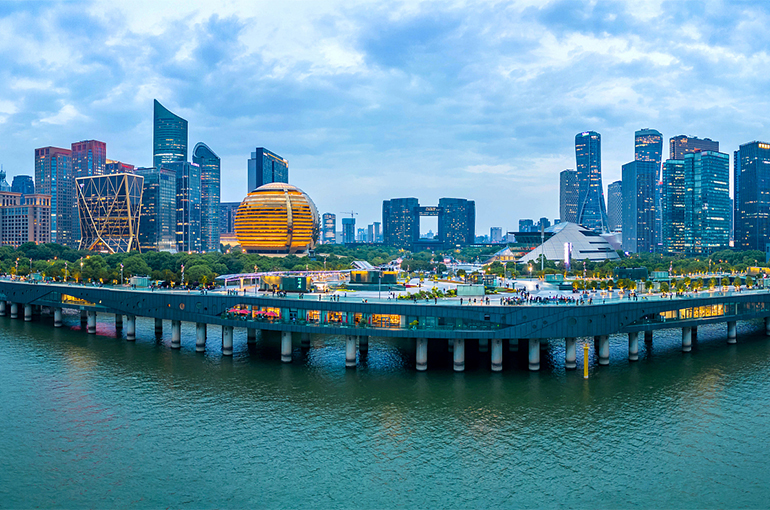 Beijing, Hangzhou, and Shanghai took the top three spots in a ranking by Tsinghua University evaluating Chinese cities based on residents’ overall health conditions.
Nanjing and Xiamen followed Beijing, Hangzhou, and Shanghai to complete the top five by comprehensive health index score, according to the Tsinghua Urban Health Index 2025 report released on Tuesday. The highest-ranked small- and medium-sized cities were Huzhou, Jinhua, and Quzhou in eastern Zhejiang province.
The Tsinghua Urban Health Index 2025 assesses the health status of urban residents based on six indicators: health services, health industry, health behaviors, health facilities, health environment, and health utilities.
Beijing took first place in health services, health industry, and health behaviors. Shanghai and Nanjing made the top five in five of the six indicators. Shanghai had very high scores in health services and health industry.
However, all the top five cities by comprehensive health index, except Xiamen, failed to make it into the top 10 by health environment, indicating that there is still much room for improvement in the environmental quality of the leading Chinese cities.
Each urban cluster boasts its own advantages. The Beijing-Tianjin-Hebei region scored relatively high in health services, thanks to its high-level medical resources. The Pearl River Delta region, which includes Guangzhou and Shenzhen, held advantages in health industry and health behaviors, with its health industry owning the most patents nationwide.
The Yangtze River Delta region, which encompasses Shanghai and Hangzhou, had balanced scores across all six indicators, while its new drug research and development sub-index was much higher than that of other city clusters. The area also had a leading position in health utilities.
Moreover, all cities, no matter large cities ranking top in the comprehensive health index, or ordinary small cities, underperformed in health behaviors.
To improve the healthy behaviors score, not only do urban residents need to enhance their health awareness, but cities also need to implement supporting laws, policies, urban infrastructure, and other software and hardware facilities, Li Dong, a core member of the report writing team, told Yicai.
The construction of a “medical informatization infrastructure” is of vital importance to improve residents’ health behaviors, Li noted, adding that the capacity of medical informatization is highly concentrated in core cities. “Half of the projects are in Beijing, Shanghai, Chengdu, Shenyang, and Urumqi.”
Health expenditure is an important secondary indicator used in the assessment of residents’ health behaviors. Hosting large-scale sports events and sports event intellectual properties are influencing residents’ health expenditures and will help improve their health behaviors, according to the report.
Source: Yicai Global