



Government News
Global experts gather in Shanghai to explore new pathways for the night economy 2026-06-09
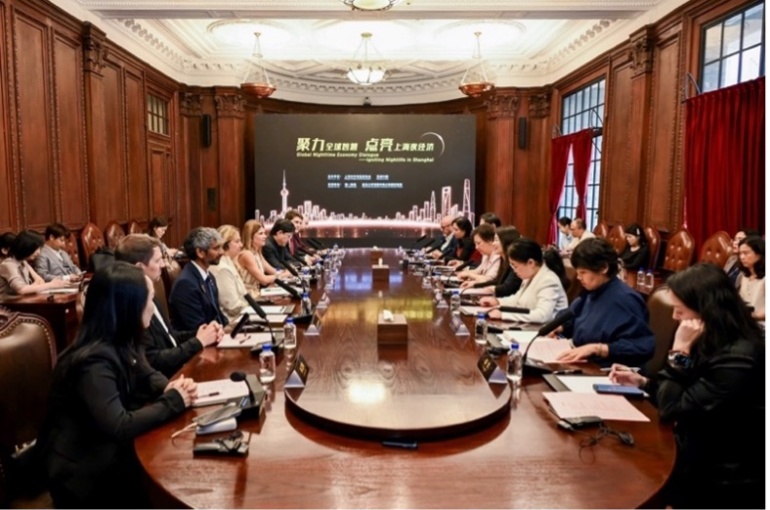
Top international experts in the global nighttime economy, including policymakers, researchers, urban planners, and businesses, gathered in Shanghai on June 6 to rethink the role of the night economy.
Discussion at the Global Nighttime Economy Dialogue: Igniting Nightlife, an event jointly hosted by the Shanghai Association of Foreign Investment and Budweiser China, focused on how the night economy can empower the high-quality development of Shanghai's services sector, and how to activate the international appeal of the night economy to help build an international consumption hub.
"Shanghai is already one of the highest of nighttime economy cities across China," Craig Katerberg, chief legal and corporate affairs officer at Budweiser APAC, said in an exclusive interview with Yicai before the dialogue. “The World Economic Forum has featured Shanghai as well for its nighttime economy.”
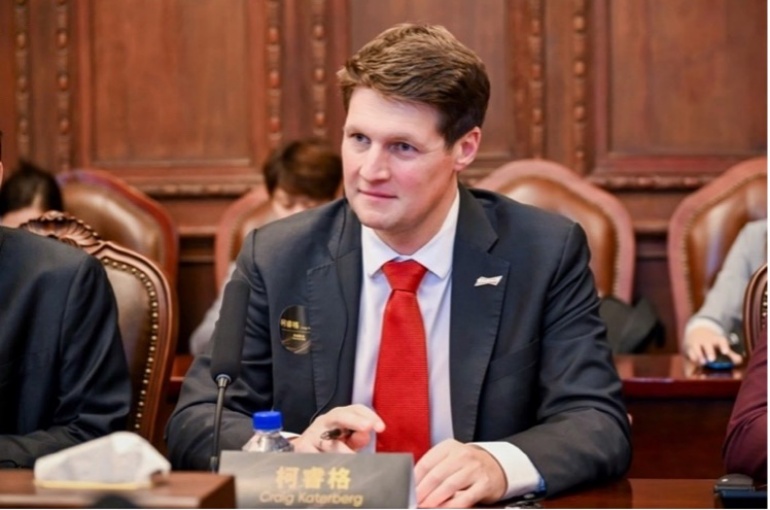
Budweiser China has been working very closely with the Shanghai government to amplify the Chinese city's nighttime economy, according to Katerberg. While evening hours account for a significant share of consumption activity in China, foot traffic slows down significantly after 8 p.m., presenting major opportunities to prolong the city's night vitality.
“We’ve been working very closely with the Shanghai government about that new opportunity,” he noted.
Katerberg also highlighted the importance of the government working together with enterprises and consumers to seize opportunities and achieve objectives, such as making Shanghai an international consumption center.
Looking ahead, Budweiser China is preparing a series of large-scale initiatives tied to the 2026 FIFA World Cup, including public viewing events and immersive fan experiences designed to bring people together through shared passions.
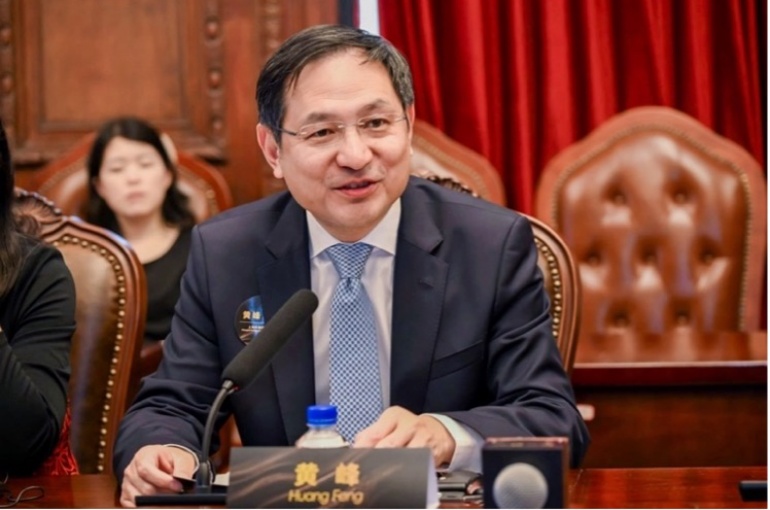
Taking Budweiser China’s approach as an example, Huang Feng, president of the Shanghai Association of Foreign Investment, noted that multinational companies are becoming increasingly important partners in urban development.
Budweiser China’s “deep integration of top international IPs with Shanghai's local consumption ecosystem has not only enriched the nighttime choices for citizens but also set a benchmark for foreign enterprises participating in urban economic development,” Feng pointed out.
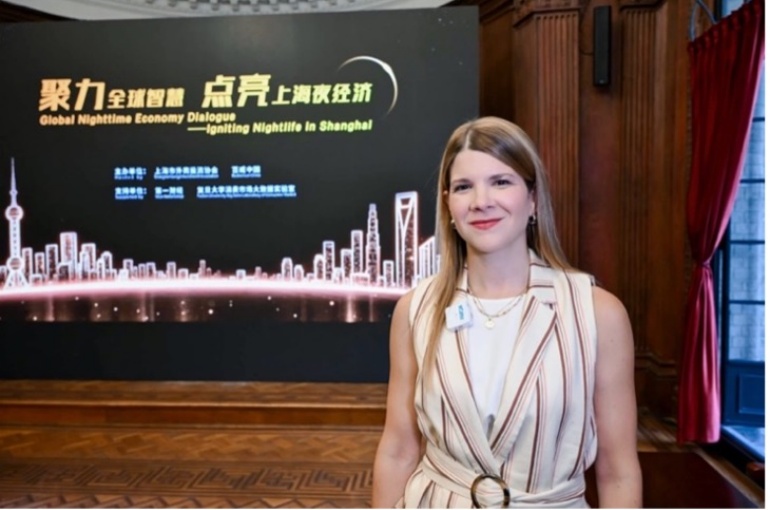
“Shanghai has a unique opportunity to leverage its cultural assets, public spaces, and global appeal to build a more vibrant, inclusive, and resilient city after dark,” Andreina Seijas, founder of Night Tank and academic lead of the World Economic Forum's 24-Hour Economy Initiative, said at the event.
To Michael Kill, chief executive of the Nighttime Industries Association and vice president of the International Nightlife Association, night economy planning needs should be integrated into other strategies, including transport, city planning, and licensing systems, and should be valued as urban infrastructure.
The dialogue produced a broad consensus: the future of the nighttime economy depends less on extending hours and more on creating meaningful after-dark experiences -- a goal that requires cooperation between governments, businesses, academic institutions, and local communities.
At the event, Budweiser China, in collaboration with the Big Data Laboratory for Consumer Markets of Fudan University, released a special report on boosting the integrated development of culture, tourism, sports, exhibition, and commerce and the high-quality growth of Shanghai's night economy.
Source: Yicai Global